

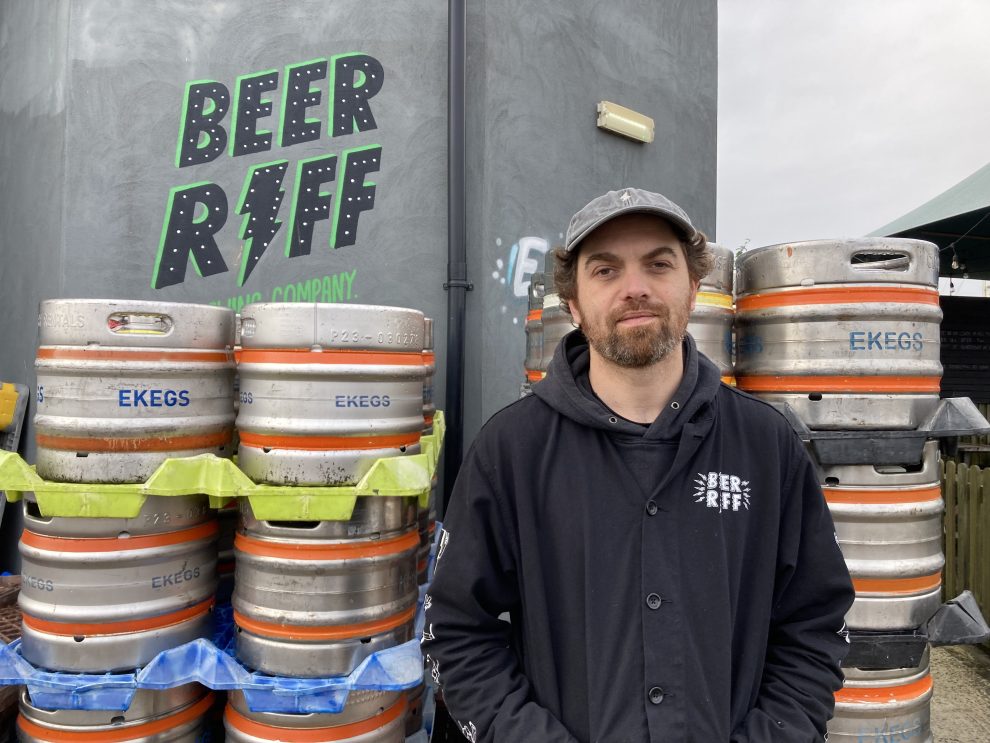

AFTER touring Europe and America with a band in his 20s Rhys Pillai found himself abroad again on a new mission – selecting hops for a beer. He visited farms in a northern region of New Zealand’s South Island, seeking something special for a new craft beer he was creating for Beer Riff Brewing, Swansea.
“We work very closely with New Zealand hop growers,” he said. “Each farm grows about 10 different varieties. Through a collective they all put in various different ‘lots’. We knew the rough flavour profile and were looking for something that really stood out.”
Finding that certain something involved rubbing and sniffing the hops and what Rhys chose is part of the recipe for Killer Kiwi, a pale ale which he launched this year and is currently Beer Riff Brewing’s best-selling beer. The Swansea Marina-based business has a first-floor tap room which serves around 15 beers – half a dozen of which are Rhys’ brews with the remainder from around the world.
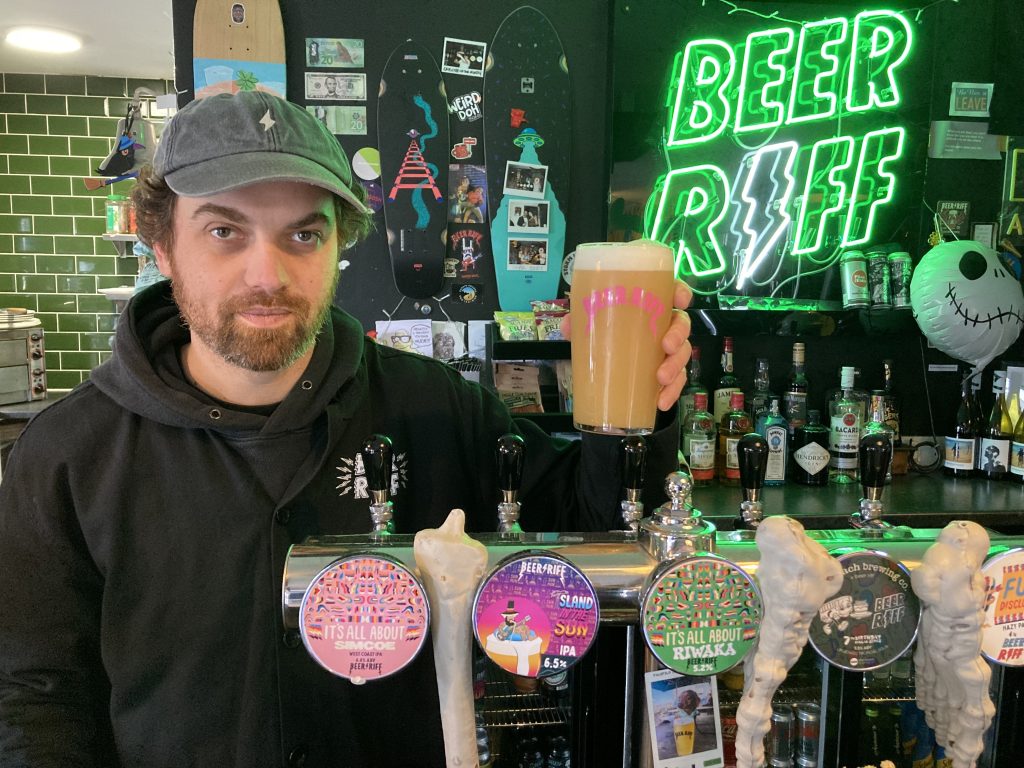
In simple terms Beer Riff Brewing is an independent brewery producing mainly craft beer which is carbonated and canned or stored in kegs as opposed to real ale stored in casks. The tap room serves pale ales and IPAs, characterised in Rhys’ words by their “bigger punchier and punchier flavours” – that’s the hops again – and stouts, “sours”, and lagers.
There is some vagueness about the term “craft beer” – a term which started in America in the 1970s to describe the emergence of small independent breweries, according to the Society of Independent Brewers and Associates (SIBA), a UK trade group.

SIBA said these independent ventures were producing “interesting, highly flavoursome” beers which went on to inspire a wave of new UK brewers in the 2000s. It said the industry “wrestled” with what craft beer meant for the UK market. This was because cask beer – served from, you’ve guessed it, casks – was in many ways the original craft beer, but the new wave of hoppy carbonated brews served from kegs and cans didn’t quite fit with that.
The waters were muddied further, said SIBA, when global breweries started buying some of the up-and-coming independent ones.
However SIBA said what wasn’t in doubt was demand for independent beer. “The issue is getting access to market and ensuring genuine independent beer is being sold,” said a spokesman.
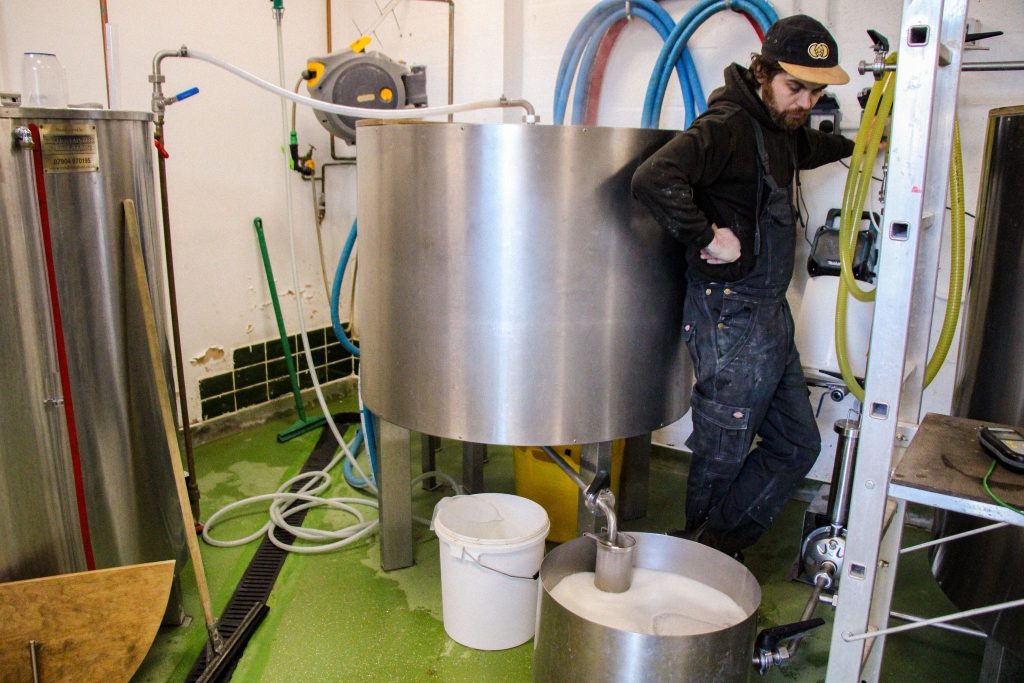
At Beer Riff Brewing Rhys mixes malted barley, oats, and wheat with water on brew day. Sugar is extracted at this “mash stage”. The brew then gets boiled down for an hour and hops are added for some flavour and bitterness.
“Then it goes into the fermenter, with yeast, for roughly a week,” said Rhys. “Then you add a load more hops for flavour. It’s left for two days then we condition and carbonate it.” Conditioning a beer, he said, involved bringing the temperature down and allowing the flavours to gel.
Rhys said there was a perception among some people that beer just “appears” but he said traditional German lagers could take up to two months before being ready to serve. While the ingredients and process might sound fairly formulaic what results from independent producers can be anything but.
“Blending them right is the magic,” said Rhys. He described it as “science and art” – and this creative, experimental aspect of the process appeals to craft beer enthusiasts.
Most of Beer Riff Brewing’s barley comes from the UK with the hops mainly from America and New Zealand. Rhys said these hops were very specific to their region and climate and growing them elsewhere wouldn’t replicate the same flavour. “New [hop] varieties, similar to American ones, are coming to the UK,” he said.
Rhys, of Sketty, went to Bishop Gore School and then did sound engineering at Gower College Swansea before touring overseas for years with his “DIY” punk band The Arteries. He played the drums.
After that adventure ended he had various jobs including running his own skateboard company and it was through this that another adventure began, thanks to The Pilot pub in Mumbles. “We asked The Pilot to make a beer for our Christmas party. It went down an absolute storm,” said Rhys.

He had dabbled in home-brewing but within months he had been taken on by Richard and Jo Bennett, who brew The Pilot’s cask beer and run the pub. There was a lot to learn. “I was with Richard for two years and would say all my brewing knowledge comes from cask beer,” he said.
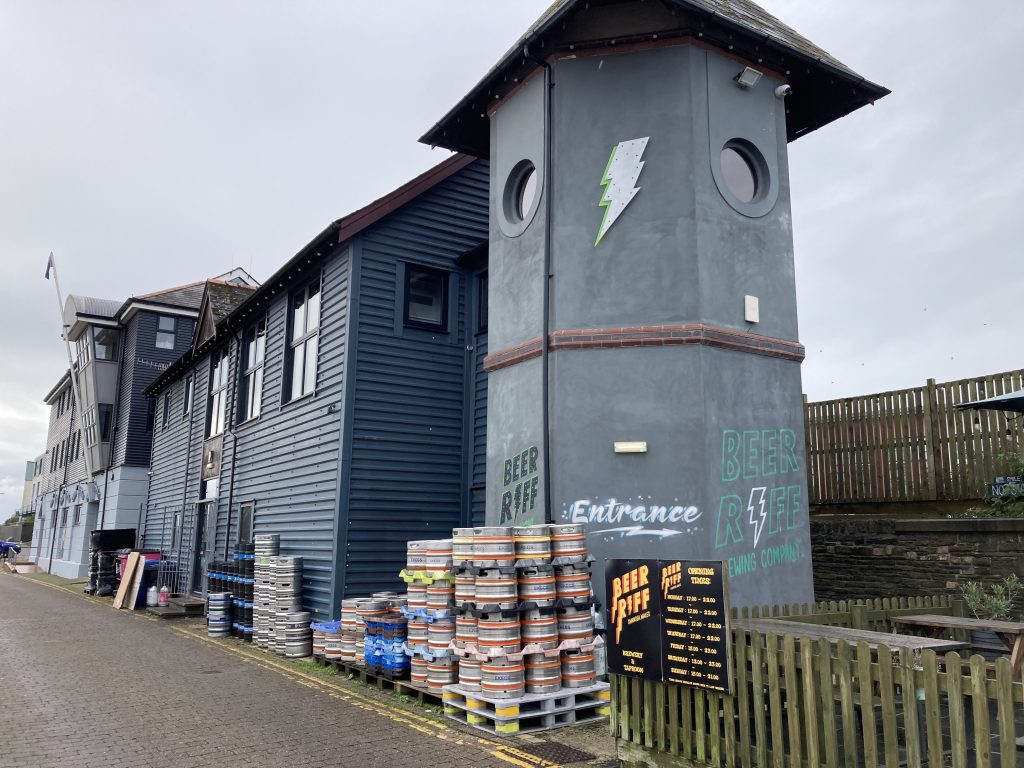
Rhys, Richard, and Jo then acquired what became the Beer Riff Brewing premises off Trawler Road – formerly a ground-floor fishing store and restaurant above – and spent a year getting the building ready. It opened in 2018 and the trio are joint owners although The Pilot remains a real ale venue while craft beer is the marina operation’s unique selling point.
“Craft beer was niche when we started,” said Rhys. “It was becoming very popular. What we were trying to do was have our own beers as well as the best beers from across the world. Our beer had to compare to that. We found a customer base although the first year was pretty difficult.”
The company has navigated the Covid pandemic, the energy price crisis, the doubling of malted barley prices following Russia’s invasion of Ukraine, and rising shipping prices. “These costs have only started dropping now,” he said.
Beer Riff Brewing employs nine full- and part-time staff and the tap room is open seven days a week. Pizzas are served and there is a beer garden but no live music. There’s also a weekly quiz with proceeds going to good causes locally.
“People come here for the beer – we want them to have a nice, relaxing time,” said Rhys, who has a five-year-old daughter. He attends beer festivals, carries out research, liaises with other brewers, and is always coming up with new recipes. Around 60% of the company’s beers are sold on site while the remaining 40% are sold to wholesalers and customers online.
Speaking before chancellor Rachel Reeves’ budget on November 26, Rhys, when asked if he would like to scale up the operation, said: “If there was the right opportunity then potentially. Hospitality is going through a hard time at the moment. Pubs are closing. There needs to be changes in how the government supports hospitality before we’d make any drastic changes.”
Mentor and business partner Richard said Rhys’ father was a regular at The Pilot and that Rhys used to join him sometimes. “My wife [Jo] saw potential in him and I needed a bit of help,” said Richard. “He did cellar and bar work and brewing. I could leave him brewing no problem at all.”
Richard said Rhys has excelled, becoming an authority in New Zealand hops, “lapping up” new ideas and techniques on YouTube, and just being a natural networker.
As well as looking after The Pilot with Jo Richard does some deliveries for Beer Riff Brewing and takes Rhys’ spent grain to a farm in Kittle, Gower, while Jo does some of the admin. “Rhys brews better than me now,” said Richard. “I take pride in that.”
Industry group SIBA said there were 1,641 independent breweries in the UK as of March 2025 – this included both keg and cask brewers – but their beer only made up 6% of total beer volumes. It said this figure typically rose to 30%, according to market research, when “genuine independent beers” were sold alongside what it termed “global beer”.
SIBA launched a campaign in 2024 called Indie Beer which sought to make it easier for drinkers to identify beer from independent breweries as opposed to ones that had been acquired by global brands.
The not-for-profit group said market access and taxation, plus rising labour costs, were headwinds. “The combination of these factors means that whilst demand is high for independent beer profitability is a huge challenge and we are still seeing far too many quality independent breweries close across the UK,” said a SIBA spokesman.
These factors are outside Beer Riff Brewing’s control. Rhys’s working routine is shaped by what’s happening in the ground floor “brew house”. The 38-year-old said: “If I need to come in at the weekend to take hops out I will do that.” He also stressed that keeping equipment clean and sterile was a large part of the job.
Seeing customers keep coming back to enjoy his beers gave him satisfaction. “I do a lot of reading and other brewers are really helpful although everyone has got their secrets,” he said.