

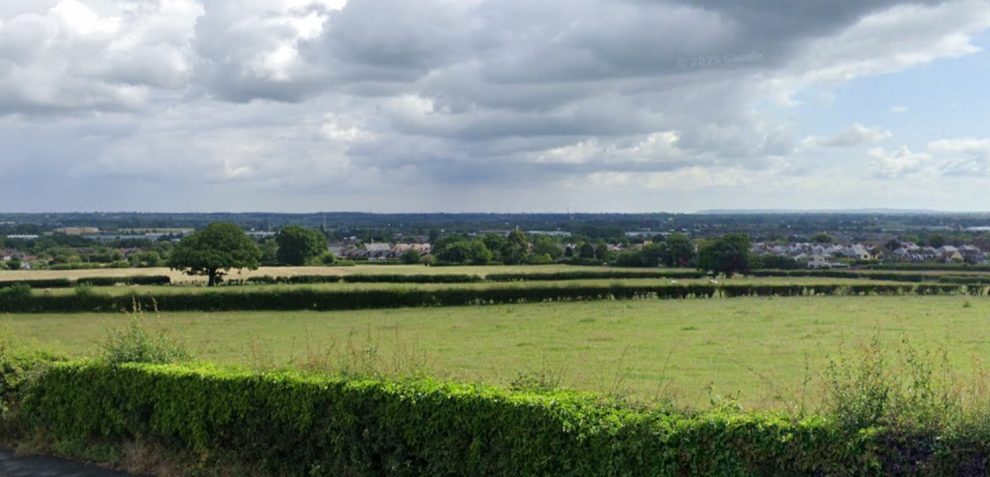

CHANGES to construction plans on a 300-home development in Hawarden due to an incorrectly mapped mine shaft have been approved by Flintshire’s Planning Committee.
The changes would see a number of proposed homes on the 27-acre Castle Green Homes site between Gladstone Way and Ash Lane moved back so they are outside a 12 metre exclusion zone from the shaft – which was discovered four meters away from where it was identified on a mapping report from 2019. Other home styles will be substituted out to ensure they do not cross into the zone.
In total 52 alterations were put before Flintshire County Council’s Planning Committee to accommodate the necessary changes – which will also increase the number of bedrooms overall on the site – which has already had over 1,200 expressions of interest from potential buyers – by three.
The move was criticised by local members originally opposed to the development.
Representing Hawarden Community Council, Cllr Connor Wynne argued this problem had been foreseen by those who campaigned against the scheme.

“This is not an acceptable position to Hawarden Community Council or the residents we serve,” he said.
“There are 52 individual amendments to note involving the changing of property types, designs, sizes, layouts and site positioning. This cannot be described as minor in nature.
“The developer alleges that they were unaware of the position of mine shafts across the site until just a few weeks ago. The issue of the area being previously mined has long been referenced within literally hundreds of objections to this site previously.
“Residents and councillors alike have advised that historical mining in the area would frustrate delivery and therefore the viability of this scheme. They were right.
“The developer previously relied upon an intrusive coal mining risk assessment from seven years ago to gain the primary permission. Why were the mine shafts not correctly identified within this report? Clearly the report was and is insufficient and inaccurate. We can therefore have no confidence in its findings.”
Cllr Wynne also recalled an incident from 2013 not far from the site where a Mancot grandmother fell 24 feet down a mine shaft she was previously unaware of beneath her driveway – arguing that if the data on mineshafts in the area is inaccurate that ongoing development could put more people at risk.
Mancot Cllr Sam Swash, a long-time opponent of the plans, took aim at the consultation on the changes.
“The consultation process surrounding these amendments has been nothing short of farcical,” he said, “Residents have been expected to comment on hundreds of pages of technical documents with no clear explanation.
“Residents should not need a degree in planning law and several free weekends to understand what a developer is trying to do to their community.
“If these amendments are approved, despite residents being effectively locked out of meaningful participation, then we will be sending a very clear message that consultation in Flintshire is not about listening to residents.

“It is simply a box-ticking exercise to complete before giving private developers exactly what they want.”
Reform UK group leader Cllr Helen Brown – who represents Hawarden Aston – said she felt making a decision on the plans would be unsafe without a new report into mine shaft mapping.
“Why has the developer not provided an up-to-date coal mining risk assessment or a recent report showing the locations and scale of the mine shafts they now understand to be on site following the recent intrusive surveys,” she said.
“How can we make a decision on the changes to the site layout, density and occupancy when this could soon change if more mine shafts are found or more continue to be in the wrong place.
“We don’t have sight of any confirmed findings. The previous report which the developer relied upon to get successful permission is clearly insufficient, hence this application.
“I believe we must request an up-to-date report of the situation on the ground urgently. I’m not comfortable with making decisions without the full facts.
But in supporting the application Cllr Chris Bithell said: “The amendments as sought are the minor relocation of a number of dwellings footprints following intrusive site investigations which revealed the exact position of all mine workings.
“Some of these mines date back to the 18th and 19th centuries, long before the Mining Mediation Authority had the maps we now rely on which were only developed from the 1870s.
“Anything before then is probably guesswork. It’s not until you start actually probing the site that you can actually identify where they are and that’s not unusual in Flintshire.
“Flintshire was a mining area. It’s not unusual to find a hole suddenly appearing in somebody’s drive and so on. It’s very unfortunate when that happens but it’s a natural consequence of living in areas which have been intensively mined in the past.”
A proposal to defer the application to seek more information on mine shaft locations was rejected as the committee approved the changes.