

FOUR INNOVATIVE projects have been developed and tested at prototype stage to support the transition to net zero in rural Wales.
Supported by Growing Mid Wales, the Welsh Government Climate Innovation-funded Whole System Research and Innovation for Decarbonisation (WSRID) programme has successfully completed Phase 2. It explored how rural and agricultural communities can decarbonise while managing increasing demand on constrained electricity networks.
The programme brought together public bodies, industry, academia and rural stakeholders to develop practical, whole-system solutions grounded in real-world conditions.
Rather than focusing on a single technology, Phase 2 examined how decentralised energy generation, flexible energy use and digital tools can work together to reduce pressure on the grid while supporting farming, forestry, rural businesses and local economic growth.
The Phase 2 projects focused on:

- HARVEST (Centre for Energy Equality and partners) developed a socially inclusive, community-led energy model through a Social Virtual Power Plant (SVPP), designed to share benefits across rural communities and provide local flexibility. The project also delivered a demonstrator in Llanidloes with Ynni Cymru funding.
- Water to Water – RuraVolt – delivered a user-friendly digital feasibility tool enabling farms to assess on-farm smart energy options, including renewables, storage and green hydrogen. The tool is now live for Welsh dairy farms and can be accessed on the Water to Water website.
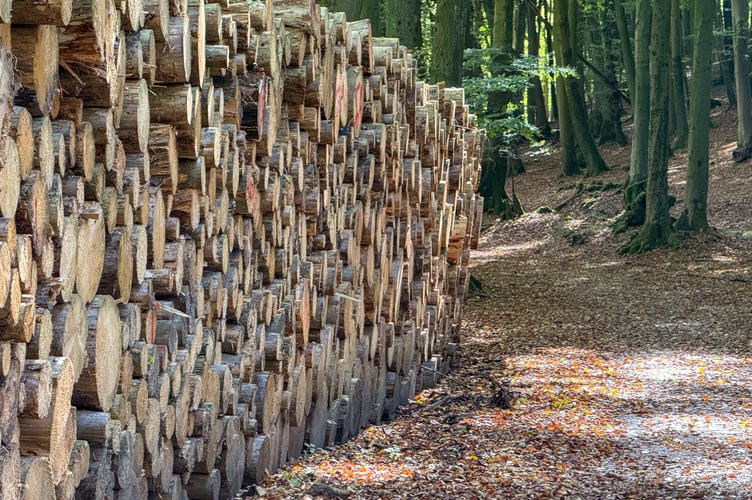
- Challoch Energy – VREM Cymru (Devil’s Bridge) – explored the use of curtailed wind energy to produce green hydrogen, supporting the decarbonisation of forestry and timber operations – an economically important but hard-to-decarbonise rural sector.
- Lafan developed a proposal to utilise excess livestock nutrients through anaerobic digestion and biochar production. Slurry would be dried on-farm and transported to a central hub, with energy generated either injected into the gas grid or converted into electricity for storage and grid use.
The completion of Phase 2 marks an important milestone, with findings helping to shape future programmes, funding and policy to ensure rural Wales plays a central role in the transition to net zero.
In a joint statement from Growing Mid Wales leaders, Councillors Bryan Davies and Jake Berriman, leader of Ceredigion and Powys County Councils, respectively, said: “This programme is helping turn new ideas into real opportunities for Mid Wales, showing how innovation can deliver practical benefits for our communities, businesses and rural economy.
“By supporting projects from early feasibility through to prototype stage, we are building the evidence and confidence needed to take these solutions further.
“Continued investment will be key to scaling what works, ensuring Mid Wales is well placed to deliver on net zero while creating long-term economic opportunities for the region.”
Growing Mid Wales will now look at how these ideas can be tested further, scaled up and rolled out across the region.
Short video clips showcasing each of the projects are now available to view on the Growing Mid Wales YouTube channel, giving a closer look at how the ideas work in practice.
Businesses, farmers and organisations interested in future opportunities can keep up to date and get involved by signing up to the Growing Mid Wales newsletter.