

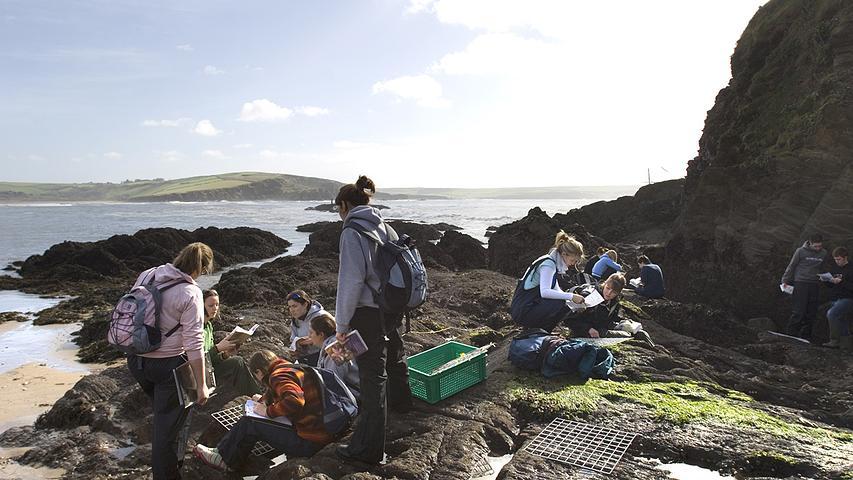

A NEW report has warned that marine conservation is becoming a “functionally middle-class” profession, with young people from working-class backgrounds facing significant barriers to entering the sector despite growing demand for environmental careers.
The study, Improving Social Mobility within Wales’s Marine Conservation Sector, published by Pembrokeshire Coastal Forum and Pelagos, says a lack of vocational training routes, a shortage of entry-level jobs and financial pressures are preventing many talented young people from pursuing careers protecting Wales’ coastline.
Researchers found there are currently no local vocational pathways into marine conservation in South West Wales, meaning university has become the main route into the profession. The report argues this risks excluding capable young people who cannot afford higher education or unpaid work placements.
The report describes marine conservation as becoming “functionally middle class”, warning that greater social mobility will only be achieved if more practical routes into the sector are developed alongside traditional graduate pathways.
Researchers interviewed 26 employers and stakeholders alongside 20 young people aged between 16 and 26 from Pembrokeshire, Carmarthenshire and Swansea between January and March this year. They also carried out an extensive review of existing research into social mobility and employment.

Among the biggest concerns identified was the severe shortage of entry-level jobs.
One graduate told researchers: “I’m now totally stuck. I’ve been applying for six months. Most jobs require a Master’s degree. I know so many people getting one but then being in the same position.”
Another employer revealed that a single vacancy attracted 293 applications, while another described the situation as “selling tickets to a gig that is oversubscribed”.
The report also highlights wider structural challenges facing young people in rural Wales.
Researchers say poverty, limited public transport, geographical isolation and reduced access to professional networks all make it harder for young people outside major cities to access higher education, internships and skilled employment. Around 31 per cent of children in Wales live in poverty, one of the highest rates in the UK, with many living in households where at least one adult is in work.
The study identifies four key factors influencing whether young people pursue marine conservation careers: their connection with the natural environment, awareness of career opportunities, community aspirations and academic confidence. It concludes that these must be supported by better funding, mentoring, employer engagement and significantly more entry-level opportunities if social mobility is to improve.
Sea Trust Wales Director Nadia Tomsa, who contributed to the research, said unpaid internships and fierce competition for experience were creating unnecessary barriers.
She said: “The conservation sector is becoming increasingly difficult to access, with a huge shortage of entry-level opportunities. Unpaid internships create a barrier to lower-income individuals gaining experience.
“I see numerous talented, passionate young people who are struggling to find a role in the marine conservation world.”
Ms Tomsa revealed that Sea Trust Wales recently received more than 100 applications for a two-month volunteer placement, many from graduates hoping to gain enough experience simply to compete for paid work.
The report concludes that Wales needs a joined-up vocational pathway into marine conservation alongside stronger financial support, mentoring and employer initiatives if the sector is to attract talent from all backgrounds rather than those who can most easily afford to enter it.
The research was funded through the Welsh Government’s Marine Resilience Fund.