

THE TEAM at The Whitebrook has created straws made entirely from a common weed growing in its kitchen garden.
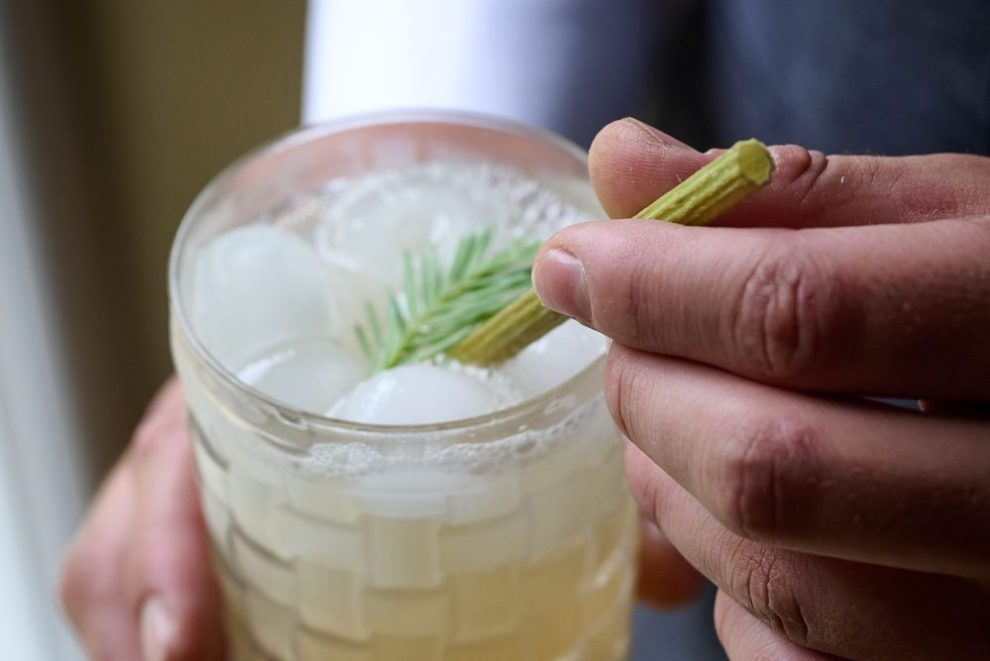
The biodegradable straws are made in-house using naturally hollow Ground Elder stems, eliminating the need for single-use plastic straws while offering a more durable alternative to paper.
Believed to be the first UK restaurant to make raw plant-based drinking straws entirely from scratch on-site, the initiative forms part of the restaurant’s wider commitment to sustainability and low-waste dining.
Located in the Wye Valley in Monmouthshire, Wales, The Whitebrook is a Michelin-starred restaurant with rooms led by chef Chris Harrod, and also held a Michelin Green Star in recognition of its environmental efforts until recently when Michelin disbanded the accolade.
The restaurant has launched the new initiative to replace disposable straws with handmade alternatives created entirely from plant materials grown and foraged locally.

Chris Harrod, chef patron at The Whitebrook, said: “Sustainability isn’t something we add to the business; it’s part of every decision we make. We’re always looking at how the landscape around us can inspire not only our food but the way we operate.
“What Rhys has achieved with these straws is a brilliant example of that approach – turning an abundant plant from the Wye Valley into a practical alternative to disposable straws.
“It’s a small detail, but one that reflects our commitment to reducing waste and thinking creatively about sustainability.”

The straws are made from young Ground Elder stems, a naturally hollow plant commonly found along woodland edges and grassland throughout the UK.
Ground Elder grows from March to October and, while often considered an invasive weed by gardeners, Harrod and his team have discovered a practical and sustainable new use for it.
Rhys Jex, restaurant manager, who has been part of The Whitebrook team for two years, was the first to recognise the potential of young Ground Elder stems as a natural alternative to drinking staws. He began experimenting with ways to refine and preserve the stems for restaurant use..
Through a process of trial and error, Rhys discovered that drying the stems alone caused them to lose much of their natural green colour.
By curing the stems he was able to retain their appearance while also improving durability.
Ground Elder is part of the carrot family and is edible when young. Once dried into straws, the stems are flavourless, fully biodegradable and naturally decompose after use, without the need for chemical treatments or synthetic coatings.
Rhys Jex, restaurant manager, at The Whitebrook, said: “Ground Elder is something most people see as a nuisance plant, but when you’re constantly working with ingredients from the garden and surrounding landscape, you start looking at things differently.

“I noticed that the younger stems were naturally hollow and wondered whether they could work as a drinking straw. It took a lot of experimentation to find the right process.
“Drying the stems on their own caused them to lose their colour and become more brittle, so I began testing different preservation methods. We found a way to retain their natural appearance while creating a stronger, longer-lasting straw.
“It’s rewarding to take a plant that many people would overlook and turn it into something practical that helps reduce waste.
“The straws are completely natural, fully biodegradable and made entirely from plants foraged around the restaurant, which makes them a perfect fit for what we’re trying to achieve at The Whitebrook.”
Following positive customer feedback, The Whitebrook plans to expand production of the plant-based straws throughout the Ground Elder season, creating enough batches for use year-round.
Sustainability has long been central to The Whitebrook’s philosophy. Harrod and his team forage many of their ingredients from the surrounding Wye Valley, allowing the menu to evolve naturally with the landscape and the seasons. Inspired by the valley itself, dishes change throughout the year to showcase the freshest local produce and the very best of British ingredients.