
Six of Wales’ seven health boards failed to balance their books as funding fell in real terms
NHS WALES recorded an annual deficit of £199 million last year, despite receiving what Audit Wales described as record investment in the health service.
The watchdog’s audit of NHS bodies’ accounts for 2025-26 found that six of Wales’ seven health boards again failed to meet their legal duty to break even over a rolling three-year period.
The combined three-year deficit across NHS Wales increased to £506 million, up from £457 million the previous year.
NHS Wales received £11.76 billion in revenue funding during 2025-26, an increase of £198 million compared with 2024-25 and around £2 billion more than it received in 2021-22.
However, once inflation was taken into account, funding was 1.5% lower in real terms than in the previous financial year.

Audit Wales said increasing demand, rising pay and other day-to-day costs meant financial pressures were not being brought under control.
The annual deficit was £75 million higher than the £124 million shortfall recorded in 2024-25.
The accounts of all 12 NHS bodies were found to present their financial positions fairly. However, the Auditor General qualified his regularity opinion for the six health boards that failed to break even because they had exceeded their legal authority to spend.
Cwm Taf Morgannwg University Health Board was the only health board to meet its three-year break-even duty.
However, the Auditor General issued a separate qualified regularity opinion for the health board because one senior officer had been paid above remuneration levels set by the Welsh Government.
All three NHS trusts met their three-year break-even duty.
The two special health authorities, Health Education and Improvement Wales and Digital Health and Care Wales, are required to break even annually and both did so.
Agency spending falls sharply
Audit Wales highlighted a significant reduction in spending on agency staff.
Agency expenditure fell to £128 million in 2025-26, representing a 61% reduction compared with its peak in 2022-23.
Around 73% of agency spending was used to cover staff vacancies, while approximately 15% supported additional activity aimed at meeting demand for services.

NHS bodies reported making £256 million in savings during the year, just £3 million more than in 2024-25.
However, Audit Wales warned that recurring savings had fallen and had been outweighed by increased reliance on one-off measures.
One-off savings can include delaying projects or expenditure, while recurring savings result from permanent changes such as more efficient working practices or securing goods and services at lower prices.
The watchdog said the NHS remained too dependent on savings that could not be repeated in future years.
It warned that the current savings profile was not enough to stem the tide of rising demand and other cost pressures, including staff pay.
Most health boards unable to produce balanced plans
Health boards and NHS trusts are also required to prepare Welsh Government-approved three-year plans setting out how they will deliver services within the funding available.
Only one health board, Cwm Taf Morgannwg, had its plan approved, doing so for the second consecutive year.
All three NHS trusts also secured approval for their plans.
Audit Wales said the inability of most health boards to produce financially balanced plans meant the overall NHS deficit was unlikely to improve in the near future.
It warned that continuing financial pressure could push NHS organisations towards short-term decisions aimed at managing the immediate annual position rather than delivering longer-term reform.
The watchdog called for greater emphasis on prevention, whole-system change and long-term planning to safeguard the financial future of the health service.
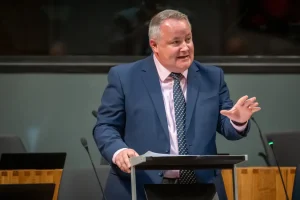
Auditor General Adrian Crompton said the accounts showed financial pressure within the NHS was continuing despite repeated increases in cash funding.
He said: “The picture painted by those accounts is of financial pressure on the NHS that is not being contained, let alone reversed.
“That has been a persistent pattern during my eight-year term, compounded by the effects of the COVID-19 pandemic and rising demand.
“As I have pointed out previously, this is despite the Senedd passing the NHS Finance (Wales) Act 2014, more than a decade ago, to set the financial and planning duties that NHS bodies are expected to meet.
“Turning the tide on NHS spending will not be easy, but turn it must.
“For the NHS, as for public services in general, a much sharper and relentless focus on the delivery of value for money is needed, alongside a mindset shift to one focused on prevention and the longer term.”
Audit Wales has also published an updated NHS Wales Finances Data Tool containing further details about the financial performance of individual NHS organisations.