


TRAIN stations across Wales have been highlighted in a major new survey by leading women’s charity Soroptimist International Great Britain and Ireland (SIGBI), which examined safety standards at stations across the UK.
The survey highlighted concerns at a number of Welsh stations, including Saundersfoot, where surveyors noted that passengers face a mile-long walk to the town centre along an unlit road, and Chepstow, where concerns were raised about a lack of CCTV coverage and emergency phone provision.
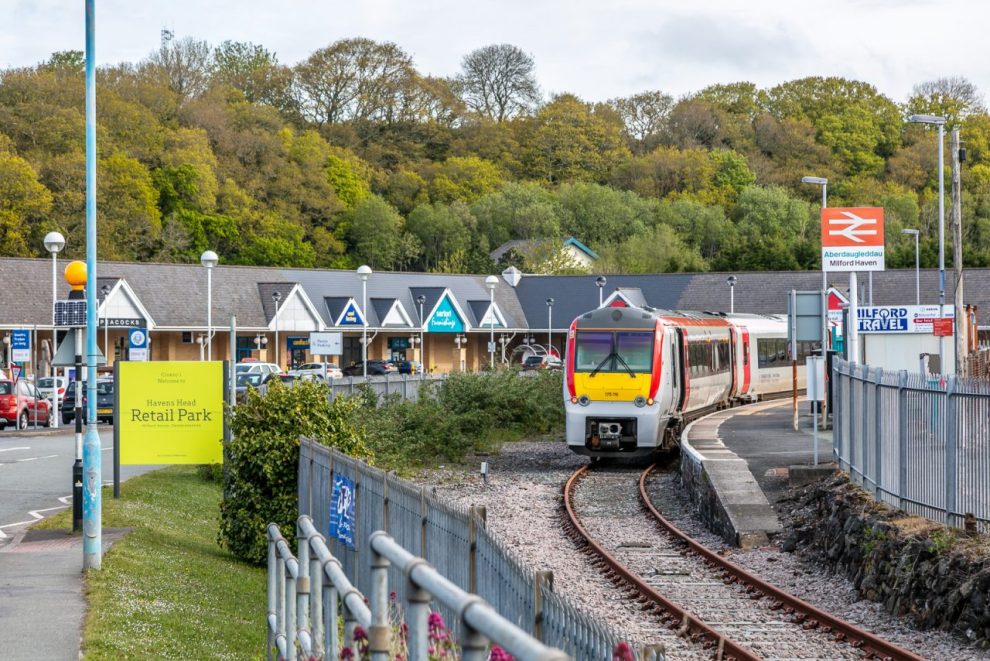
The report also identified many local stations, including Pembroke, Pembroke Dock, Kilgetty, Penally, Milford Haven and Narberth, as being permanently unstaffed. Surveyors warned that limited staffing, isolated station environments and gaps in emergency provision can leave women feeling vulnerable, particularly during evening journeys.
While Cardiff Central, Llandudno and Aberystywth were highlighted as examples of good practice, the findings reflect wider national concerns about passenger safety and access to assistance, particularly in rural areas.
Across the UK, only 10 percent of stations are staffed at all times, 30 percent are permanently unstaffed and fewer than half (44 percent) display clear information about who is responsible for passenger safety.
Gillie O’Rourke, President of SIGBI, said: “These key measures, which can help women feel more secure, remain inconsistent, patchy and mixed at best. This leaves women increasingly vulnerable when travelling by train.”
SIGBI has been campaigning for safer railways for women and girls for over 30 years. First launched in 1996, ‘The Future of the Railways’ was an investigation into personal safety on the railways, which the charity’s members – known as Soroptimists – used to lobby the Government into taking action to do more to protect women on public transport.
It was launched in response to a Soroptimist being attacked on a train in the London area.
Soroptimists carried out grassroots research into the experiences of female passengers, visiting more than 500 overground stations across Britain. Their work also included consultation with station managers and rail staff to build a comprehensive picture of safety and accessibility on the rail network.
SIGBI published a report making recommendations to the UK Government on how to improve safety in stations, claiming the Government’s approach to passenger safety in railway stations was ineffective.
In 2024, the project was relaunched to ask the same questions of the UK’s railway stations, to see how much has changed. The results of the new survey are the outcome of 388 surveys undertaken by Soroptimists covering 373 stations and 985 platforms.
The survey’s aims were to assess the visibility of railway staff, emergency help points, and station signage, and to evaluate the clarity and quality of safety information.
The new findings expose a persistent gender safety gap across the rail network, raising urgent questions about accountability, visibility, and the protection of female passengers after dark.
“It is shocking that in almost 30 years so little has changed, the same issues persist, the same voices are going unheard, and progress feels more like a circle than a line,” Gillie added.
In response to the investigation’s findings, SIGBI is calling for the introduction of minimum safety standards for all stations, particularly during the evening. The charity believes urgent action is needed to address the gaps in basic safety provision across the rail network.

This includes reliable emergency help points, monitored CCTV, adequate lighting and clear emergency contact information.
SIGBI is also pressing for greater accountability, with clear signage showing who is responsible for safety, alongside improved accessibility measures and facilities to ensure all passengers – especially women and girls – can travel with confidence.
Lindsay Green, Programme Director at SIGBI, said: “Our goal is to stand up for women and girls, advocating for equal rights, opportunities, and representation. The relaunch of our railway safety project has been key in advancing this important issue and bringing it to the forefront of policy makers’ agendas.
“The timing of the survey’s relaunch happened to coincide with the British Transport Police’s last report which stated that violence against women and girls on British railways had risen by more than 50 percent since 2021. Clearly, more needs to be done, and urgently.
“We’re proud to be playing our part in helping to shape a safer environment for women when travelling.”
In addition to its work with this report, SIGBI is carrying out ‘Bystander Awareness’ training in communities up and down the UK, in a bid to help further identify and prevent violence against women and girls.
Read SIGBI’s Railway Station Safety Survey Report here: https://sigbi.org/railwaysurvey/