

CONSIDERATIONS over otters, squirrels, hares and hedgehogs have been made amid an Anglesey fishery’s plans to develop 18 touring caravan pitches.
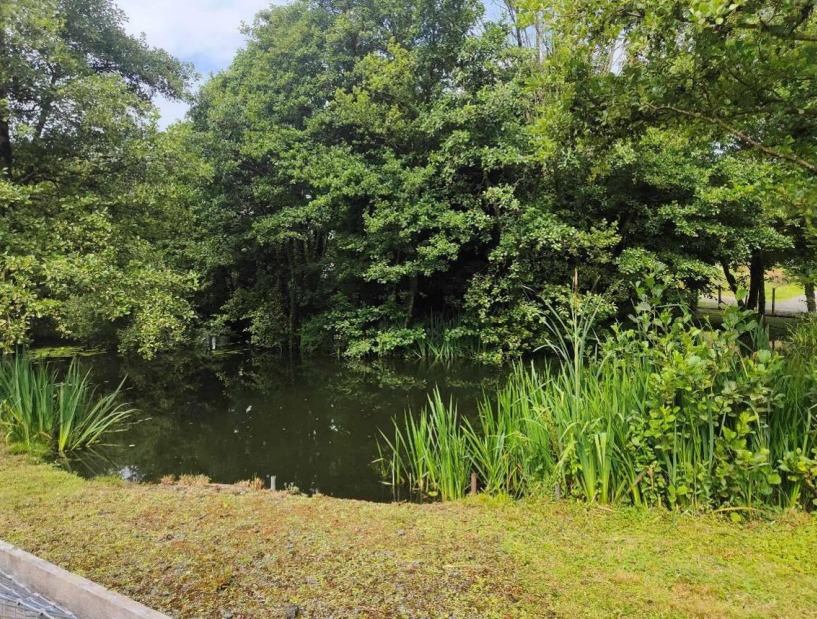
Anglesey County Council has received a full application for the change of use of land at the Llyn y Gors fishing lakes at Llandegfan.
Planners will consider the scheme to site the touring caravans with landscaping and associated works at the site which is near Menai Bridge.
The application is part of a commercial fishery and caravan site.
It has been made by Mr M Morris of Llyn y Gors through the agent Rhys Davies of Cadnant Planning.

The application included a preliminary ecological assessment, carried out on July 16, 2024, but which refers to a proposal to develop 20 touring caravan pitches.
A data search in the report had revealed a number of bat records and other protected and other wildlife, with 23 bat species revealed within a 2km search area.
Data had also noted 22 common frogs, four common lizards, 18 common toads, seven great crested newts, nine hares, 31 hedgehogs, five otters, five palmate newts, 16 red squirrels, five slow worms and one smooth newt.
The report stated that the proposed development work was “unlikely to have any significant negative impact” on bats or habitats.
There was “no risk” to potential roosts or any “negative impact” on bat movements as a result of “inappropriate! external lighting, the report said.
There was only a “very minor potential” for hares, hedgehogs, herpetofauna species and otters to access the area” and only a “…minor potential” for nesting birds in removed vegetation at certain times.
There was also “no potential” for any “negative impact” on hares, hedgehogs or most herpetofauna species.
Common toads were also “likely to be spawning” in the ponds only at certain times and there was a “very minor chance” that reptile and amphibian species, including great crested newts may be present in terrestrial habitats..
While the risk to this species posed by the proposed works was described as “negligible,” precautionary methods of working were recommended.
The report’s key message stated:

“The only habitats to be impacted by the proposed works are an area of improved grassland and an area of disturbed ground with encroachment of tall ruderal vegetation.
“All plant species present are common and widespread. There will be no significant negative ecological impact as a result of habitat loss,” it had stated.
Recommendations had included work to ensure no negative impact on bats, herpetofauna, freshwater habitats, nesting birds or otters.
A protected species survey had proved “negative” with no field signs or direct sightings of any protected species, and no potential bat roost features present.
There was “no evidence” of hedgehogs and hares in the development area, although the report said “the species may be accessing the area for foraging or commuting across the site…”
No otter records were returned in a data search within 900m of the development site and were not recorded in a survey.
However, “it was possible” that otters could occasionally “take advantage of the prolific food source present in the order of multiple stocked fishing ponds and high concentrations of nesting waterfowl,”it stated.
But the chance of otters being present was “greatly reduced by the presence of wire fencing” around the lakes.
“While records of red squirrels were returned in the data search, the proposed works “will not result in the loss of any habitat of significant value to this species,” it stated.