

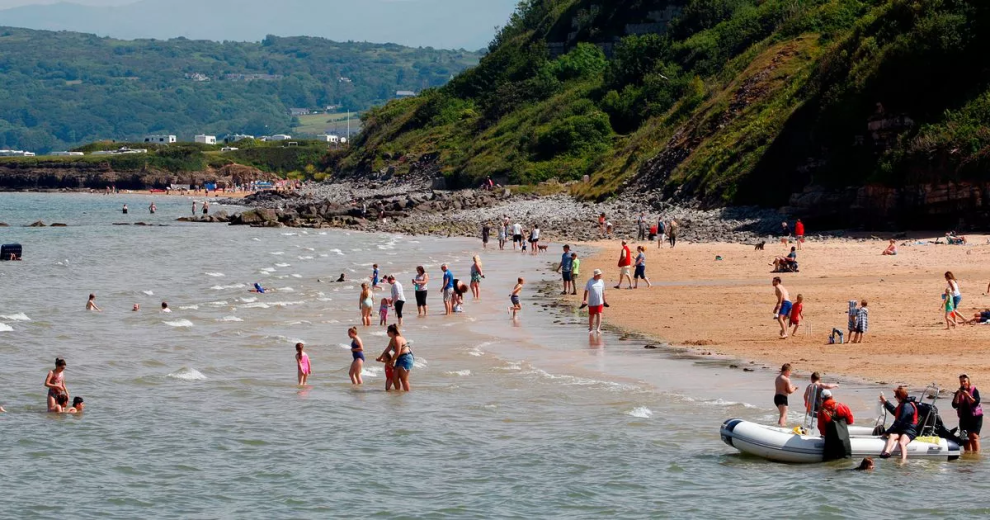

Wales has experienced its hottest summer on record, according to provisional figures released by the Met Office.
The mean temperature across the nation between June and August reached 16.06C, narrowly surpassing the previous high of 16.04C set in 1995. The figure is calculated by averaging daytime maximums and overnight lows throughout the three summer months.
July proved to be the peak of the heat, with 12 July registering the country’s hottest day of the year when 33.1C was recorded at Cardiff’s Bute Park. Just last week, Hawarden in Flintshire marked the hottest August Bank Holiday Monday on record at 29.6C.
While these temperatures fell short of the 37.1C record-breaking day recorded in Hawarden in July 2022, this summer stands out for the persistence and extent of the heat. Wales met official heatwave thresholds on four separate occasions – once in June, twice in July, and again in August.
The criteria for a heatwave in Wales require three consecutive days above 25C, or 26C in the far south-east of the country. The first occurred as early as the summer solstice in June, with further episodes following in mid-summer.

Beyond the heat, the season was also the driest and sunniest since 2022. Much of eastern Wales received only half its usual rainfall, while even the wettest regions, including parts of Eryri National Park and upland areas of mid and west Wales, saw only average levels. Overall, Wales recorded 79% of its typical summer rainfall.
The long, dry spell came on the back of the country’s driest spring in more than half a century, leaving reservoir levels lower than normal. By comparison, the famous drought of 1976 remains Wales’ driest summer on record, when just 85mm of rain fell.
However, the season was not without its unsettled spells. Early August brought Storm Floris, which delivered wet and windy conditions and caused localised disruption.
Why has it been so warm?
Meteorologists point to a combination of factors. Persistent high pressure systems kept skies clear and conditions calm, while parched ground meant less energy was lost to evaporation, allowing surface and air temperatures to climb further.
In addition, a marine heatwave around the UK saw sea temperatures rise by up to 3C above average at times, reducing the usual cooling effect along coastal areas.
Scientists are unequivocal that climate change is driving the trend towards hotter, drier summers. Nine of the past ten summers, from 2016 to 2025, have exceeded long-term averages. The number of days exceeding 30C has more than trebled compared with the 1961–1990 baseline.
This latest record now pushes the summer of 1976 down to fifth place in Wales’ all-time rankings, meaning four of the country’s hottest summers have all occurred since the turn of the millennium.