

TWO wind farm projects off the west and north Wales coastlines have secured UK government backing to supply electricity to the national grid, with as many as 7,000 jobs expected to be created.
One of the developments, the Erebus wind farm off the Pembrokeshire coast, would become Wales’ first floating offshore wind project. Similar schemes are already operating in Scotland, and the project is being hailed as a potential catalyst for a new industry in Wales, supporting up to 5,000 jobs over the next decade.
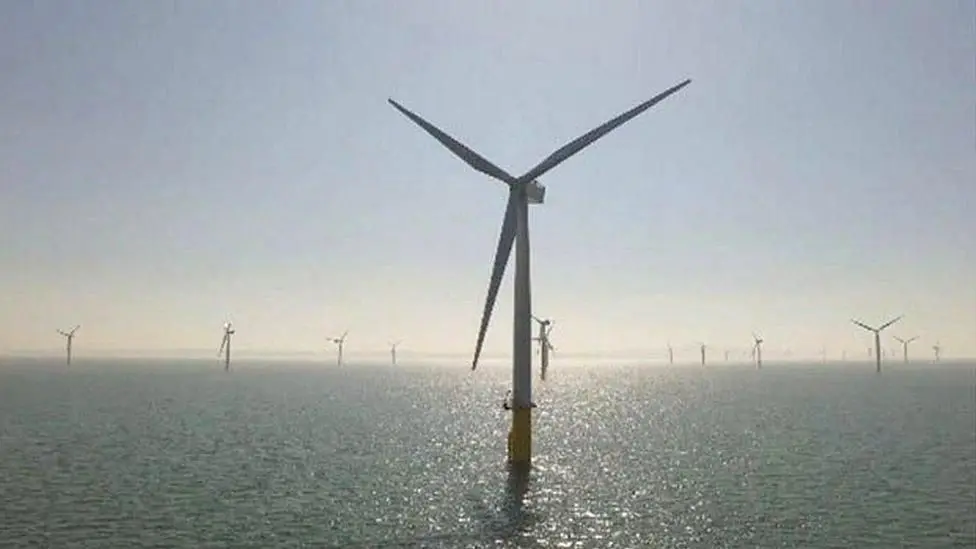
A second scheme, using conventional fixed-bottom turbines, is planned around 10km (6.2 miles) off the coast of Rhyl in Denbighshire.
Both projects have been awarded funding through a UK government scheme designed to encourage investment in renewable energy.
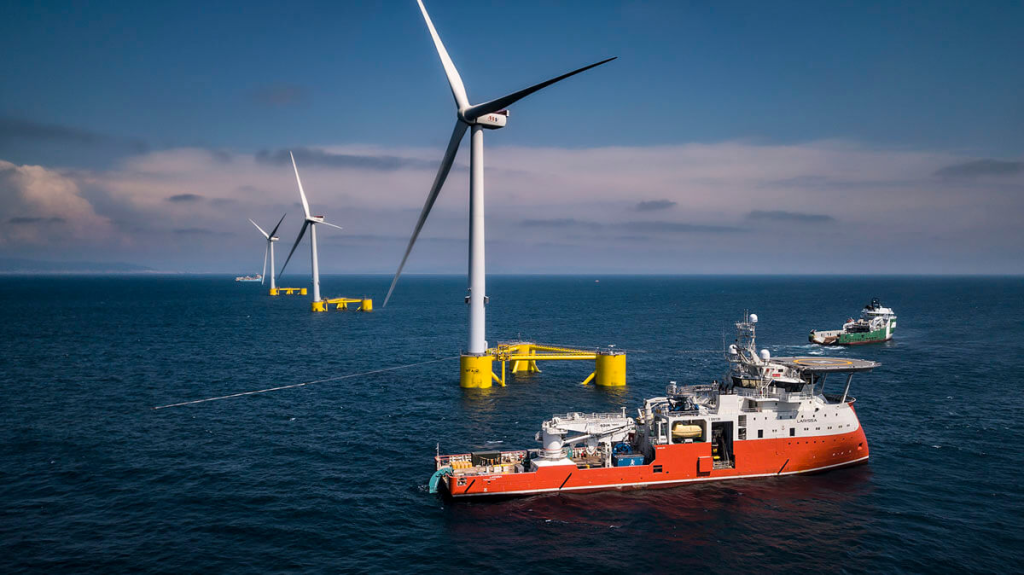
What is a floating wind farm?
Unlike traditional offshore wind turbines, which are fixed directly into the seabed, floating turbines sit on large steel platforms that are tethered to the seabed.

This approach allows turbines to be built, maintained and serviced on land before being transported by ship to deeper waters further offshore, where wind speeds are typically higher.
The longer-term ambition is to establish the Celtic Sea as a major centre for floating offshore wind. The Crown Estate is already leasing three large-scale projects in the area, with around 264 turbines expected to be installed by the mid-2030s.
The Erebus project would have a generating capacity of 96MW, enough to power around 90,000 homes.
Plans by Blue Gem Wind, which is co-owned by French energy company Total, involve installing between seven and 10 turbines in the Celtic Sea, approximately 45km (28 miles) off the Pembrokeshire coast.
While modest in scale compared with other offshore wind developments, the scheme has been described as a “pathway project” for the Celtic Sea.
As the first project to deploy floating wind technology in the area, there is currently limited infrastructure, supply chain capacity and workforce in Wales to support construction. The turbines, which can be as tall as skyscrapers, are built on land before being transported by sea to their final locations.
Ports around the Celtic Sea are also not yet equipped to handle the scale of infrastructure required, although three Welsh ports — including Port Talbot — are in contention for contracts linked to future developments.
Scotland already hosts two of the world’s largest floating wind farms, Hywind Scotland and the Kincardine Offshore Wind Farm. These will soon be joined by the Pentland and Salamander projects, as well as the 560MW Green Volt scheme, currently the world’s largest, which has also secured UK government funding.
It has been a decade since any offshore wind farm was built in Wales. Alongside Erebus, a more traditional project, Awel y Mor, has also secured backing.
Majority owned by energy company RWE, Awel y Mor would comprise between 34 and 50 turbines, located about 10km (6.2 miles) off the north Wales coast, adjacent to the existing Gwynt y Mor wind farm.

The development could generate enough electricity to power around half of all homes in Wales, and the company says it has the potential to create 2,000 jobs during construction.
Becky Gittens, MP for Clwyd East — the constituency where Awel y Mor will be built — said the funding decision represented “a major step forward for… our local economy, and the UK’s energy security”.
Aled Jones-Griffith, chief executive of Llandrillo Menai, told BBC Radio Cymru’s Dros Frecwast it would “bring opportunities to young people and perhaps lead them to consider new career options”.
“It is very positive news about Awel Mor and especially for our campus at Rhyl where we have a specialised centre to deal with wind energy,” he said.
Abi Beck, of trade body RenewableUK Cymru, told BBC Radio Wales Breakfast that floating offshore wind farms were “the new revolution”.
She compared the funding arrangement to a “fixed-term mortgage”, saying: “The government has agreed a price to pay for electricity, and that price won’t change.
“That means it’ll keep bill payers’ costs down and will make sure we don’t have to import more gas – we don’t have control over that price.
“We’re protecting our own energy security and protecting our bill payers as well.”
Responding to the announcement, the Secretary of State for Wales, Jo Stevens, said: “It is a massive a vote of confidence in Wales’ clean energy industry which is already delivering the well-paid, highly-skilled jobs of the future with the potential to bring thousands more.
“The UK government is working with investors to develop home-grown clean power which will secure our energy supply and bring down bills for good. These new projects in the seas off Wales will help us achieve those goals.”