
The satirical candidate with a bin for a head has become a serious talking point after Britain’s main parties stepped aside in Clacton
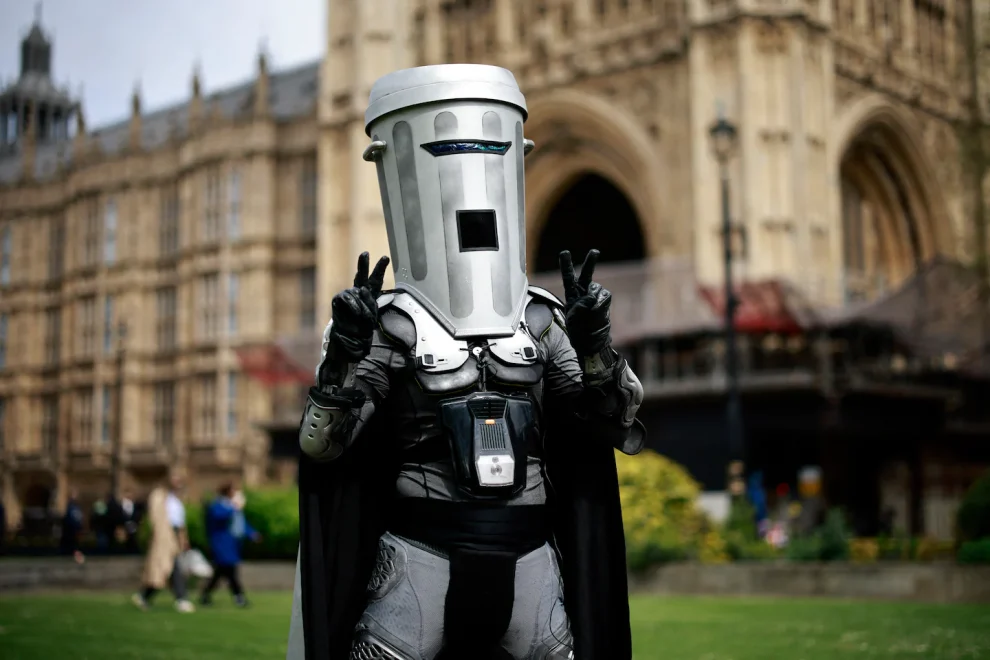
COUNT BINFACE has always claimed to be an intergalactic space warrior. This week, he may also be the most visible challenger to Nigel Farage.
The silver-helmeted satirical candidate, best known for appearing at election counts beside prime ministers and party leaders, has suddenly become one of the most talked-about figures in British politics.
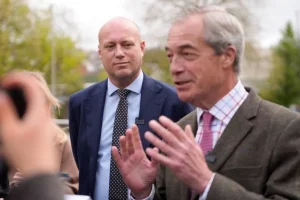
That is because the Clacton by-election triggered by Reform UK leader Nigel Farage has taken an unexpected turn. Labour, the Conservatives and the Liberal Democrats have all declined to field candidates, dismissing the contest as a political stunt.
The result is a very British spectacle: one of the country’s most recognisable politicians potentially facing his most famous opponent in the form of a man dressed as a dustbin from outer space.
Binface, created by comedian and writer Jon Harvey, is not new to the political stage. He has stood against Theresa May, Boris Johnson, Rishi Sunak and Sadiq Khan, using deadpan humour and joke manifesto pledges to mock the language and rituals of modern politics.

His policies have included capping the price of croissants, bringing back Ceefax and making Piers Morgan a zero-emissions zone. They are absurd, but that is the point. In an era of three-word slogans, culture wars and performative outrage, Count Binface often sounds only slightly less plausible than the real thing.
That is why the joke has lasted.
Britain has a long tradition of novelty candidates, from the Monster Raving Loony Party to Lord Buckethead. But Binface has become a politician for the meme age. He is instantly recognisable, TV-friendly and tailor-made for social media. A photograph of him outside Parliament says more about the mood of the country than many speeches from the despatch box.
There is also a sharper political edge to the humour. Farage says the by-election will allow voters to judge him directly amid questions over his finances. His critics say the contest is a distraction from scrutiny. Binface, meanwhile, has simply turned up in a cape and allowed the absurdity to speak for itself.
For anti-Farage voters in Clacton, he may become a protest vehicle. For Farage supporters, the absence of major party candidates will be presented as proof that the establishment fears him. For everyone else, it is another reminder that British politics increasingly looks like satire with a ballot paper attached.
Nobody seriously expects Count Binface to become prime minister. Even by current standards, that would be a stretch.
But his sudden prominence says something important. Voters are tired, angry and often deeply cynical about politics. When mainstream parties step back, the joke candidate steps forward. And when the joke candidate starts to look like the clearest alternative, the joke is no longer only on him.
Count Binface has not conquered Westminster.
But for one strange political moment, Westminster has come to him.