
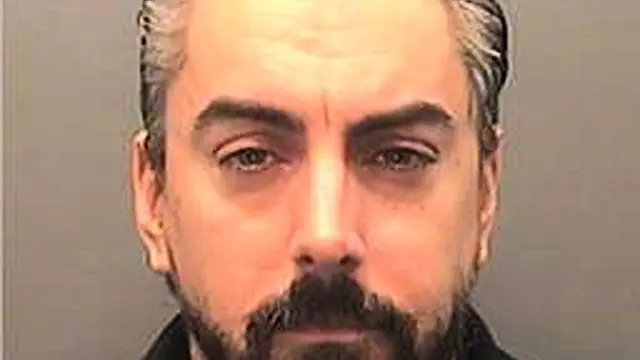
Two men have appeared in court accused of murdering convicted paedophile and former Lostprophets frontman Ian Watkins, who died following an attack at Wakefield Prison.
Watkins, 48, was fatally injured during an incident at the high-security jail shortly after 9.30am on Saturday. He was serving a 29-year sentence for a series of child sex offences.
Rashid Gedel, 25, and Samuel Dodsworth, 43, appeared separately before Leeds Magistrates’ Court on Monday morning. During brief consecutive hearings, both men spoke only to confirm their names and dates of birth.
No pleas were entered, and both defendants were remanded to appear before Leeds Crown Court on Tuesday.
Watkins had been imprisoned since 2013 after admitting numerous child sex offences, including the attempted rape and sexual assault of a child under 13. Although he denied rape, he pleaded guilty to conspiracy to rape a child, three counts of sexual assault involving children, seven counts relating to indecent images of children, and possession of an extreme pornographic image depicting a sex act with an animal.

During sentencing, Mr Justice Royce described the case as one that “broke new ground” and “plunged into new depths of depravity.” Watkins was also subject to an additional six years on licence should he ever have been released.
The disgraced musician was previously attacked inside Wakefield Prison in 2023, though his injuries at the time were not life-threatening.
Life behind bars at Wakefield
Wakefield Prison, which houses more than 600 inmates, is known for holding some of the UK’s most dangerous offenders. Among those believed to be currently serving time there are Roy Whiting, the murderer of eight-year-old Sarah Payne, and Reynhard Sinaga, convicted of 159 sexual offences against 48 men in 2020. Both men have reportedly been assaulted within the prison in recent years.
The facility has previously held some of the country’s most notorious criminals, including Harold Shipman, Ian Huntley, and Piran Ditta Khan.
A report published last month revealed that violence within the prison had “increased markedly” since its last inspection in 2022. It also criticised the prison’s deteriorating infrastructure, citing “repeated breakdowns of essential equipment” and “significant failures” in perimeter security systems.
From fame to infamy
Born in Pontypridd, Watkins was once one of Wales’ most recognisable musicians. Lostprophets, formed in 1997, became one of the UK’s leading rock bands, achieving 11 Top 40 singles and a number one album between 2002 and 2010.
At the height of their success, the band sold millions of albums worldwide. However, their career came to an abrupt end in 2013 when Watkins was convicted of his crimes.
Prosecutors described him as a man corrupted by fame, drugs, and power, who committed acts “beyond imagination.” The court heard that Watkins used his celebrity status to manipulate others, often under the influence of drugs including crystal meth.
Following his conviction, the remaining members of Lostprophets released a statement expressing that they were “heartbroken, angry, and disgusted” by his actions, adding that their “hearts go out” to his victims.
Des Mannion, the NSPCC’s national head of service for Wales, said at the time:
“Watkins used his status and global fame as a means to manipulate people and sexually abuse children.
But we must nevertheless remember that this case isn’t about celebrity, it’s about victims. And those victims are children.”