


A NEW meaning was given to the ceremonial Eisteddfod plea “A oes heddwch?” (“Is there peace?”) during the 1945 National Eisteddfod in Rhosllannerchrugog, when it was announced from the stage that Japan had surrendered and the Second World War was over.
The announcement came suddenly in the middle of a choral recitation competition. The Eisteddfod secretary, JT Edwards, stepped onto the stage and told the stunned audience the historic news.
A Western Mail correspondent later wrote: “For a moment there was complete silence. Everyone seemed stunned, not grasping the significance of the announcement. Then the floodgates opened. The crowd rose to their feet, shouting and applauding loudly until it seemed as if the roof might lift. Few in the pavilion that day had dry eyes. Everyone knew what it would mean for their husbands and sons still serving in the Far East.”
After the emotional celebrations, it was announced that a thanksgiving service would be held. The Western Mail summed up the moment: “So the Rhos Eisteddfod which began during the Second World War closed with the world at peace.”
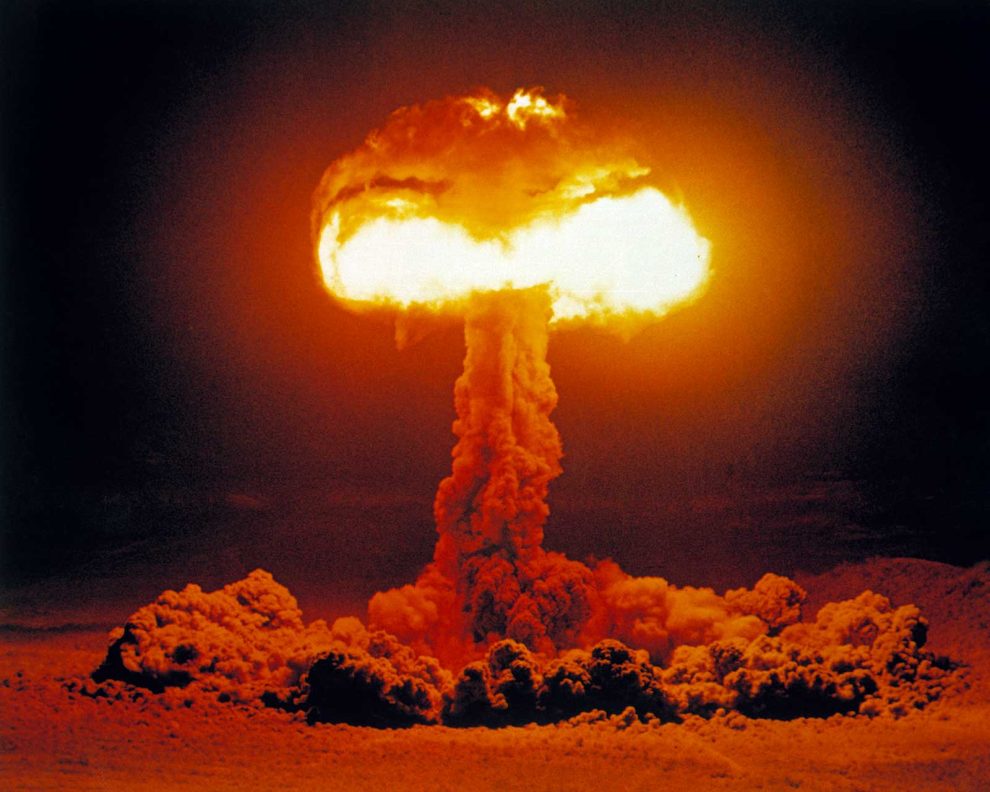
The Eisteddfod took place just days after the United States dropped the first atomic bomb on Hiroshima, killing an estimated 166,000 people.

To mark the 80th anniversary of that devastating event, and following a minute’s silence in the Pavilion, Super Furry Animals composer Cian Ciarán presented a sound installation within the Gorsedd Circle on the National Eisteddfod field.
Inspired by visits to Japan, Hibakusha is one of the art projects featured during the Wales-Japan Year – a year-long celebration of links between the two nations. The six-hour work recreates the flight of the Enola Gay, from take-off to the release of the ‘Little Boy’ bomb over Hiroshima, using 12 speakers placed around the stone circle to create a 360-degree sound experience.
Cian said he hoped the piece would prompt people to reflect on the human cost of Hiroshima and inspire peacebuilding – echoing the Eisteddfod’s own ceremonial call for peace.
“I believe, given the current geopolitical climate, it’s more important than ever for us to reflect, and this piece is timely in reminding us of the catastrophic effects war and conflict can have on people’s lives,” he said. “The National Eisteddfod has always offered a space for reflection and peacebuilding. I chose not to perform so people could focus on the subject and their own experience within the installation.”
The work is one of more than 20 art projects in the Wales-Japan Cultural Programme 25, led by Wales Arts International in partnership with the Welsh Government and the British Council. The programme aims to strengthen cultural and economic ties between the two countries.
As part of the Eisteddfod programme, Cian will appear alongside peace campaigner Catharine Huws Nagashima, a Welsh migrant to Japan, to discuss remembrance and peacebuilding in a talk titled Remember, Remember, Remember. They will be joined on stage by Jill Evans, Vice-Chair of the Wales Peace Academy – Wales’ first dedicated peace institution.
Jill Evans said: “The Wales-Japan Year gives our two nations the opportunity to learn from each other while sharing our rich cultural heritage.”
Eluned Hâf, Head of Wales Arts International, added: “The Wales-Japan Year is an opportunity for our two nations to share reflections and learn from each other through art and culture.”