

ARWAIN DGC has given Welsh vets and farmers a unique opportunity to see how innovative technology and livestock health practices in Europe are reducing the risks of antimicrobial resistance (AMR) and to become ambassadors for responsible stewardship in Wales.
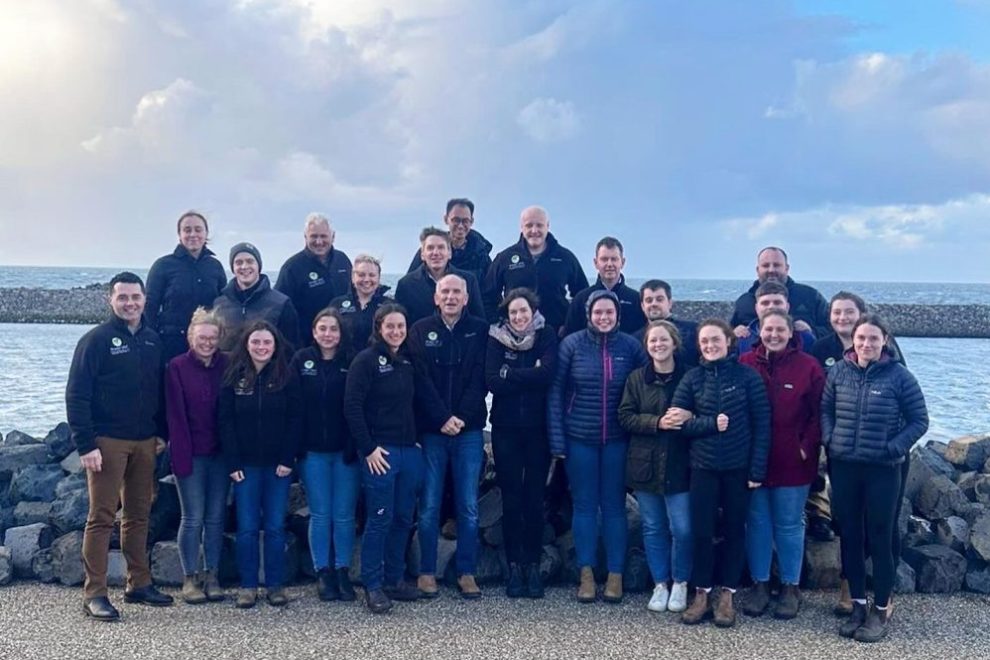
The ‘Arweinwyr Arwain DGC Leaders’ Study Tour’ to the Netherlands provided the 21-strong group with a valuable understanding of the work being done on the Continent to combat antibiotic resistance, and a greater appreciation of the pioneering work being undertaken voluntarily in Wales.
Arwain DGC is a Welsh Government-funded programme dedicated to preventing antibiotic resistance in animals and the environment. Working with partners across the agricultural and scientific community, Arwain DGC supports farmers and vets through data-driven decisions, innovative technologies, and best practices.
The Study Tour participants gained firsthand insights into sustainable practices for antimicrobial use in the Netherlands, which they will share with the wider agricultural and veterinary communities at events, conferences, and through social media as AMS (Antimicrobial Stewardship) Ambassadors in Wales.
During the tour, the ambassadors learned about innovations in AMS, viewed cutting-edge technology in action, and compared the approaches to responsible antimicrobial use in Wales and the Netherlands – and how the activities complement each other.

AMR is a global challenge, and Wales’ successful approach is largely based on voluntary initiatives and collaborative engagement, with programmes like Mentera-led Arwain DGC emphasising education and professional responsibility. The Netherlands has adopted a different and stricter approach to antibiotic reliance, which is supported by government legislation and mandatory regulations.
From corporate entities to research institutions, sites showcasing technological innovation to practical on-farm applications, the diversity of activities and accessibility to the latest information and innovation provided the Study Tour group with an invaluable experience.
The Study Tour was led by Rhys Jones, Arwain DGC Technical Lead, who said the experience put into context the importance, scope, and success of the work being carried out in Wales.
He said: “The Study Tour offered an invaluable experience, providing the group with a deeper understanding of AMR, particularly through observing the Netherlands’ approach through regulation to reduce antibiotics by 76.4% since 2009 (MARAN 2024).
“This demonstrates the potential for large-scale reduction in antibiotic use and is comparable to similar reductions achieved on some farms we have worked with through the Arwain DGC programme.”
The diversity of the itinerary, from corporate entities to research institutions and sites showcasing technological innovation to practical on-farm applications, enhanced and inspired the Arweinwyr Arwain DGC Leaders’ AMR knowledge and how to sustainably reduce the need to use antibiotics.
A key takeaway from the Study Tour was the cohesive nature of each sector, demonstrating a clear understanding of the issues surrounding antimicrobial resistance and working in harmony to reduce reliance on antimicrobials.
Rhys said: “Wales is also bridging the gap, and with our new ambassadors, we can inspire greater change, and I am confident this whole experience has empowered our Arweinwyr Arwain DGC Leaders in their ambassadorial role.
“The additional background knowledge garnered on the Study Tour will help bring about real change and inspire farmers, veterinarians, students, and young farmers alike to responsibly use antimicrobials to safeguard future efficacy and animal and human health.“
The four-day Study Tour included visits to several leading farming locations, academic bodies, and companies specialising in technology and scientific research.


The first day focused on technology and innovation with a visit to Lely Industries, a leading dairy robot manufacturer, to learn how advanced technology and data-driven decisions can reduce the need for antibiotics on dairy farms – with the ‘Lely Zeta’ – an AI calving and barn monitor of particular interest to the group. Visits to two dairy farms followed at Farm Nescio and Floating Farm.
Industry strategy and practical application were discussed on the second day, including a visit to Nedap, a multinational technology company, to explore the role of sensor technology in modern livestock management and how it enables targeted health interventions. Also, a visit to a major veal producer, the VanDrie group, provided insight into corporate-level strategies and the successes and challenges of large-scale antibiotic reduction programmes within the food supply chain.
Practical implementation and industry trends were also on the itinerary, with visits to large-scale and individual farmers to see how AMS strategies are being implemented and the broader industry trends that support them. At Farm Nescio, Erik van Norel’s sheep farm in Oosterwolde, and Wim & Jolanda Aalbers’ calf-rearing enterprise in Zwolle the group experienced practical on-farm applications.
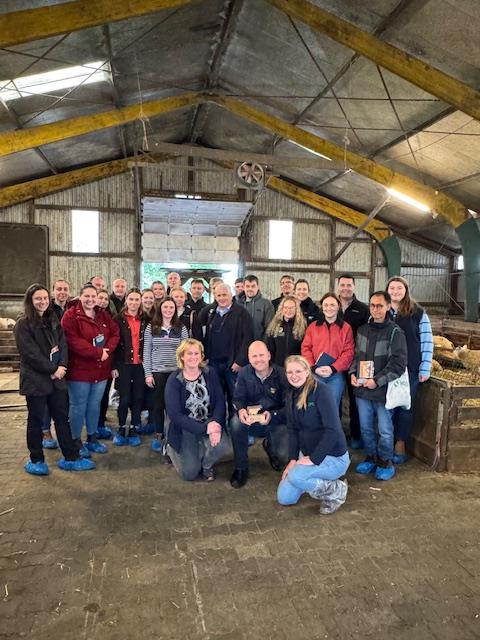
Clwyd farmer Glyn Roberts said: “I was inspired, through first-hand experience of seeing data used effectively to reduce the use of antibiotics on farms.
“I could envisage how reducing the use of antibiotics leads to a reduction in costs, and a positive impact on the herd health, and as a result of this, the long-term sustainability of the business.”
The day also included meetings with representatives of NSFO (the Dutch goat and sheep breeders’ association) and a presentation by representatives of the global animal nutrition company, De Heus. This was followed by a visit to one of the largest agricultural events in Europe – the Rundvee & Mechanisatie Vakdagen (RMV) trade fair in Hardenberg.
The final day focused on the scientific and academic foundations of AMS, which took the group to Wageningen Bioveterinary Research. Under discussion was the country’s ‘One Health’ approach and the successful national strategy for reducing antibiotic use.
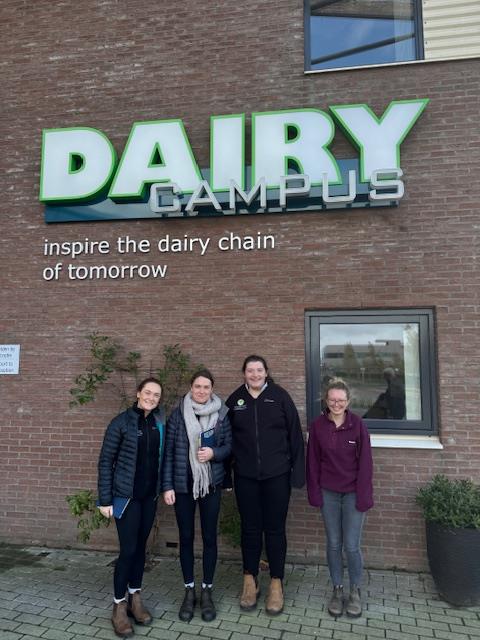
A tour of the Wageningen Dairy Campus then demonstrated how scientific findings, such as selective dry cow therapy, are implemented on a working farm, and how technology is used to collect data for proactive health management.
Carys Owens from Pembrokeshire, a vet at Prostock, said: “As a farm vet, it was interesting to see how other countries are facing AMR issues with a ‘One Health’ approach.
“This trip has provided me with insights into how we can take alternative approaches to refining the use of antimicrobials on Welsh farms.”
The multi-award-winning Arwain DGC programme aims to continue positioning Wales as a global leader in the fight against antimicrobial resistance (AMR). This objective is achieved by nurturing collaboration, promoting innovation, and sharing knowledge to ensure that antibiotics remain effective for animal and human health for future generations.
Arwain DGC’s pioneering work was recognised earlier this year at the Antibiotic Guardian 2024/25 Shared Learning & Awards, and last month at the Food and Agricultural Organisation of the United Nations 2025 Global Conference on Sustainable Livestock Transformation.
The ‘Arweinwyr Arwain DGC Leaders’ Study Tour’ to the Netherlands will be featured in an edition S4C’s Ffermio programme in the new year.