
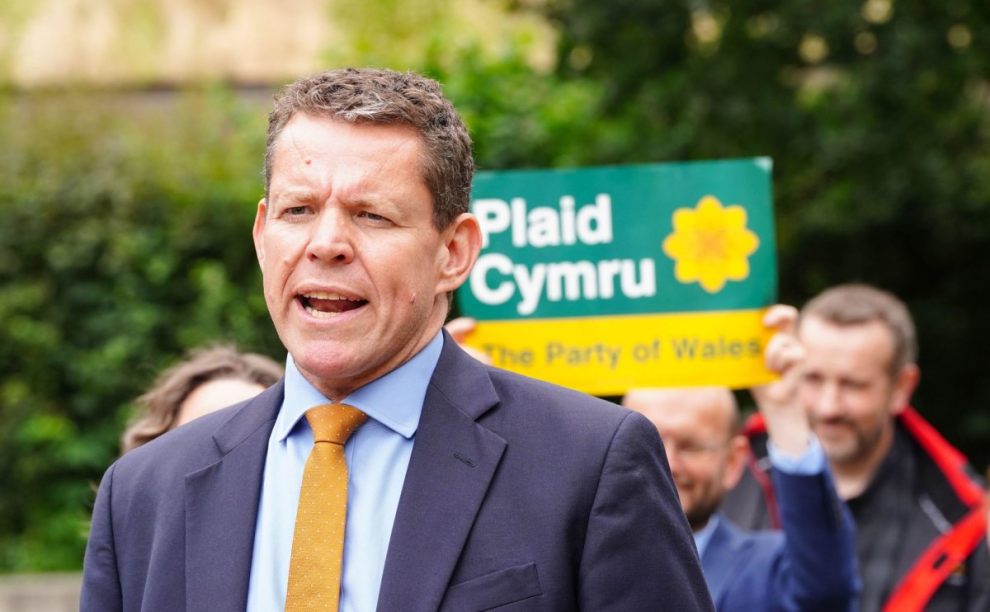

As Plaid Cymru marks a century since its founding in 1925, new polling from YouGov paints a striking picture of a party that, for many, remains the foremost champion of Welsh interests – yet still struggles to shake off old perceptions.
The survey, published this week, shows that more than half of people in Wales believe Plaid is the best party to stand up for the nation – far outpacing Reform UK (11%) and the other major parties. Even among Labour voters, six in ten see Plaid as the strongest defender of Welsh interests, while a third of Conservative supporters agree.
It’s a fitting moment for the party’s milestone birthday. From winning its first Westminster seat in 1966, to playing a pivotal role in securing devolution and safeguarding the Welsh language, Plaid has long carved out a distinctive place in Welsh political life. More recently, under leader Rhun ap Iorwerth, the party has entered into a cooperation agreement with Labour on 46 policy areas – a pragmatic approach aimed at delivering tangible results while keeping its eye firmly on the 2026 Senedd elections.
Favourability: A clear lead
The poll finds Plaid Cymru is the most positively viewed political party in Wales, with 46% of respondents holding a favourable view. Only 36% take a negative view – giving Plaid a healthy net favourability score of +10.
By contrast, Labour (-30), Reform UK (-28) and the Conservatives (-51) trail far behind, with the Tories emerging as the least liked party in Wales. Even the Greens (-1) and Liberal Democrats (-3) fail to match Plaid’s standing.
Significantly, this goodwill extends beyond Plaid’s traditional base. Nearly two-thirds of Labour voters express a positive opinion of the party, and even one in five Conservative and Reform UK voters feel the same.
Perceptions: Purposeful, yet not fully understood
The Welsh public is more likely to see Plaid as having a clear sense of purpose (33%) than being aimless (25%). One in three view the party as moderate, while only 20% consider it extreme.
But the poll also exposes vulnerabilities: opinion is evenly split on Plaid’s competence (27% vs 26%) and trustworthiness (28% vs 26%). A greater share view the party as out of touch (34%) than in touch (24%), and many still believe Plaid serves its own interests over the public good.
Perhaps most telling is the enduring perception that Plaid is primarily for Welsh speakers. Overall, 35% see it that way – although this view is much stronger among the over-65s (50%) than among younger voters (just 14% in the 16–24 age group). In fact, younger generations are significantly more likely to see Plaid as a party for all Welsh people.
The Welsh language and identity
On one issue, Plaid’s dominance is unchallenged: 61% of people believe it is the best party on the Welsh language – ten times more than any other party.
The polling also underscores Plaid’s identity-driven appeal. A large majority (80%) believe the party cares about Welsh speakers, while 68% say it cares about people born in Wales. By comparison, only 19% think it cares about those born in England – a notable finding given that this group makes up a fifth of Wales’ population.
Challenges on bread-and-butter issues
Despite strong cultural credentials, Plaid lags behind rivals on core policy areas. Just 10% see it as the best party for the NHS, well behind Labour (19%) and Reform UK (16%). Only 6% back Plaid on the economy, and just 5% see it as strongest on immigration – dwarfed by Reform UK’s 30%.
The picture is similar on environmental issues, where the Greens dominate (34%) and Plaid trails at 7%.
A party at a crossroads
The findings suggest that Plaid Cymru enters its second century with enviable goodwill and a unique position as Wales’ most favourably viewed party. Its challenge now is to translate cultural authority and national pride into trust on everyday issues – from healthcare and the economy to environmental policy.
With the 2026 Senedd election looming, and polls placing Plaid neck-and-neck with Reform UK, Rhun ap Iorwerth’s task is clear: to prove that the party can not only stand up for Wales, but govern it.