

WALES’ first-ever dedicated women’s health minister has promised a major overhaul of endometriosis and abortion services.
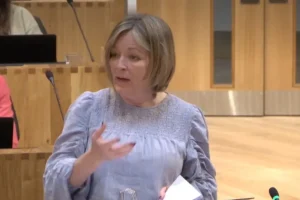
Addressing Senedd colleagues on July 7, Blaenau Gwent Caerffili Rhymni MS Delyth Jewell vowed to tackle the “invisibility” of women’s pain in the healthcare system
Ms Jewell, who was appointed deputy minister for social care, mental health, and women’s health in May, said these areas have lacked “sufficient attention” for too long.
The Plaid Cymru MS said she would champion carers, and said she would work to ensure more carers receive the real living wage and “parity of esteem”,
She said: “Why is it that social care receives less prominence in debate than the NHS? Why shouldn’t care workers hold the same space in our psyche as nurses and doctors?”
Speaking on the importance of mental health care, Ms Jewell highlighted the need for “a fundamental change” in how services are delivered, moving towards “open-access, same-day mental health support”.
The deputy minister revealed she had met with Professor Ann John, national adviser for suicide prevention and self-harm, and pledged to provide a written statement setting out the government’s priorities – with a focus on male suicide.
Ms Jewell also said: “For too long, women’s health has been treated as an afterthought” – and pledged to tackle women’s pain in healthcare.
“How many women have been told, ‘this might hurt’, and have been afraid to speak up and say that they are in pain?” Ms Jewell asked.
“Women’s voices should be heard. Their pain should not simply be endured. I am determined to change this.”
Ms Jewell continued: “We will be refreshing elements of the NHS Wales women’s health plan, with action this year focused on improving endometriosis and abortion services.
“I will want to hear from women directly. We’ll be commissioning work to gather women’s feedback, and we’re also carefully considering the women’s health hub model to improve consistency.”
Ms Jewell confirmed plans to host a ministerial summit on the matter on July 16, and pledged to help those struggling to get appointments, families waiting too long for diagnoses, and women who have not been believed.
She said: “I want to bring hope, to bring change, and, most of all, to be a voice for those who have not been heard. I promise I am listening.”
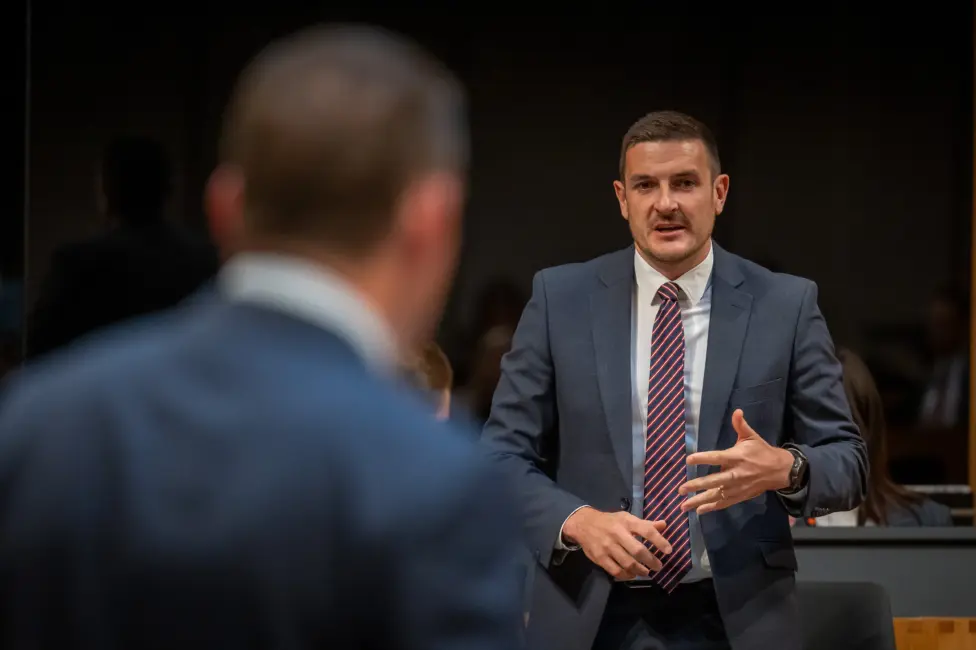
James Evans, Reform’s shadow minister for health and prevention, congratulated Ms Jewell on her appointment but reminded her that “warm words […] need to be matched by delivery, deadlines and accountability”.
Mr Evans quizzed his opposite number on her plans for a national care service, something Ms Jewell pledged would be created this Senedd term alongside a new national care academy.
But Mr Evans said he has “long opposed” its creation, describing it as an “unnecessary additional level of bureaucracy and a drain on vital public money”.
He added: “A national care academy, fair pay and conditions, better support for unpaid carers – there’s something we all want – and those significant commitments that you’ve made also need to be matched by funding.”
Mr Evans called for a “practical timetable” on this, asking when the national care academy will be online, and how the Welsh Government will ensure the national care service does not become “another layer of bureaucracy”.
In response, Ms Jewell said: “We want to make sure that what we have for people is greater than the sum of those parts, that actually there is parity of esteem for people in the workforce.
“[…] It’s bizarre, isn’t it, that there’s never been a founding moment for the care service in the way that we’ve had with the NHS. We celebrated the NHS’s birthday a few days ago; when I was talking about the same space in our psyche, we should be celebrating this work.
“Most people will come into contact with the NHS and with other areas of public service throughout the course of our lives.”
Ms Jewell spoke of the importance of increasing the status of the sector and said: “Most people only come into contact with the care service when something has either gone wrong with them or someone else they love.”
Answering Mr Evans’ questions on timescale, Ms Jewell admitted a lot of the work will take the course of the Senedd term but that some elements, such as the academy, she wants to bring forward “far earlier”.
Mr Evans also pressed Ms Jewell on her plans for suicide prevention, and welcomed the focus on male suicide.
He said: “One of the biggest groups that does suffer from suicide is young white men, and young men in general. They are the people who suffer the most and they do need to be supported.”
Mr Evans called for a dedicated men’s health plan, adding that it should not be limited solely to suicide prevention but also other issues such as cardiovascular disease and fathers struggling with newborns.
In response, Ms Jewell said: “I am prepared to engage with you and other members on this as a concept, because, of course, you’re right that certain health issues are either only apparent in men, or have a disproportionate effect on men.
“And there’s lots of work, including what I’ve said about male suicide. The upcoming cancer plan will look at improving rates of diagnosis in areas like prostate cancer. Whether we need to bring that together in one men’s health plan, I am open to the idea – let’s have further conversations.”

Labour’s spokesperson for public and preventative health, Jayne Bryant, told the Siambr that “for far too long, women’s voices and experiences in the healthcare system have not been given their due weight.”
Ms Bryant, of Casnewydd Islwyn, drew attention to the work of the previous Labour government to support women’s health – from “free period products, to menopause support, to creating women’s health hubs in every health board.”
She told the Senedd it was “disappointing” to see “no dedicated action” for women’s health in Plaid Cymru’s pledges for the first 100 days in government.
She called for the deputy minister to share the government’s plans to address endometriosis – a condition which affects one in ten women in Wales.
Ms Bryant told the Siambr that “advances are being made in diagnosis” and Wales must make sure it’s ready to adapt.
She said: “Rapid endometriosis tests have just been given the go-ahead by the National Institute for Health and Care Excellence, which will help to significantly reduce the time it takes for women to be told whether they have the condition.
“One test, I believe, provides that result in 45 minutes. Currently, getting a diagnosis can take years. So, when does the minister expect women in Wales to be able to access those new tests?”
Ms Jewell paid tribute to the work done by Labour’s Sarah Murphy and Eluned Morgan on women’s health in the last Senedd term.
She said: “It should not be normal for women to have to go for so many appointments before they get the symptom diagnosis that they deserve.
“So, I want to look at this in terms of how it is working in hubs, how it’s working in primary care, all the way through to tertiary services as well. It’s going to be a focus of the women’s health plan.”
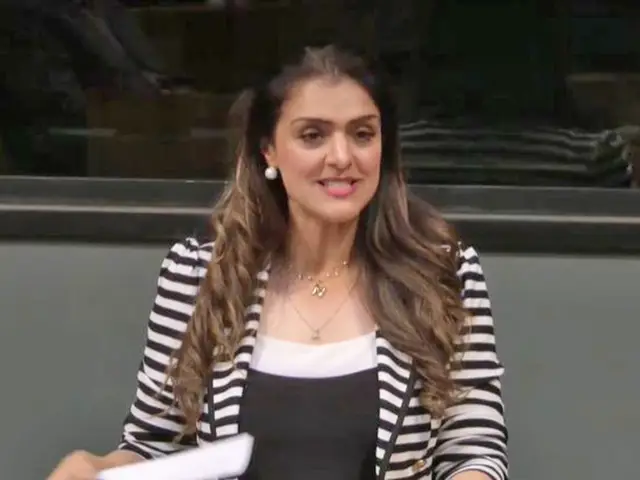
Conservative spokesperson for health and social care, Natasha Asghar, questioned the deputy minister on endometriosis and polyendocrine metabolic ovarian syndrome (PMOS), formerly known as polycystic ovary syndrome.
Ms Asghar told colleagues that NICE published draft guidelines on PMOS last week which recommended “faster diagnosis and an annual review of women and girls aged ten and over to include symptoms and signs of PMOS.”
She called on Ms Jewell to consider annual reviews of the condition alongside the training of doctors and health professionals across Wales to ensure they can spot the signs of PMOS.
Ms Jewell acknowledged the draft guidance but noted the final recommendations won’t be available until December.
Ms Asghar, of Casnewydd Islwyn, also highlighted the importance of quality education on menstrual health and menopause.
She said: “All too often, women and girls cope with endometriosis and PMOS because they believe that heavy and painful periods are a normal part of their menstrual journey.”
Ms Asghar said she had asked the previous education minister about “ensuring universal menstrual health education within the curriculum”, and asked Ms Jewell how she will ensure “quality menstrual health education” is available Wales-wide.
She also said she has raised “consistent concerns” about the delivery of advice and support for menopause alongside menstrual health.
Ms Asghar noted that Cardiff and Vale University Health Board has launched a menopause hub in Ely, and asked about their Wales-wide rollout.
In response, Ms Jewell said she is “willing and eager” to work cross-party to ensure the message gets out to women and to “empower them to use their voice”.