
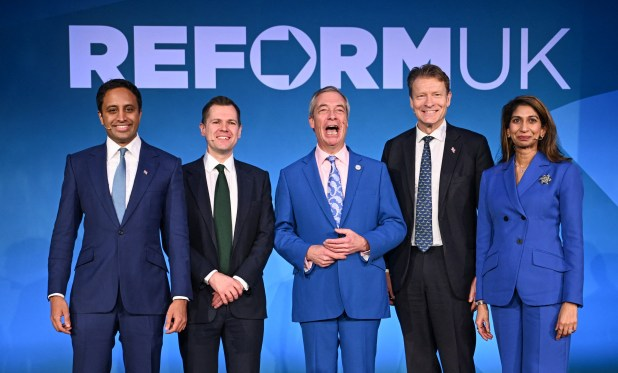

Reform UK has named Robert Jenrick as its choice for chancellor should the party win the next general election, as Nigel Farage unveiled what he described as a new “shadow cabinet”.
Jenrick, a former Conservative minister who defected to Reform last month, said the party’s economic plans would restore stability, cut waste, reduce the benefits bill and lower taxes. A former housing secretary, he also served at the Home Office and Department of Health, and held the post of exchequer secretary to the Treasury under Theresa May.
Another recent Conservative defector, Suella Braverman, has been appointed to the education and skills brief, while deputy leader Richard Tice takes on a newly created portfolio combining business, trade and energy.
Announcing his top team, Farage said Reform was now “the voice of opposition” to the Labour government. Although the Conservatives remain the official opposition at Westminster — as the second-largest party in the Commons — Reform has led national opinion polls consistently since last spring.
Farage said the appointments were intended to “broaden the party” and counter accusations that Reform was “a one-man band”. He argued it was time to place senior figures in “shadow positions” to demonstrate the party’s readiness for government.

Zia Yusuf, currently Reform’s head of policy, will lead on home affairs with a focus on reducing both legal and illegal immigration. Before Jenrick’s defection, both Tice and Yusuf had been touted as potential chancellors in a future Reform administration.
Farage said Tice would also serve as deputy prime minister if the party entered government. Tice insisted he was “delighted” with his new brief, adding that he would prioritise oil and gas production to drive economic growth and abandon net zero targets.
Braverman said a Reform government would aim for half of young people to enter trades rather than attend university. In addition to her education remit, she has been given responsibility for equalities policy — though she confirmed the party would scrap the role of equalities minister.
She argued the country was being “ripped apart by diversity, equality and inclusion” policies and said Reform would repeal the Equality Act 2010, introduced under New Labour, which provides legal protections against discrimination. Braverman said the move would help build “a country defined by meritocracy, not tokenism” and “personal responsibility, not victimhood”.
The party has yet to outline what legislation would replace the Act. However, Farage said Reform would “get rid of the pernicious, divisive notion of protected characteristics”, while maintaining workplace protections.
Responding to criticism over the prominence of former Conservatives in his ranks, Farage said Reform required people with experience of government. He added that the party would also recruit “genuine experts in their area” for junior ministerial-style roles to provide “real world experience”.
With the next general election not expected until 2029, Reform — which currently has eight MPs — has yet to publish a full policy platform.
In November, Farage softened the party’s earlier pledge to introduce £90bn in annual tax cuts, a move widely seen as an effort to bolster Reform’s economic credibility. He instead outlined “relatively modest” measures, including raising tax thresholds, scrapping inheritance tax for family-run businesses and reversing Labour’s decision to apply inheritance tax to farmland.
The appointments drew swift criticism from political rivals.
Conservative chairman Kevin Hollinrake said Reform’s front bench “looks more like a tribute act to the old Conservative Party than a credible alternative”.

Labour Party chair Anna Turley described the team as “failed Tories” who had “failed Britain before” and would “do the same again under Reform”.
Liberal Democrat deputy leader Daisy Cooper added: “Nigel Farage is welcome to give his colleagues new name badges, but it won’t change the view of the country — that Conservatives, current or former, are totally unfit to govern.”Reform UK has named Robert Jenrick as its choice for chancellor should the party win the next general election, as Nigel Farage unveiled what he described as a new “shadow cabinet”.
Jenrick, a former Conservative minister who defected to Reform last month, said the party’s economic plans would restore stability, cut waste, reduce the benefits bill and lower taxes. A former housing secretary, he also served at the Home Office and Department of Health, and held the post of exchequer secretary to the Treasury under Theresa May.
Another recent Conservative defector, Suella Braverman, has been appointed to the education and skills brief, while deputy leader Richard Tice takes on a newly created portfolio combining business, trade and energy.
Announcing his top team, Farage said Reform was now “the voice of opposition” to the Labour government. Although the Conservatives remain the official opposition at Westminster — as the second-largest party in the Commons — Reform has led national opinion polls consistently since last spring.
Farage said the appointments were intended to “broaden the party” and counter accusations that Reform was “a one-man band”. He argued it was time to place senior figures in “shadow positions” to demonstrate the party’s readiness for government.
Zia Yusuf, currently Reform’s head of policy, will lead on home affairs with a focus on reducing both legal and illegal immigration. Before Jenrick’s defection, both Tice and Yusuf had been touted as potential chancellors in a future Reform administration.
Farage said Tice would also serve as deputy prime minister if the party entered government. Tice insisted he was “delighted” with his new brief, adding that he would prioritise oil and gas production to drive economic growth and abandon net zero targets.
Braverman said a Reform government would aim for half of young people to enter trades rather than attend university. In addition to her education remit, she has been given responsibility for equalities policy — though she confirmed the party would scrap the role of equalities minister.
She argued the country was being “ripped apart by diversity, equality and inclusion” policies and said Reform would repeal the Equality Act 2010, introduced under New Labour, which provides legal protections against discrimination. Braverman said the move would help build “a country defined by meritocracy, not tokenism” and “personal responsibility, not victimhood”.
The party has yet to outline what legislation would replace the Act. However, Farage said Reform would “get rid of the pernicious, divisive notion of protected characteristics”, while maintaining workplace protections.
Responding to criticism over the prominence of former Conservatives in his ranks, Farage said Reform required people with experience of government. He added that the party would also recruit “genuine experts in their area” for junior ministerial-style roles to provide “real world experience”.
With the next general election not expected until 2029, Reform — which currently has eight MPs — has yet to publish a full policy platform.
In November, Farage softened the party’s earlier pledge to introduce £90bn in annual tax cuts, a move widely seen as an effort to bolster Reform’s economic credibility. He instead outlined “relatively modest” measures, including raising tax thresholds, scrapping inheritance tax for family-run businesses and reversing Labour’s decision to apply inheritance tax to farmland.
The appointments drew swift criticism from political rivals.
Conservative chairman Kevin Hollinrake said Reform’s front bench “looks more like a tribute act to the old Conservative Party than a credible alternative”.
Labour Party chair Anna Turley described the team as “failed Tories” who had “failed Britain before” and would “do the same again under Reform”.
Liberal Democrat deputy leader Daisy Cooper added: “Nigel Farage is welcome to give his colleagues new name badges, but it won’t change the view of the country — that Conservatives, current or former, are totally unfit to govern.”