

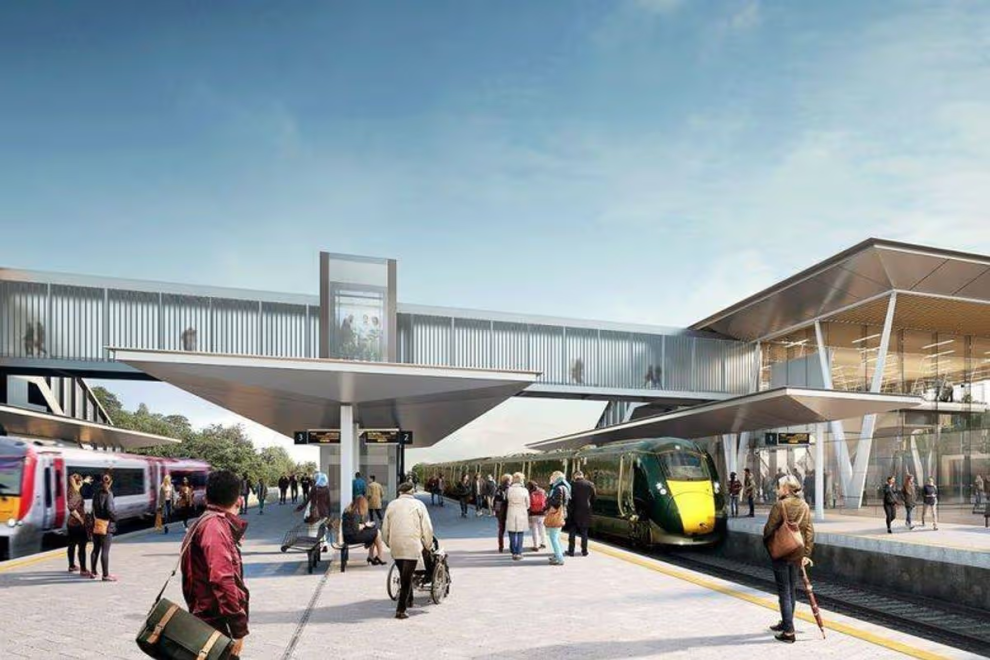

PLANS to overhaul Wales’ rail network have been boosted by a promised £14bn investment from the UK government, with Sir Keir Starmer describing the move as “investment for the long term” that would put the country “on the front foot”.
The UK government has confirmed funding for seven new stations at Magor and Undy, Llanwern, Cardiff East, Newport West, Somerton, Cardiff Parkway and Deeside Industrial Park. Ministers have also endorsed a wider list of projects set out by Transport for Wales.
A Welsh government source described the announcement as “the biggest day in devolution”, though opposition parties accused Labour of recycling previously announced schemes.
Ministers have not yet confirmed when all the funding will be released, or over what period, with one source suggesting it could stretch as far as 2040. The UK government had already allocated £445m for Welsh rail projects at last June’s spending review, now earmarked for the seven stations and related upgrades in north and south Wales.
Initial work on five of the south-east stations is expected to begin later this year, with construction on two due to start in 2029. Magor and Undy is likely to be the first to be completed, alongside upgrades to the line needed to accommodate the new stops.

Ahead of a visit to south Wales, Sir Keir said Wales had been “let down by a UK government unwilling to do the hard yards”, adding that seven new stations, thousands of jobs and a “generational commitment” would help build a network fit for the future.
First Minister Eluned Morgan said the announcement placed Wales in “an unprecedented position to deliver the next chapter of transformation for rail services”.
Ministers said Cardiff Parkway – near St Mellons, where private developers secured planning approval in January 2025 – could serve 800,000 passengers a year and support around 6,000 jobs. The government confirmed it had reached agreement with the Welsh government and investors to help fund the station.
Cardiff Central is also due for an upgrade, with work expected to start this spring and finish by 2029. Improvements to the Wrexham–Liverpool line are planned to allow two trains an hour and a new station at Deeside Industrial Park.
Wider rail plans
The UK government has also backed a broader rail “vision” from Transport for Wales, comprising 43 schemes described as ready to move forward and valued at up to £14bn. These include proposals for Cardiff Crossrail extensions, new Core Valley Lines stations, electrification to Holyhead and Llandudno, reopening St Clears station, service improvements at Pembroke Dock and Milford Haven, Swansea Bay and West Wales Metro stations, a Bridgend–Maesteg shuttle, capacity upgrades at Chester and a direct Cardiff–Liverpool service.
Most of these projects are not yet funded or scheduled, with ministers saying precise allocations would be confirmed in future spending reviews.
Political reaction
The announcement comes less than three months before May’s Senedd election, with polls suggesting Labour faces stiff competition from Plaid Cymru and Reform UK. Rail funding has long been a contentious issue, particularly after Wales received no consequential funding from England’s HS2 scheme.
The Welsh Conservatives said Labour had halved rail funding compared with previous Tory governments. Conservative MS Sam Rowlands criticised the lack of a commitment to electrify the north Wales main line.
Plaid Cymru’s Westminster leader Liz Saville Roberts said many in Wales would feel “déjà vu”, arguing the stations were already announced last year. Welsh Liberal Democrat MP David Chadwick echoed the criticism, warning that key electrification projects remained unfunded.
A Reform UK Wales spokesperson accused Welsh Labour of underfunding transport, while the Green Party called for full devolution of rail infrastructure, saying Wales had been “starved of investment”.

A Welsh government source said the deal followed two years of “quiet work” behind the scenes. “To have the green light for a £14bn transformation is enormous,” they said. “Now we just need the rail industry to move as fast as possible.”