


PLAID AND REFORM BATTLE FOR TOP SPOT AS COUNTS CONTINUE ACROSS WALES
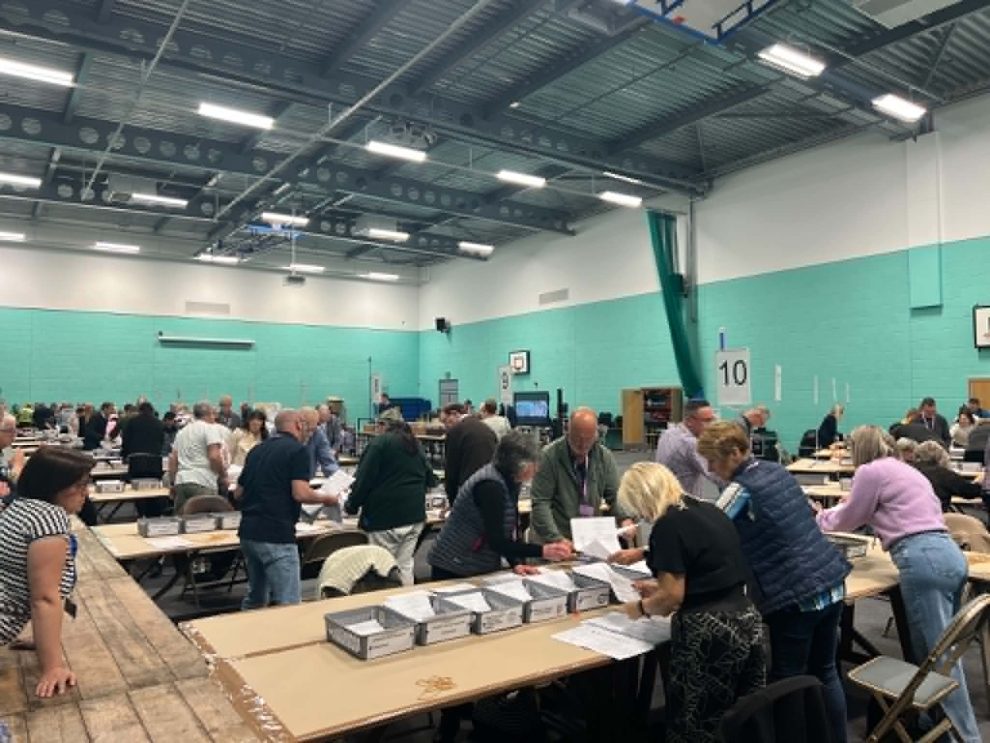
WALES is waiting to discover who will form the next Welsh Government as counting continues in the most unpredictable Senedd election since devolution began.
Early indications from count centres across the country suggest Welsh Labour is heading for its worst result in modern history, with Plaid Cymru and Reform UK emerging as the main challengers for power.
In a dramatic moment early on Friday (May 8), Labour’s Deputy Leader Huw Irranca-Davies publicly admitted that Labour would “not form the next government”, effectively conceding defeat before many constituencies had completed counting.
The comments have sent shockwaves through Welsh politics and fuelled speculation that Labour’s 27-year grip on devolved government is coming to an end.
Across Wales, the picture remains fluid, but several clear trends are emerging.

Plaid Cymru is performing strongly in its traditional west and north Wales heartlands and is believed to be highly competitive in a number of mixed rural and post-industrial seats.
Party leader Rhun ap Iorwerth is expected to make major gains, with party insiders increasingly confident that Plaid could finish as the largest party overall.
Meanwhile, Nigel Farage’s Reform UK appears to have achieved significant breakthroughs across large parts of South Wales, particularly in former Labour strongholds in the Valleys and industrial communities.
Reform’s vote appears to be holding up across much of rural Wales as well, with strong performances reported in areas where frustration over farming policy, immigration, cost-of-living pressures and distrust of mainstream politics have become major campaign issues.
The Conservatives are facing a difficult night overall but may still retain pockets of support in rural and suburban Wales.
Senior Welsh Conservative figures, including Paul Davies and Sam Kurtz, remain hopeful of securing representation in Ceredigion Penfro under the new proportional system.
Labour’s difficulties appear especially severe in parts of West Wales and the South Wales Valleys, areas which have traditionally formed the backbone of the party’s electoral coalition.
Perhaps the biggest shock of the night is the growing possibility that First Minister Eluned Morgan could lose her own seat in Ceredigion Penfro.
Labour insiders have already suggested privately that the result there is likely to be extremely close.
The election is the first to use Wales’s new expanded Senedd system, which increased the number of Members of the Senedd from 60 to 96.

The country has been divided into sixteen large six-member constituencies using the d’Hondt proportional representation method.
Under the system, seats are allocated sequentially by dividing party vote totals by the number of seats already won plus one.
While critics have attacked the complexity of the counting formula, others argue the biggest constitutional change has been the creation of vast “super constituencies” covering huge geographical areas.
The system has also made forecasting far more difficult than under previous elections, as relatively small vote swings can change the allocation of final seats.
Counts are continuing throughout Friday, with some final declarations not expected until later in the day.
Coalition discussions are already quietly beginning behind the scenes as parties prepare for the possibility that no single group will secure an outright majority.
Potential outcomes being discussed include a Plaid-led coalition, a Reform-supported administration, or complex agreements involving smaller parties and independents.
Whatever the final numbers, one thing already appears certain — Welsh politics has changed dramatically overnight.
With reporters stationed at counts across Wales, The Herald will continue to provide live updates, reaction and analysis throughout the day.