

CITIES, towns and villages across Wales fell silent on Sunday (Nov 9) as thousands gathered to mark Remembrance Sunday, honouring those who gave their lives in service to the nation.
From Cardiff to Caernarfon, communities stood side by side in quiet reflection at 11:00am, the moment that marks the end of hostilities in the First World War in 1918. The familiar notes of the Last Post echoed across war memorials, churchyards, and town squares, as wreaths of red poppies were laid to remember those who never returned home.
Nation-wide tributes
In the capital, the National Service of Remembrance took place at the Welsh National War Memorial in Cardiff’s Alexandra Gardens, attended by First Minister Eluned Morgan, the Lord Mayor of Cardiff, senior military officers and representatives from the armed forces, veterans, and charities. The service, led by the Reverend Canon Stewart Lisk, featured readings, prayers, and the traditional two-minute silence.
In North Wales, poignant ceremonies were held in towns including Wrexham, Bangor and Llandudno, where veterans and cadets marched in procession alongside local schools and civic leaders. In Anglesey, the service at Llangefni drew a large crowd, with the names of fallen islanders read aloud — a reminder of the personal toll of war in rural Welsh communities.
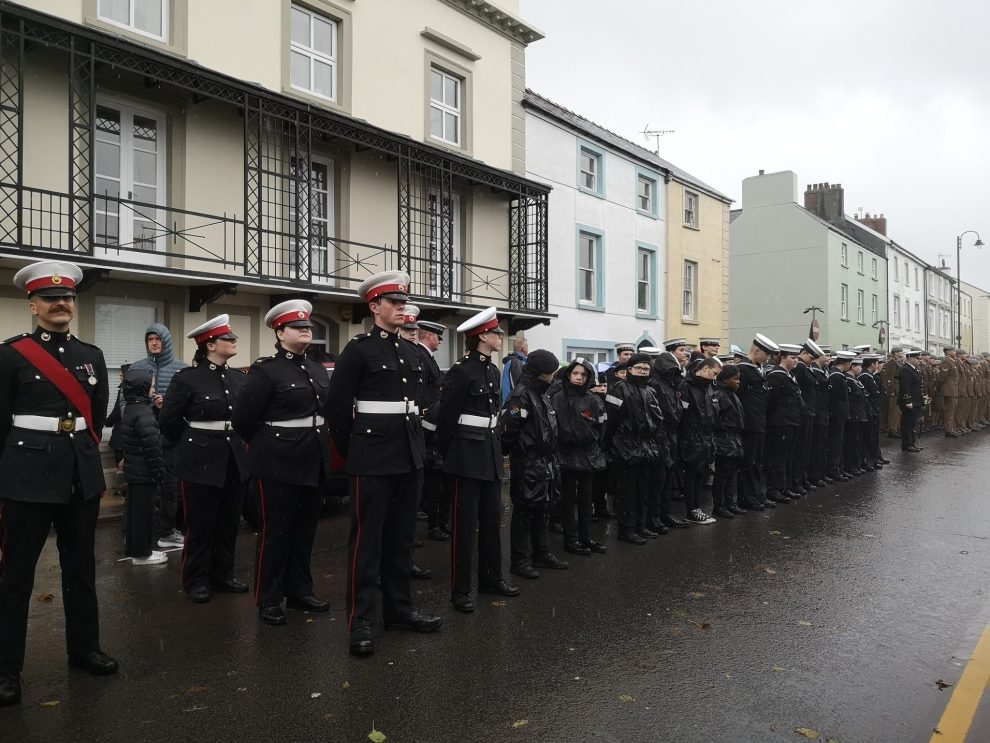
In West Wales, services in Pembrokeshire, Carmarthenshire and Ceredigion were equally well-attended. Towns such as Tenby, Pembroke, Milford Haven, and Haverfordwest saw civic parades and public ceremonies, with residents braving the rain to pay their respects. In Carmarthen, local schoolchildren joined veterans to lay crosses of remembrance, while in Aberystwyth, the town’s Remembrance parade made its way from the train station to the cenotaph near the promenade.

Generations remembering together
Across the country, the presence of youth organisations — from Scouts and Guides to Sea, Army and Air Cadets — reflected the passing of remembrance traditions to younger generations. Many local schools held their own Armistice assemblies on Friday, with pupils crafting paper poppies and reading wartime poetry in memory of Welsh men and women who served in the Armed Forces.
In Swansea, the Lord Mayor’s Parade drew hundreds of spectators, led by veterans, police, fire and ambulance representatives. The parade concluded at the Cenotaph on Mumbles Road, where wreaths were laid by civic dignitaries, the armed forces, and emergency services.
Remembering all who served
Wales has a long and proud military history, with soldiers, sailors and airmen serving in every major conflict of the past century. According to the Royal British Legion, more than 40,000 Welsh servicemen and women lost their lives in the First and Second World Wars combined.
Modern remembrance services also reflect on more recent losses — those who died in conflicts such as Iraq, Afghanistan, and peacekeeping missions around the world.
First Minister Eluned Morgan said: “Remembrance Sunday is a moment to pause and reflect on the courage, sacrifice and service of all those who have worn the uniform of our armed forces, past and present. Their legacy is the peace and freedom we enjoy today.”
A country united in gratitude
As the poppy wreaths rested beneath countless memorials from Wrexham to West Wales, the message was the same across the nation: remembrance is not only about the past, but a pledge to honour the values of service, sacrifice and peace for the future.
At the going down of the sun, and in the morning — we will remember them.
(Pic: Milford Haven, Photo by Carol Best)