


A MAJOR solar farm covering more than 650 acres of agricultural land on Ynys Môn has been approved by the Welsh Government, despite objections from countryside groups and local residents who say the decision undermines its own planning policies.
The Campaign for the Protection of Rural Wales (CPRW) has expressed “deep disappointment” at the move, warning that the development will take large areas of productive farmland out of use at a time of growing concern over food security.
Policy clash
Welsh planning guidance states that “Best and Most Versatile” (BMV) land – the most productive grades of farmland – should be protected from inappropriate development. CPRW argues that this project contradicts those rules.
Dr Jonathan Dean, a CPRW Trustee, said: “I am at a loss as to why the Government bothers having policies at all when they are so eager to run roughshod over them. They allow wind farms to be developed on peatlands, against their own policies; Trydan Gwyrdd Cymru will install overhead electricity lines, against their own policies; and now solar development on Best and Most Versatile farmland, against their own policies.”
He added: “The Cabinet Secretary is using a ‘scorched earth’ approach to reaching net zero, approving any and everything that crosses her desk, wilfully ignoring the very policies her government put in place to prevent inappropriate development. This is not a just transition.”

Local opposition
Residents on the island have raised concerns about the effect on the landscape, as well as potential harm to agriculture and tourism. They say the project brings little in terms of long-term jobs or economic benefit, as once built, solar farms typically require minimal staffing.
Campaigners also point to grid capacity, claiming there are already more solar schemes proposed on Ynys Môn than can be connected for over a decade. “If ever a reason had to be found to protect this land, this is it,” said Dr Dean.
The government and developers’ case
The Welsh Government has consistently argued that renewable energy projects are vital if Wales is to meet legally binding climate change targets. Ministers say solar is one of the cheapest and fastest ways to expand clean power generation, and that large-scale projects are needed alongside wind and tidal energy to secure future energy supplies.
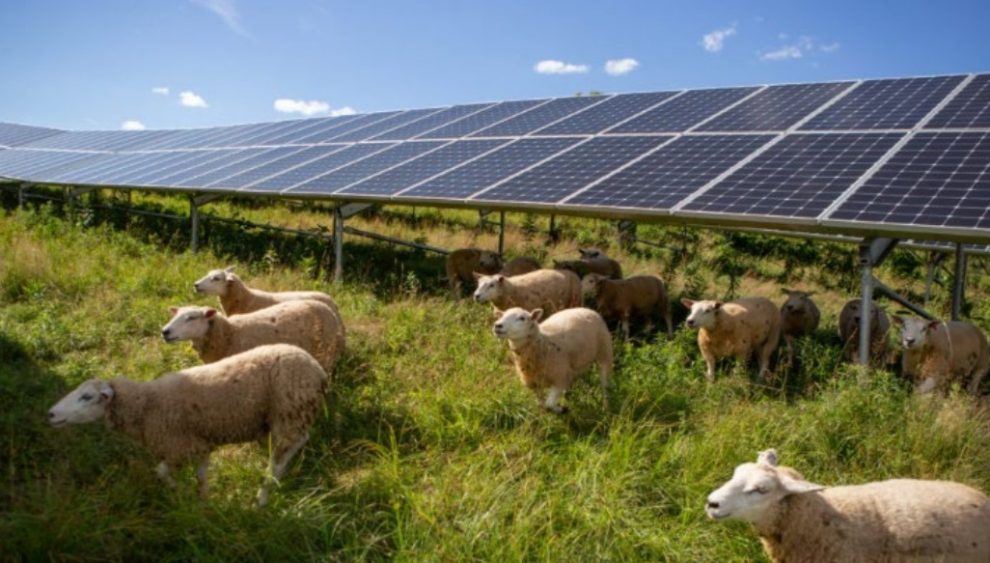
Developers of solar farms also argue that schemes can be temporary, with the land returned to agricultural use at the end of their lifespan – usually 30 to 40 years – and that many sites allow sheep grazing to continue beneath panels. Proponents also point out that solar contributes to local and national decarbonisation, reducing reliance on imported fossil fuels.
Wider debate
The decision highlights a growing tension between Wales’s food and energy policies. While the Government’s planning framework seeks to protect high-quality farmland, it is also under pressure to rapidly scale up renewable energy.
Critics say the Ynys Môn approval demonstrates how net zero commitments are being prioritised over food security and rural concerns. Supporters counter that, without urgent expansion of renewable power, Wales risks falling short of its climate goals.
The row is likely to intensify as further applications for large-scale solar projects across Wales come forward in the coming months.