
Programme launched in response to “CSI effect” sees rising demand, new facilities and students progressing to university
A FORENSIC science course launched in response to the so-called “CSI effect” is continuing to gather momentum at Coleg Cambria, with increased demand, expanded facilities and students now progressing to university.
Introduced three years ago, the Forensic and Criminal Investigation programme was developed to meet growing interest in crime scene investigation, forensic analysis and the wider criminal justice system.
Since its launch, interest in the course has remained consistently high, resulting in additional classes being added and strong retention and achievement rates among learners.
Lead lecturer Paul Phillips-Jenkins said the continued growth highlights both the relevance of the subject and the progression routes now available to students.
“The programme has developed significantly in a relatively short period of time,” he said.

“We are seeing sustained interest year on year, strong academic outcomes and clear progression routes into higher education in areas such as forensic science, anthropology and archaeology.”
The college has now seen its first cohorts progress on to university, marking what staff describe as a major milestone for the qualification and reinforcing its value as a stepping stone into specialist scientific and investigative disciplines.
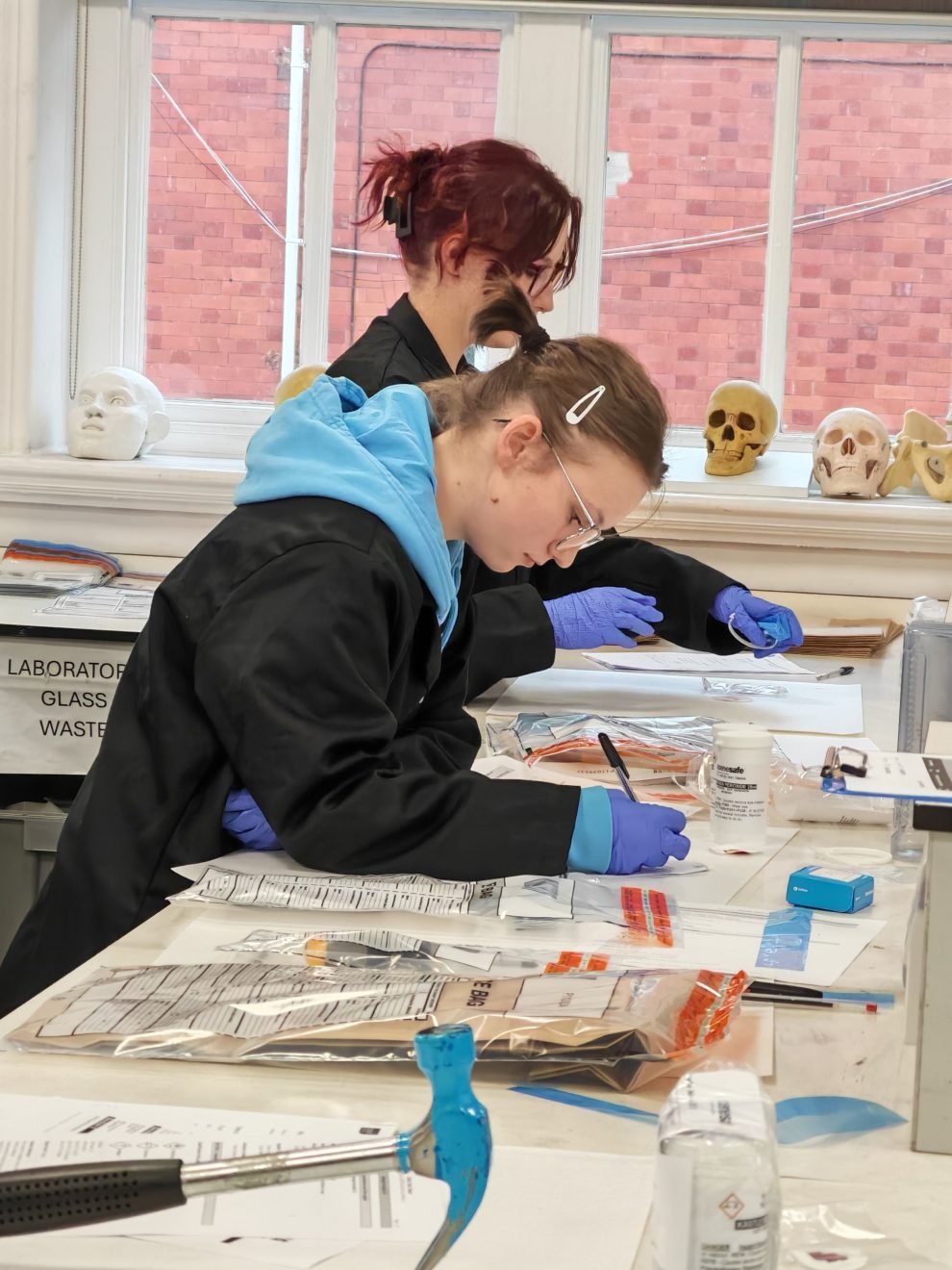
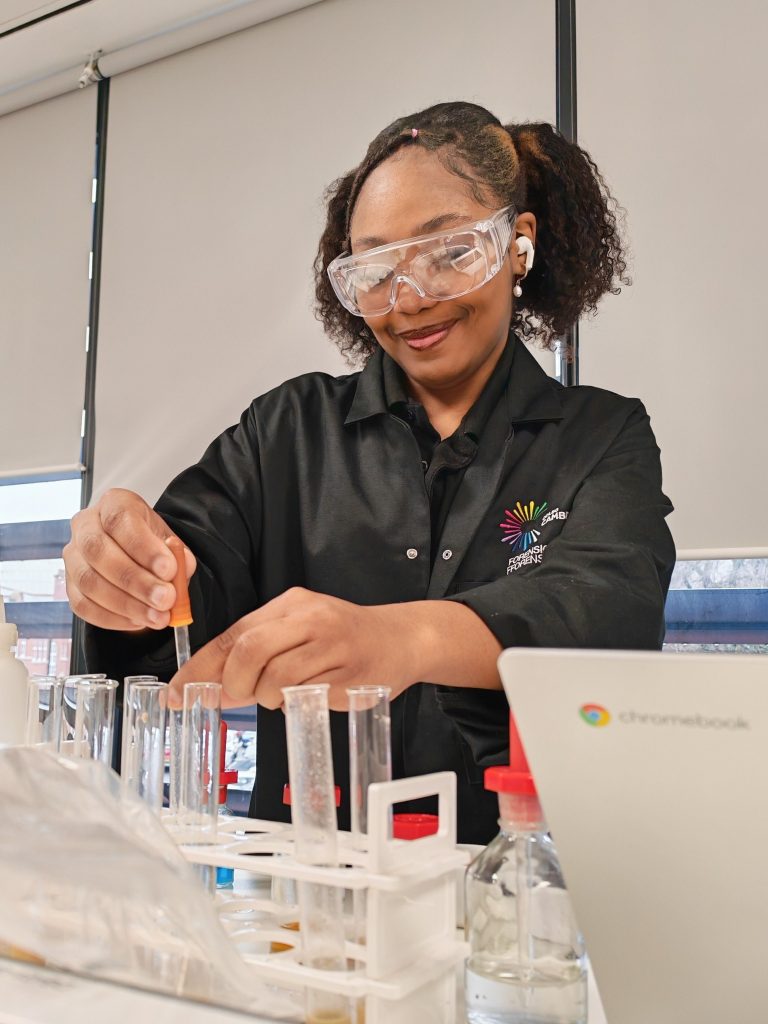
Delivery of the course has also been strengthened through investment in specialist facilities. It is now based in the Nant building at Yale in Wrexham, and includes a dedicated forensic laboratory, specialist teaching spaces and immersive mock crime scene environments.
These include simulated hospital wards and a mock social care apartment, designed to provide students with hands-on experience in realistic settings. The programme is also supported by a specialist forensic science technician.
At the time of its launch, the course drew attention due to the impact of the “CSI effect”, with popular crime dramas increasing awareness and sparking interest in forensic science as a career.
Paul added: “The subject was increasingly viewed as an accessible and engaging route into science, particularly for learners interested in real-world application rather than traditional pathways. That’s certainly proven to be the case.”
Equivalent to three A Levels and studied alongside the Advanced Skills Challenge Certificate (Welsh Baccalaureate), the programme combines academic learning with practical crime scene investigation skills. Areas covered include environmental forensics, criminology, forensic genetics, anthropology and archaeology.
For more information visit www.cambria.ac.uk/our-courses or email [email protected].