

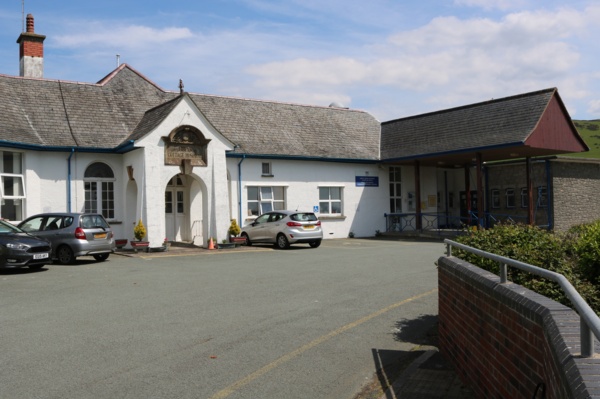

UNCERTAINTY looks set to continue for staff and patients over the future of a rural hospital in Gwynedd.
It comes as decisions over the future for Tywyn Community Hospital could be delayed until after the Senedd elections.
Shortlisted options for the hospital could form part of a formal public consultation process after the ballot, but reinstating inpatient beds is not an option that made the shortlist.
The temporary closure of the Dyfi Ward in April, 2023, due to workforce shortages and reliance on agency staff, triggered a review of the hospital services and prompted a local outcry.
New services were later introduced, including expanded inpatient capacity at Dolgellau Hospital, the Tuag Adref community service, a treatment room, a reopened minor Injuries Unit, and Wellbeing facilities, a Betsi Cadwaladr University Health Board report noted.
Presenting the document on Thursday, (November 27) Paolo Tardivel, Interim Executive Director of Transformation & Strategic Planning, told the board, that despite recruitment efforts “reopening the inpatient ward remained challenging due to workforce resilience and sustainability concerns”.
He described how stakeholder sessions called ‘Balanced Room’ had been held to help to design” and appraise” five short-listed options.
They had been whittled down to three options – but which did not include the option of re-opening beds.
However it did include ‘maintaining current services without beds’, ‘developing Tywyn as a community health hub; and ‘using Dyfi Ward as a day treatment centre, alongside community-based provision’.
An option to reopen inpatient beds, was “not being prioritised” he said, “due to value being placed on the new services and the sustainability and workforce risk”.
Llais, the Welsh Government body which aims to give people a say in the planning and delivery of health and social care services – had advised the board that the absence of inpatient beds among the options had constituted a “substantial service change and therefore would require a formal consultation”.
The view was based on Welsh Government guidance, which related to a small number of patients with a large impact and highly sensitive issues within the local population”.
Mr Tardivel stated “Llais are concerned that there is insufficient time to do the necessary work required to support a consultation of this nature prior to the May Senedd election pre-election period”.
He added that “given the pre-election period, a consultation could not commence until after the May, 2026 elections”.
The committee noted that preparatory work, including public engagement, impact assessments, and development of consultation materials could be undertaken in the interim.

The report stated “it is recognised that staff who were substantively employed in both services prior to the temporary closure have and continue to face uncertainty whilst the service review, options appraisal and, if required formal consultation, are concluded”.
It was important that staff continue to be “effectively engaged and supported throughout the process”.
Mr Tardivel said: “We really do recognise that the uncertainty has continued for some time, and we want to be clear, our priorities are absolutely to ensure the best possible care and services for the whole population.
“We have heard the strength of feeling within the community about the future of services and want to make sure that all the scenarios are fully explored before any decisions are made.
“We also want to express our sincere thanks to the staff who continue to care for the local community often in new and flexible ways which is greatly appreciated”.
Geoff Ryall-Harvey of Llais said the proposed changes constituted: “a substantial service change, not only does it meet that definition, the issue is of great concern locally.
“For that reason Llais recommends a full consultation within the [Welsh Government] guidance. The gold standard for that is 12 weeks”.
He said that the Balanced Room sessions had made “a good start” in engaging with the public but that there was a “local concern that reopening the hospital and retaining the new service was not in the options list” and would need to be added to the options.
He noted that a lot of work had already been done, and Llais had been involved with, to canvass views of local groups, young people, young mums and local community councils.
“That should continue right until the pre-election period,” he said.
“We should take the opportunity until March to engage, followed by a full consultation post-election within the Government guidance”.
CEO Carol Shillabeer said that “she felt gathering many voices was important”.
The board noted recommendations over the short-listed options to come before a subsequent board meeting following further detailed work and over seeking a formal consultation on the future of services, post the Senedd Elections in May.