

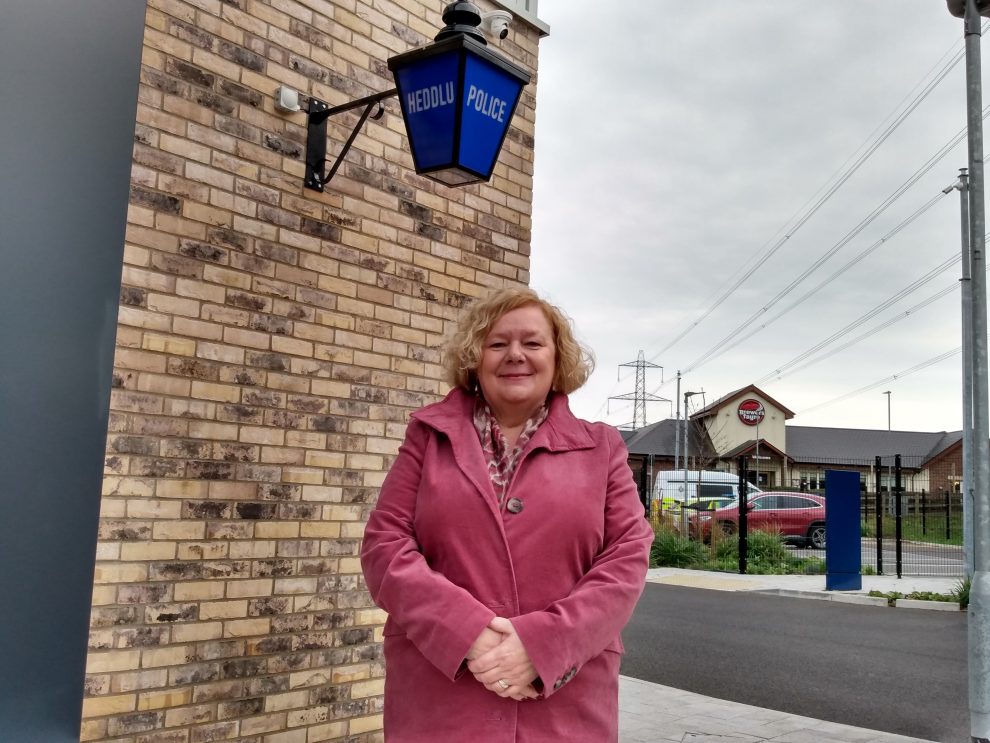

FIGHTING online sexual abuse and fraud is diverting police officers away from pounding the beat on the streets of Gwent, the area’s watchdog has said.
Jane Mudd, who is the directly elected Police and Crime Commissioner responsible for overseeing the performance of Gwent Police, said the chief constable has a difficult “balancing act” between visibility of officers on the street while also protecting the public from offences committed over the internet.
She was responding to a question on whether Monmouthshire gets a “fair share” of resources allocated by Gwent Police with its residents having described as paying a greater percentage of the local policing budget than their neighbours in the other four local authority areas.
Chepstow Labour councillor Dale Rooke questioned Ms Mudd, who along with being the police commissioner is also an elected Labour councillor in Newport, when she appeared before Monmouthshire County Council’s public services committee.
He asked: “We pay in the range of 25 per cent more than any other county. Can you be confident we get a fair share, a slice of the cake, in resources because we don’t see any difference on the ground.”

Cllr Rooke also highlighted Gwent Police had, in October 2022, said it would recruit 100 more police officers and asked what proportion of those would be “directed to Monmouthshire.”

Ms Mudd said she would ask Chief Constable Mark Hobrough to write to the committee with the answer on recruitment which she described as an operational policing matter but said she “takes assurance” he is committed to a “delivery model” with a “focus on neighbourhood policing”.
She said: “That is increasing the visibility of officers across Gwent. You will start to see this increased visibility but I have to be completely candid and say we also need those other officers to protect society from those other harms that have become more prevalent in modern times and for the chief constable that is a very difficult balancing act.”
The commissioner acknowledged policing visibility is often raised by residents and said funding to increase neighbourhood policing numbers has been made available but said “we also need to police the virtual streets”.
She cited fraud and said officers work “everyday” on protecting the public from sex offences and monitoring obscene images.
“Maybe 20 or 40 years ago police did not have to do that and it does impact the number of police available,” said Ms Mudd.
On the police precept, which is added to council tax bills, Ms Mudd said the figure is related to the council tax base across Gwent.
Ms Mudd said she didn’t see “any variation of service” provided across the five local authority areas and said just as residents all pay towards council services, but are unlikely to use all of the 500 to 800 services a council will typically provide, that doesn’t mean “they are not available to us”.
She described the police precept as “inextricably linked” to the council tax base figure and said: “We know the Welsh Government is looking at reforming council tax and we will have to look very closely to see how we do this going forward.”
The police precept for a typical band D home across Gwent for the current financial year is £377.31 but as Monmouthshire has a greater percentage of homes in the higher value bands, than the other Gwent authorities, more of its residents are paying charges ranging from £461.16 for band E homes and £545 in band G and above. The charge for the highest band I homes is £880.39.