

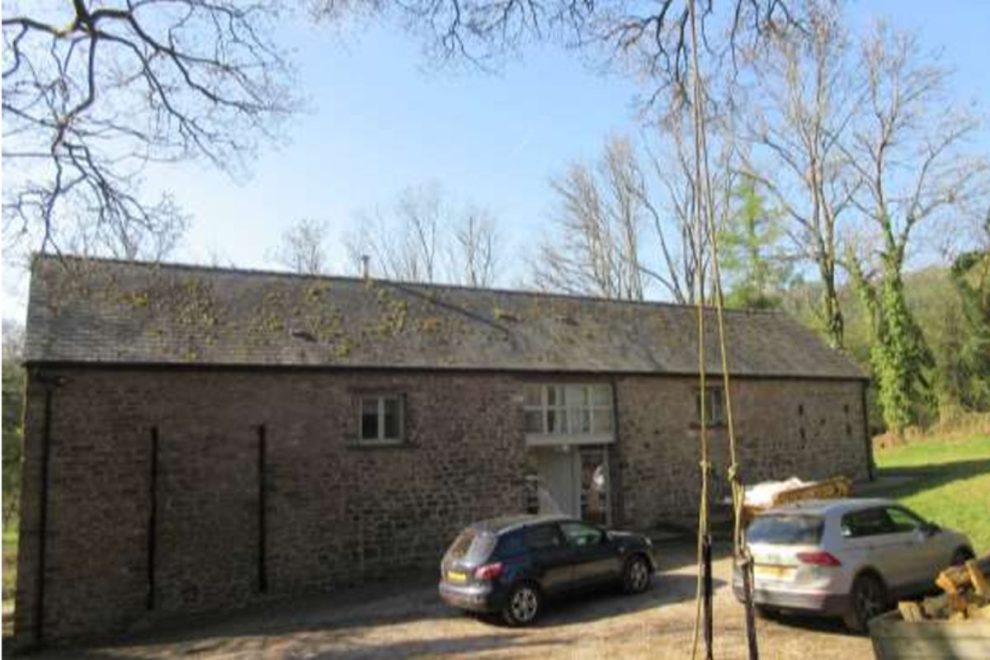

USING a former barn as a home office with a guest bedroom would have caused “harm” to a rural area, an inspector has ruled.
Alistair Brooke had wanted to convert the existing two storey barn in an existing agricultural setting at Panta Farm, Coal Road, Devauden to a two-level building with a double garage, guest bedrooms, a bathroom, a home office, a workshop and a utility area as well as for storing bicycles.
His plans were rejected by Monmouthshire County Council in October last year and that decision has now been backed by an independent planning inspector after Mr Booke appealed to Planning and Environment Decisions Wales.
Inspector G Hall, who considered the application, said the development “would result in a building that would read as a significant new structure, rather than a modest and sensitively located outbuilding.”
Hall said the outbuilding would “be perceived as a visually prominent and competing structure alongside” to the existing “host barn” which is at odds with the council’s planning policies on the conversion of buildings in the open countryside for residential use and extensions and ancillary buildings.

The barn would no longer be seen as a “former agricultural building”, and the area would have “an unduly domesticated grouping of buildings”.
Hall’s report stated: “This harm would be readily appreciable within the site and in views from the surrounding land, including the restricted byway and footpath.”
The inspector also said they’d considered Mr Brooke’s argument he’d prefer to provide additional storage and a guest bedroom in one building, rather than smaller structures spread around the site, but said these practical benefits “are personal considerations and attract limited weight”.
Hall said: “I have considered the inclusion of a home office and its potential to support home working, reduce the need to travel and contribute to a better work–life balance. However, the evidence before me does not demonstrate that these needs could not reasonably be accommodated within the existing dwelling, nor that any reduction in travel would amount to a meaningful public benefit. In any event, any such benefit would be limited and would not outweigh the identified harm to the character of the host building.”