

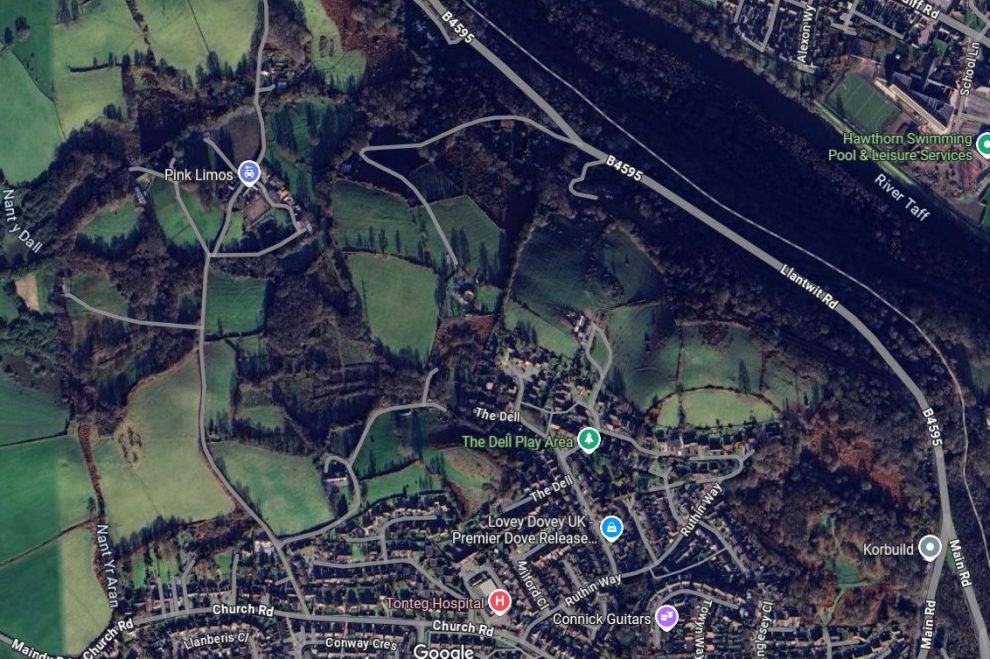

A DECISION is due to be made on plans for a battery energy storage system in Rhondda Cynon Taf (RCT) with concerns about noise withdrawn.
An application for the battery energy storage system and associated infrastructure at Lowlands Farm, Tavern-y-coed, Tonteg is set to before RCT’s planning committee on Thursday, September 18.
This application originally came to a meeting of the committee in July with an officer recommendation of refusal.
At that meeting and following advice provided by the head of major development and investment, members decided to defer a decision on the application to allow officers to properly consider late, additional information submitted by the applicant in respect of noise, which was the sole reason for the original officer recommendation of refusal, and to report their conclusions back to committee.
In their planning assessment, officers say the site lies in close proximity to a number of residential dwellings and the council’s public health and protection team considers the proposed development has the potential to have an adverse impact on the amenities of those neighbouring properties, through operational noise.

There is a noise impact assessment, which was revised during the course of the application to address earlier concerns raised by public health and protection.
Officers say despite the updates to the noise report, public health and protection did not consider it satisfactorily demonstrated the proposed development would not result in an adverse impact on the amenities of nearby residents, saying the noise associated with the operation of the development would have a negative impact on existing residents, particularly at night when bedroom windows were left open.
This was why the application was originally recommended for refusal.
But since the writing of the original committee report, further discussions have taken place between the applicant and the council’s public health and protection team.
The discussions centred around the concerns and objections raised by public health and protection about noise and the submitted noise impact assessment.
The applicant suggested certain conditions could be imposed upon any grant of planning consent to control issues of noise and examples of cases for similar developments where the use of such conditions have been considered acceptable by other authorities have been provided.
The planning assessment says the council’s public health and protection team has carefully considered the wording of the suggested conditions and are content that, with some refinement, they would adequately control any noise associated with the proposed development.
Therefore, public health and protection have withdrawn their original objection and it is considered that, with the recommended conditions, the development would not result in such an adverse impact upon the amenities of nearby residents that it would warrant the refusal of the application.