

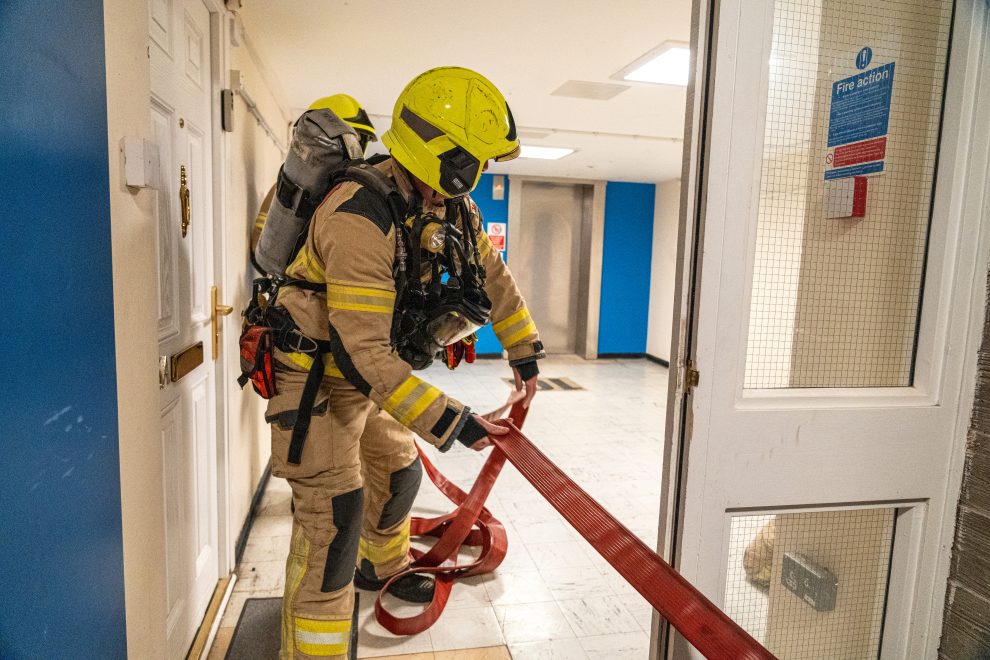

SOUTH WALES Fire and Rescue Service (SWFRS) has announced the successful development and implementation of an extensive four‑phase training programme designed to enhance operational response to high‑rise incidents. This work directly supports key recommendations from the Grenfell Tower Inquiry, which highlighted crew, commander, and control training as essential across all fire and rescue services. A total of 12 recommendations focused specifically on improving training, policies, and operational preparedness, forming the foundation for a five‑year strategic training plan created by the Service’s High‑Rise Team in 2022.
The plan includes the development of new standard operating procedures (SOPs) for high‑rise firefighting and evacuation, a new all-Wales evacuation procedure, now adopted by neighbouring Mid and West Wales and North Wales Fire and Rescue Services, and updated training packages for all on‑call, wholetime, and Joint Fire Control (JFC) staff.
Phase one, delivered between April 2023 and October 2024, focused on core skills and mass‑evacuation procedures for all operational and control staff. Phase two, carried out between October 2024 and April 2025, focused on introducing enhanced training on building construction, failure, and demolition for all crews across the Service.
Phase three, running from October 2025 to February 2026, strengthened high‑rise incident command capability. Tactical Officers and crews took part in specialist command training featuring XVR animation and video‑led scenarios to support high‑risk decision making. This phase was developed using direct feedback from firefighters, ensuring the content reflected their needs and represented realistic operational challenges. Dates are due to be confirmed for the fourth and final phase of the programme, which will cover smoke control and ventilation.
Training has been delivered through a partnership with Cardiff University Hospital of Wales’s Brecknock House, providing a dedicated environment for realistic high‑rise exercises. In addition, new evacuation packs for appliances have been introduced, and JFC staff have received life‑survival guidance training to support callers through evacuation during live high-rise incidents. This forms part the first all‑Wales approach to JFC procedures, designed to strengthen national resilience.

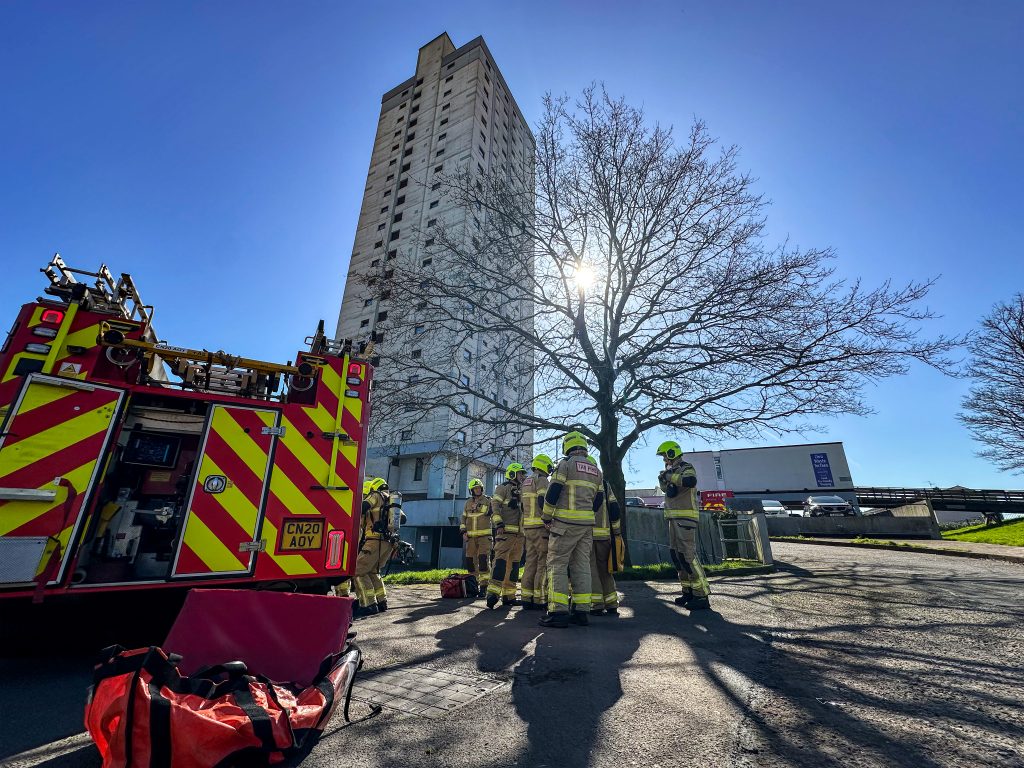
To further support operational learning, cladding panels are being installed at the Service’s Operational Training, Leadership and Personal Development Academy to aid research and testing of new firefighting tactics. Two new immersive training packages have also been introduced, allowing firefighters to work through each stage of a high‑rise incident in 360 degrees. The programme received high praise from operational crews, scoring 4.8 out of five stars for quality and relevance.
Group Manager Jason Lamport said: “As a team, we understand that what underpins professional operational staff is engaging, relevant training.
“Our ambition is to complete the Grenfell recommendations and train our crews, commanders, and control room operators to the highest standards.
“We want to give them the equipment, tools, policies, and procedures to feel competent and confident at some of our most challenging incidents.
“The public can feel assured that SWFRS is focused on high‑rise firefighting and evacuation training and will champion operational and public education as part of their Grenfell compliance.”
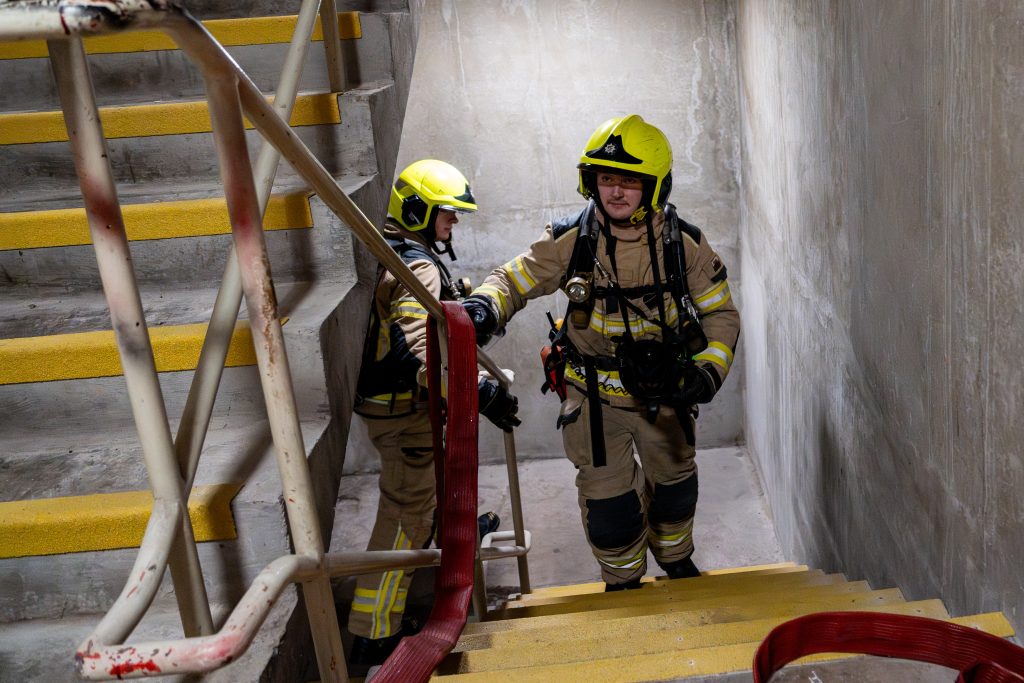
A recent multi‑agency training exercise in Cwmbran further strengthened this work, using Bron Afon’s high‑rise residential building, The Tower, to test real‑time evacuation and life‑survival guidance procedures. The Service’s drone was also deployed during the exercise, providing an enhanced aerial view of the incident and streaming live footage directly to JFC to support decision‑making. The scenario enabled JFC staff to practise delivering life‑survival guidance, one of the only situations where call handlers remain on the phone for the duration of an incident, supporting a caller step‑by‑step as they evacuate safely. Operational crews used the exercise to practice the new evacuation procedures within a live environment, ensuring both fire control and frontline staff could coordinate seamlessly under realistic conditions.
JFC FF Pearce shared: “Practical training with crews is essential to ensure we can support each other to resolve these complex incidents with high numbers of calls and information to share with the crews at the fire ground.
“The exercise provided valuable learning experience to practise new screen layouts and system details to enable fire control to manage large numbers of calls, working together with my team members in control and at the incident.”
South Wales Fire and Rescue Service remains committed to evolving and strengthening its response to high‑rise incidents, ensuring the safety of communities through innovation, partnership, and continuous professional development.