


OVERDUE repairs to a castle in a “volatile frontier zone” that was destroyed, rebuilt, sacked and partially demolished have been given the go-ahead.
Carmarthen Castle has been a focal point of conquest and rebellion not to mention centuries of wear and tear.
Its remains overlooking the River Towy are a scheduled ancient monument and one of only three grade one-listed buildings in Carmarthenshire.
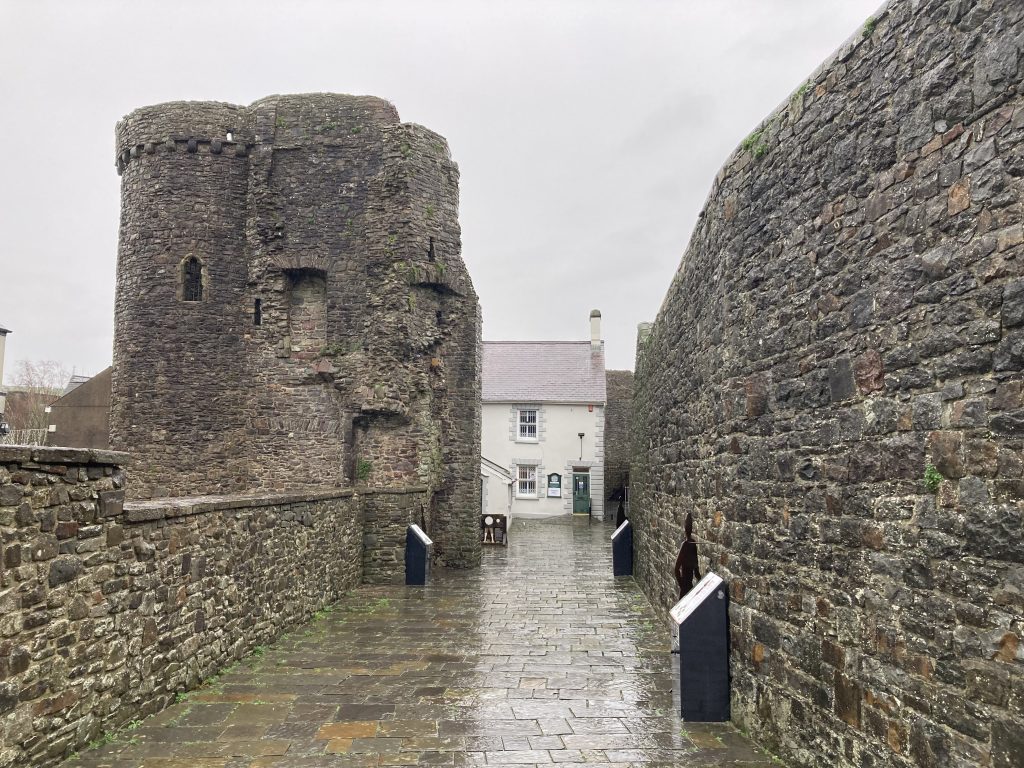
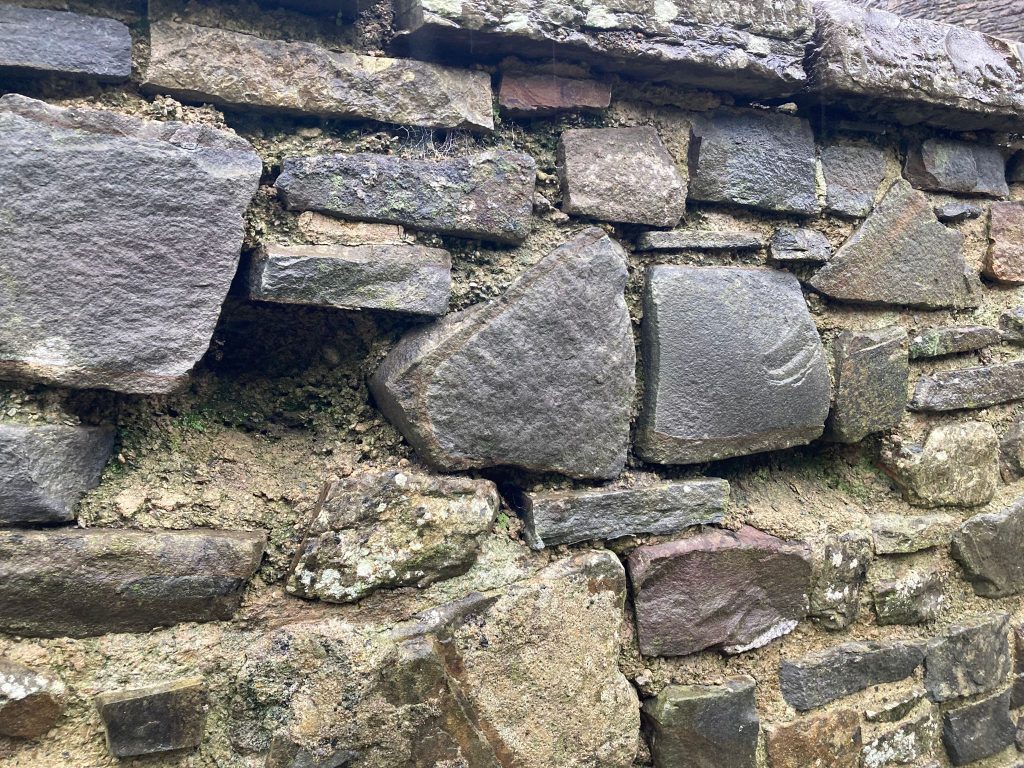
The county council, whose County Hall headquarters replaced a jail built within the castle’s perimeter, now has listed building consent to re-point and repair the old jail wall and police house, the north curtain wall and the forecourt. Work on the cottage garden will be determined once foliage is cleared.
The castle’s strategic value and historical importance since the early 12th Century are brought to life in a heritage impact assessment on behalf of the council. The report by Nathan Goss Conservation said Carmarthen Castle was for many years the only royal castle in Wales.

“Its medieval history is the story of the kings of England and their almost continuous warfare with the Welsh Princes,” it said. “It is a story of conquest, of conflict, and the struggle between attack and defence. However, it is also a story of government and the challenges facing the administration of what was, for the Norman kings, a volatile frontier zone.”
The castle was the headquarters of Norman kings in South Wales, it said, and one of the most important castles in the country.
“It was the hub around which the medieval walled town of Carmarthen developed, and it still dominates the townscape today,” added the report. “After the Middle Ages the castle became ruinous but continued to be used as a gaol until the 1920s. The site returned to being an administrative centre with the demolition of the gaol in 1938 and the construction of County Hall in 1939-55, and in this sense the castle continues to flourish.”
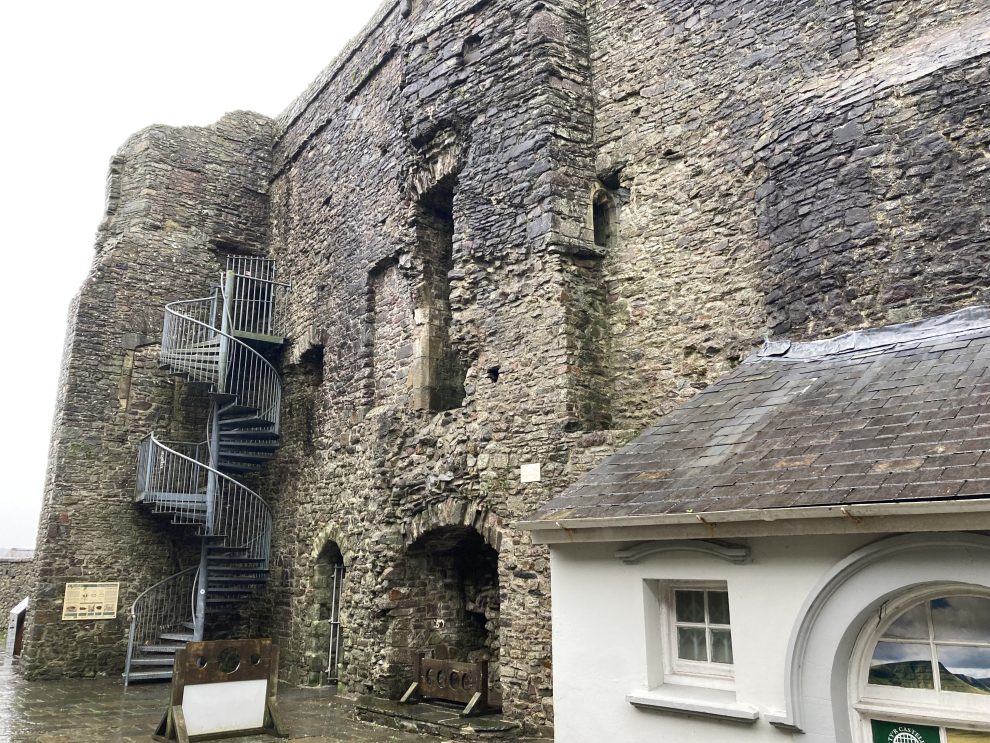
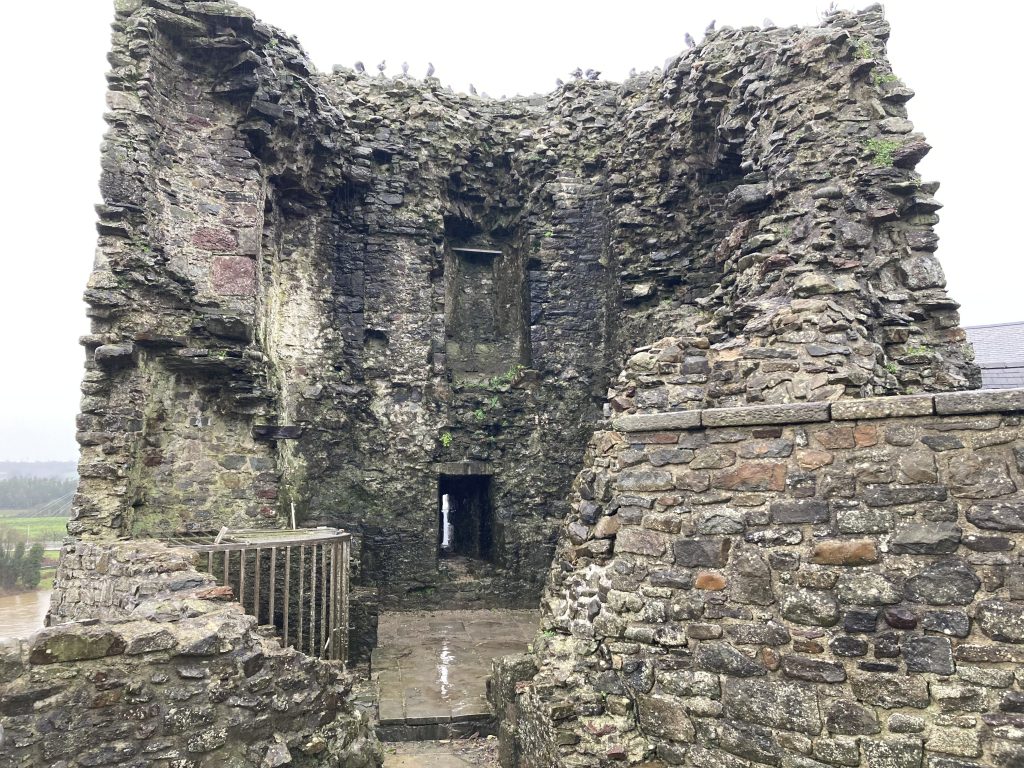
What’s actually left of the castle is a stone motte, twin-towered gatehouse, corner tower, wall turret with sections of curtain wall, plus a motte wall with turrets, and paired buttresses.
“Overall, the castle is in reasonable condition, which is quite remarkable for its age and the poor material choice for repairs,” said the heritage report.
It said the repairs now approved should be considered as “maintenance that’s fallen behind schedule”, and added: “The work will help preserve the ruin, open up previously shut areas and make accessible this wonderful structure which is iconic within the town’s heritage.”
The castle is managed by Welsh Government heritage body Cadw, which was satisfied Carmarthenshire Council could determine the listed building consent application.
The council said interim scheduled ancient monument consent has been granted separately.
“Both consents include conditions that must be met before any works can commence, and these will likely form part of the contractors work package,” said a council spokeswoman.
“We are currently working to secure the necessary funding for the required works. Once this is confirmed, we will proceed with a procurement exercise. At this stage, we are unable to confirm a start date however we hope to have an update over the coming months.”

POTTED history of Carmarthen Castle (from a heritage impact assessment by Nathan Goss Conservation)
- Originally built in 1109 as a motte and bailey castle by Walter, Sheriff of Gloucester, attacked unsuccessfully by Gruffydd Ap Rhys in 1116 and then destroyed in 1137, and then rebuilt by Gilbert fitz Richard, Earl of Pembroke, in 1145.
- Re-captured in 1146, it was strengthened by Cadell ap Gruffydd in 1150, returned to English royal control, it was probably first rebuilt in stone, resisting two attacks by Lord Rhys, but taken by Llywelyn the Great in 1215.
- William Marshall the younger retook the castle 1223 and returned it to royal hands in 1226. In 1233, it withstood a siege by Llywelyn.
- In 1258, after the massacre of an English army from Carmarthen at Coed Lathen, it was bestowed on Prince Edward, later Edward I. The castle became the seat of royal government in South Wales.
- The Black Prince (eldest son of Edward III) was granted the lordship in 1343 and visited in 1351, 1362 and 1370. Richard II visited in 1399.
- The castle was captured by Owain Glyndwr in 1405, having sacked the town in 1403.
- During the Wars of the Roses it was granted to Sir Rhys ap Thomas (died 1525) as Chief Justice of South Wales.
- During the Civil War, the castle was captured by the Parliamentarians under General Laugharne in 1644 but retaken by Royalist forces. By 1648 Laugharne had changed sides, and Cromwell halted at Carmarthen, probably then ordering the slighting (deliberately damage) of the castle, described in 1660 as ‘quite demolished’.
- In 1789-92, architect John Nash’s county gaol was built within the curtain wall, for which much of the remains were demolished.
- The gaol was extended over the years and covered most of the site. From 1938, the construction of the County Hall obliterated any remains on the gaol site within the curtain walls.