

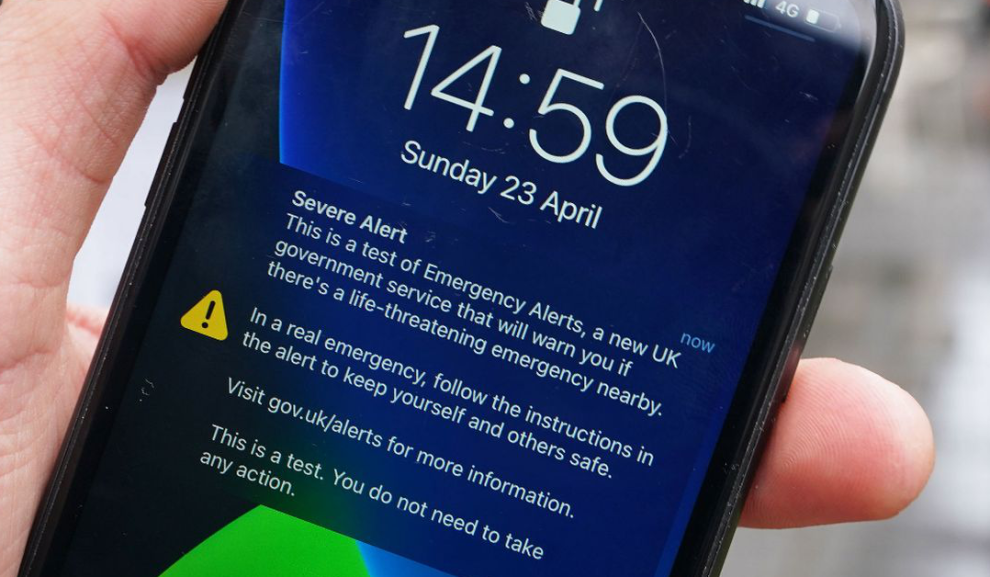

Sunday, 7 September at 3pm – that’s when every mobile phone across the UK will simultaneously blare a loud siren and vibrate, as part of a planned test of the Government’s national emergency alert system.
This marks only the second time a UK-wide test of the system has been conducted, following the inaugural trial in April 2023. Designed to warn of life-threatening emergencies, the alert system is capable of delivering vital safety information in real-time during events such as severe weather, public safety threats, or civil emergencies.
The message, which will clearly state it is a test, will appear on screen and trigger a distinctive ten-second siren sound — even if phones are on silent. The alert will be sent to all compatible mobile phones connected to 4G or 5G networks. Devices do not need to be connected to mobile data or Wi-Fi to receive the alert, but phones that are switched off, using only Wi-Fi, or connected via 2G or 3G networks will not receive it.
There are an estimated 87 million mobile phones in use across the UK, all of which could potentially receive the test alert — provided they meet compatibility requirements.
Officials say the test is being conducted to ensure the system functions effectively and to familiarise the public with the process, echoing similar measures already in place in countries such as Japan and the United States. Ahead of the test, the Government will launch a public information campaign, with particular efforts to reach vulnerable individuals, including victims of domestic abuse who may be in possession of hidden or secondary devices.

Pat McFadden, Chancellor of the Duchy of Lancaster, said:
“Emergency Alerts have the potential to save lives, allowing us to share essential information rapidly in emergency situations including extreme storms. Just like the fire alarm in your house, it’s important we test the system so that we know it will work if we need it.”
Importantly, the emergency alert system does not require users to opt in, nor does it collect phone numbers or location data. The alerts are broadcast-based and do not involve individual tracking or data gathering.
Since the system’s national rollout, five alerts have been issued in response to genuine emergencies. The most significant activation occurred during Storm Éowyn in January 2025, when approximately 4.5 million people across Scotland and Northern Ireland received an alert after a red weather warning was declared.
In December 2024, around 3.5 million people across Wales and the South West were alerted during Storm Darragh. Other instances have included the discovery of an unexploded Second World War bomb in Plymouth and incidents of flash flooding in Cumbria and Leicestershire.
The exact wording of the alert will be made public prior to the test, and officials are encouraging everyone to be aware of the timing and purpose of the alert to avoid unnecessary alarm.
The message is clear: while this is only a test, the ability to communicate quickly and effectively in times of danger is crucial. This system, officials say, is about safeguarding lives — and making sure the nation is ready when it truly matters.