

THE RESULTS of the 2026 Big Farmland Bird Count (BFBC) show that farms providing supplementary feeding are supporting higher numbers of many farmland bird species whose breeding populations are declining nationally.
Run by the Game & Wildlife Conservation Trust (GWCT) and sponsored by the NFU, the BFBC takes place each year in February and encourages farmers and land managers to record the bird species and numbers on their farms.
Since 2014 it has formed a national census of farmland birds. It also aims to raise awareness of the important role that land managers play in helping birds across the countryside, quantifies the impact of the conservation work that many farms and estates carry out, and highlights the crucial support agri-environment schemes provide.
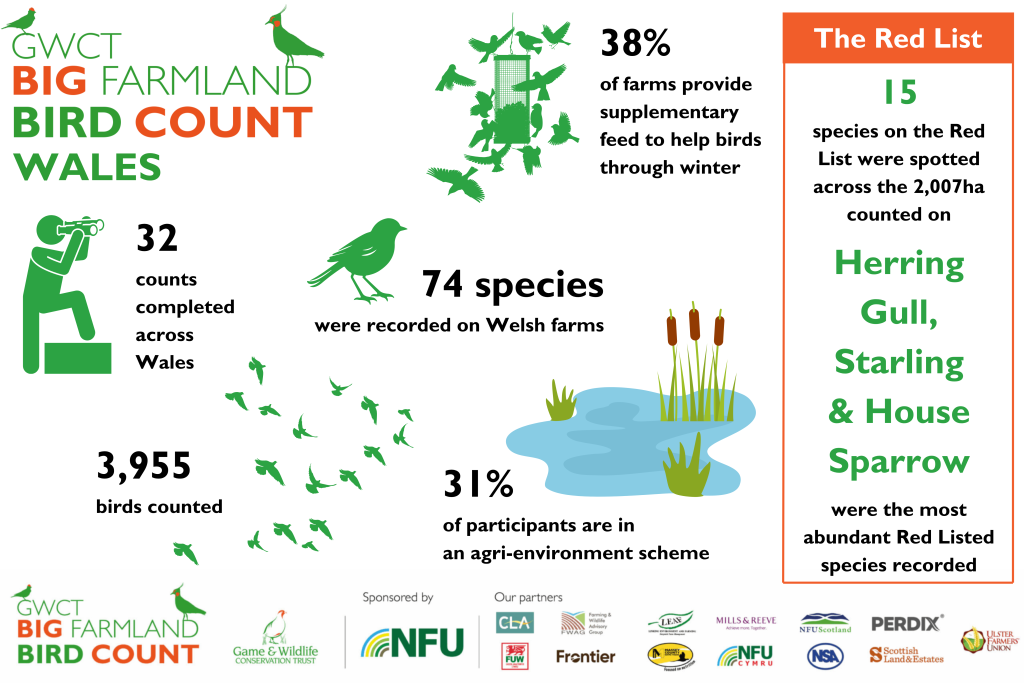
Despite poor weather conditions this spring, over 1,200 submissions were made from across the UK. A total of 275,024 birds were counted over 292,828 hectares of farmland by farmers, land managers, or their helpers, with the most counts submitted in Suffolk, Norfolk, and Lincolnshire at 139, 101, and 62 counts respectively.
This year they found that 67 per cent of farms surveyed were in an agri-environment scheme, with 64 per cent providing supplementary feeding for birds on their farm. In total, 69,222 red-listed birds were counted including 34 different species, with the most abundant of those being starling (25,306), lapwing (19,198), and fieldfare (15,816).

Jayna Connelly, GWCT’s science communicator who studied the trends and data in this year’s results, says: “The BFBC data shows that many farmland species that are declining nationally as breeders, can be found in large winter numbers on farmland.
“Red listed farmland specialists such as starling, lapwing and linnet continue to feature strongly in the counts, despite severe long-term declines shown by BTO data.
“This suggests that well managed farmland, with supplementary feeding and improved habitat features, helps provide important winter refuge and food when it is scarce elsewhere. However, it hasn’t solved the underlying breeding problems driving national declines – populations may be boosted locally even where these species remain under pressure overall.
“In contrast, BFBC data for adaptable generalists like woodpigeon and jackdaw show patterns that closely mirror their national stability or increases, which provides a useful benchmark and helps reinforce that management really matters most for specialist species.
“For highly mobile winter visitors such as fieldfare and gulls, the BFBC data show big year to year swings. When you set that against BTO evidence, it becomes clear these changes are driven much more by weather, movements and redistribution than by real population change.”
NFU Vice-president Robyn Munt says: “It is really encouraging to see farmers and growers continually engaging with the Big Farmland Bird Count, with a range of farmland bird species being recorded in large numbers on farms during the winter.
“From providing supplementary feeding to maintaining hedgerows, land managers across the country are playing a vital role in supporting farmland wildlife. These findings provide a valuable data set and are an important indicator that farmers and growers can sustainably produce food whilst supporting outcomes for nature.
“With 67 per cent of farms surveyed participating in agri-environment schemes, it is clear that schemes such as the Sustainable Farming Incentive (SFI) are making a difference on the ground. This is why it is so important that the government provides some much-needed certainty on SFI and the future of agri-environment schemes, so farmers can continue to make positive environmental choices with confidence.”
Roger Draycott, GWCT’s director of advisory, says: “Findings like this help to demonstrate the impact of practitioner science schemes like the Big Farmland Bird Count and gives us valuable information about how birds are faring across our farmland, and what actions farmers and other land managers can take to help. This makes conversations with other scientists, working conservationists on the ground, and policymakers easier, as we have strong data to back up our points. We are currently working on a long-term analysis of BFBC data recorded to date and look forward to sharing the results of that in due course.”
Since 1970 the UK has lost 73 million wild birds and now more than one in four bird species are on the Red List. Farmland birds have shown the biggest decline, with numbers falling by 63 per cent in the past 50 years.

We will not halt the alarming declines of species such as curlew and skylarks if we leave it to nature reserves and national parks alone. With 72 per cent of land in the UK being farmland, the key to reversing the decline in wildlife is held by those looking after this land and biodiversity recovery must take place alongside sustainable food production.
The BFBC helps figure out what is working for wildlife and provides farmers with a way of measuring the impact their conservation efforts are having on the landscape. This data helps demonstrate why it is essential that the Government continues to adequately fund agri-environment measures.
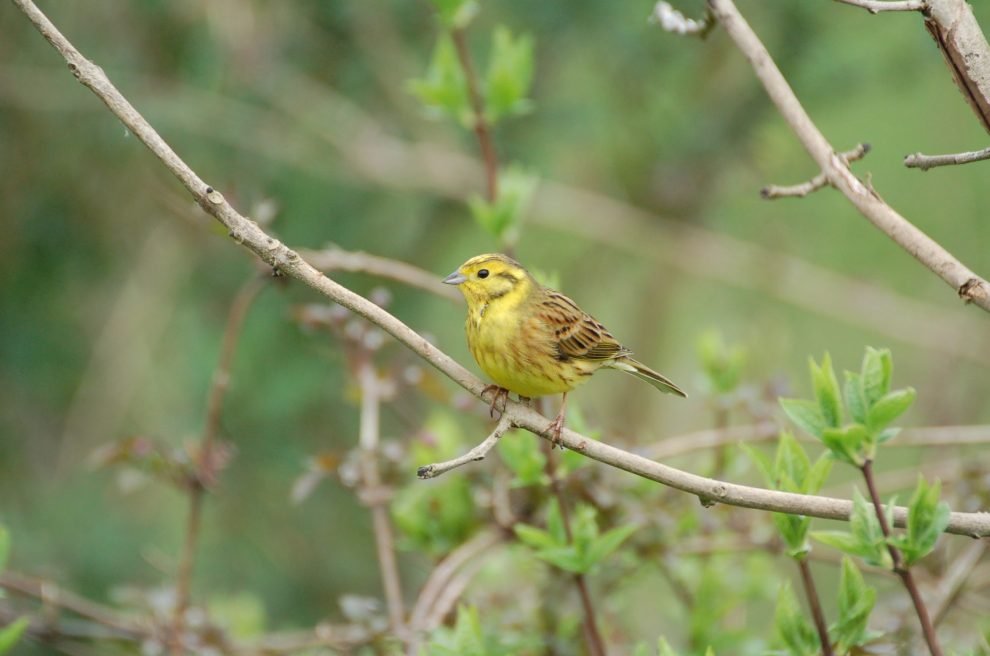
Over the past decade, the count has enabled us to spot trends and changes in the abundance of certain species. One such example is the yellowhammer, which had declined dramatically, but has since increased four-fold on farms with both an agri-environment scheme and supplementary feeding in place.
Reasons for the decline
Changes in farming methods, such as the removal of hedges and natural wildlife corridors, and the use of pesticides since the 1970s mean many species, such as yellowhammers, corn buntings and grey partridges have struggled to find enough food and suitable habitat. There have also been big increases in predators like crows and foxes, which prey on eggs, chicks and adult birds.
The BFBF also highlights how we can all help our birds during the winter months when food is scarce and temperatures drop, a time often referred to as the ‘hungry gap’ when natural food sources are running low. These are some of the measures farmers can implement:
- Planting and sympathetically managing hedgerows (not cutting every year) to provide farmland birds with nesting habitat, safe places to hide from predators and berries and insects to eat.
- Creating and keeping wide field margins – conservation headlands – where little or no pesticides are used, allowing some broad-leaved weeds to flourish, and sowing strips of plants to provide bird seed.
- Leaving some areas of land cultivated but uncropped to provide food and suitable nesting for birds that prefer to forage and nest on the ground, such as red-listed lapwing, skylark and stone curlew.
- A pond or wetland area around the farm can help attract wildfowl and wading birds.
- All these measures help to provide food, nesting habitat and a safe haven from predators.