

Makerfield result sparks fresh questions over Starmer’s future as party figures openly discuss leadership change
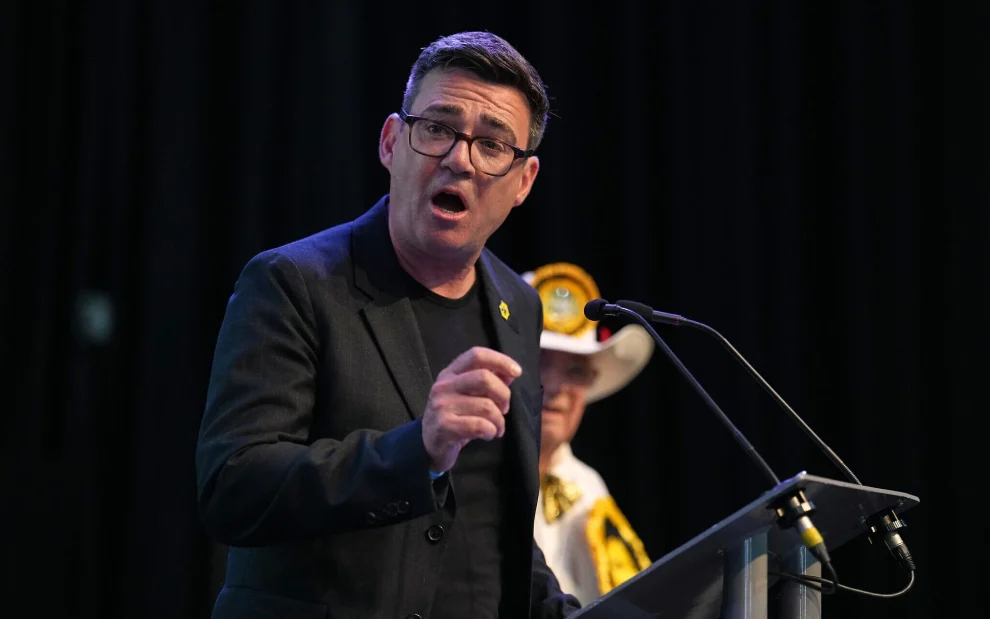
ANDY BURNHAM has declared that Labour faces a “final chance to change” after securing a commanding victory in the Makerfield by-election, a result that has plunged the party into a fresh debate about the future of Prime Minister Sir Keir Starmer.
The former Greater Manchester Mayor won the Wigan-area seat with 24,927 votes, securing 54.8 per cent of the vote and increasing Labour’s share by ten percentage points compared with the 2024 General Election. Reform UK finished second with 15,696 votes (34.5 per cent), while the Conservatives suffered a collapse, securing fewer than 1,000 votes and just 2.2 per cent of the total.
The scale of Burnham’s victory has stunned political observers. By-elections traditionally see governing parties lose support, yet Burnham not only held Labour’s vote together but expanded it significantly at a time when national polling suggests Labour is struggling.
Speaking after the result was declared, Burnham described the election as a potential turning point for both Labour and the country.
“Everyone knows that politics isn’t working. Everyone can feel that the country isn’t where it should be,” he said.

“Tonight could, just could, be the turning point.”
He warned that voters were demanding change and delivered a pointed message to his own party.
“This is a final chance to change,” he said. “There will be no second chance.”
A challenge to Starmer?
Although Burnham stopped short of announcing a formal leadership bid, his victory is expected to intensify pressure on Sir Keir Starmer, who has faced mounting criticism from within Labour following disappointing local election results and the continuing rise of Reform UK.
The Prime Minister sought to put on a show of defiance on Friday morning, congratulating Burnham on what he described as a “very good victory” and insisting he would fight any attempt to remove him.
Asked whether he would stand in a leadership contest if one were triggered, Starmer replied: “If there is a contest, then yes I will run, I will stand. I’m not going to walk away from that.”
However, Labour MPs and senior party figures were already openly discussing the possibility of change.
Southport MP Patrick Hurley said Labour needed “a transition to something new”, while York MP Rachael Maskell argued that a leadership contest “has to happen soon”.
Former Health Secretary Wes Streeting, who has previously indicated he would consider standing for the leadership himself, described Burnham’s result as an “astonishing victory” and said it proved Labour needed to change if it was to defeat Reform UK nationally.
Culture Secretary Lisa Nandy, whose Wigan constituency neighbours Makerfield, described the result as “history in the making”.
“What Andy’s shown here is that there is something that he brings, a willingness to go out and fight for the change that people need,” she said.
“He wears his heart on his sleeve and people have responded.”
A northern agenda
Throughout the campaign Burnham positioned himself as a champion of working-class communities and argued that Labour must reconnect with voters who feel neglected by Westminster.
He pledged to make Makerfield the benchmark against which national policies would be judged.
“Makerfield will never be a stepping stone to me,” he said.
“It will be my touchstone. A Makerfield test at the heart of British politics will ensure the places Westminster has neglected will now get fairness.”
Burnham also renewed calls for policies aimed at reducing household costs, arguing that Labour must focus on making life affordable again.
He called for lower water, energy and rail bills, a new programme of reindustrialisation and an economy that “works for everybody”.
The newly-elected MP also said England’s long-standing north-south divide could not be addressed without major national reforms.
“I always knew that one day I would seek to go back to Westminster to complete that unfinished business,” he said, referring to his years as Greater Manchester Mayor.
Reform setback
The result represents a setback for Nigel Farage’s Reform UK, which had hoped to build on strong local election performances in the area.
Farage admitted it had been “a disappointing morning” for his party, saying he had expected a stronger showing.
Nevertheless, Reform remains firmly in second place nationally in many opinion polls, and party leaders quickly turned their attention to another contest triggered by Burnham’s victory.
Under electoral rules, Burnham can no longer serve as Greater Manchester Mayor now that he has returned to Parliament. His election automatically triggers a mayoral by-election, expected to take place later this summer.
Reform deputy leader Richard Tice described the mayoral contest as the party’s “next ambition”.
Labour ministers have already signalled that retaining the mayoralty will be a top priority.
Housing Secretary Steve Reed warned that a Reform victory in Greater Manchester would have serious consequences and urged Labour supporters to unite behind the party’s candidate when the campaign begins.
A defining moment
For now, Burnham’s immediate focus remains Makerfield. Yet few doubt that his emphatic victory has transformed the political landscape.
Only weeks ago, discussion of a Labour leadership challenge was largely confined to Westminster gossip. Today it is being discussed openly by MPs, former ministers and senior figures across the party.
Whether Burnham ultimately launches a challenge remains unclear. To force a contest he would need the support of at least 81 Labour MPs.
What is certain is that his victory has strengthened the argument made by supporters that he is one of Labour’s most effective electoral performers and one of the few figures capable of taking on Reform UK in traditional working-class heartlands.
The coming days will reveal whether Makerfield was simply a remarkable by-election result, or the moment that reshaped the future direction of the Labour Party.