
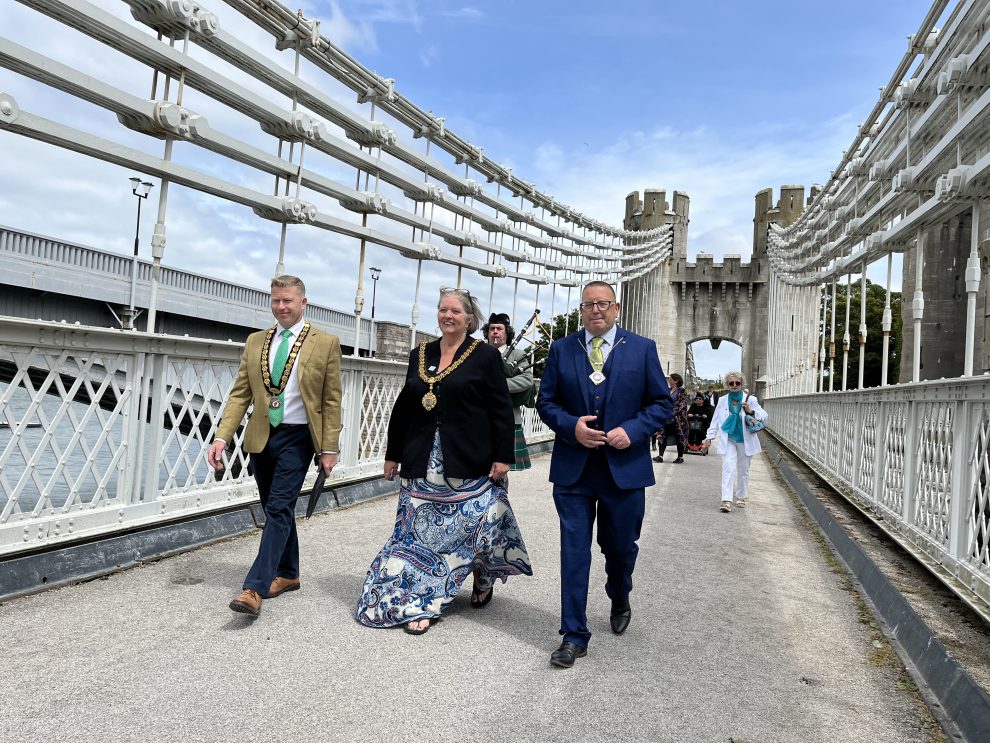

A SPECIAL plaque and timeline were unveiled in Conwy on Wednesday (July 1) to mark 200 years since the opening of the Conwy suspension bridge and cob.
The plaque was unveiled by the Institution of Civil Engineers North Wales Cymru Chair, Ian Davies, alongside Mayor of Conwy and Councillor Sian Grady, and Councillor Trystan Lewis, Chairman, Conwy County Borough Council.
The cob and suspension bridge mark the vision and ingenuity of Thomas Telford, the first President of the Institution of Civil Engineers.
In 1815, Thomas Telford received the commission from Parliament to undertake the work of improving the London to Holyhead Road, which included the link to Chester.
Telford set about improving the road from Chester to Bangor by completing the cob in 1825 and later the suspension bridge in 1826.

Prior to the cob and suspension bridge, the only way of crossing the Conwy estuary was by ferry across a dangerous tidal channel.
The suspension bridge was gifted to the National Trust in 1965 and now Grade 1 listed.
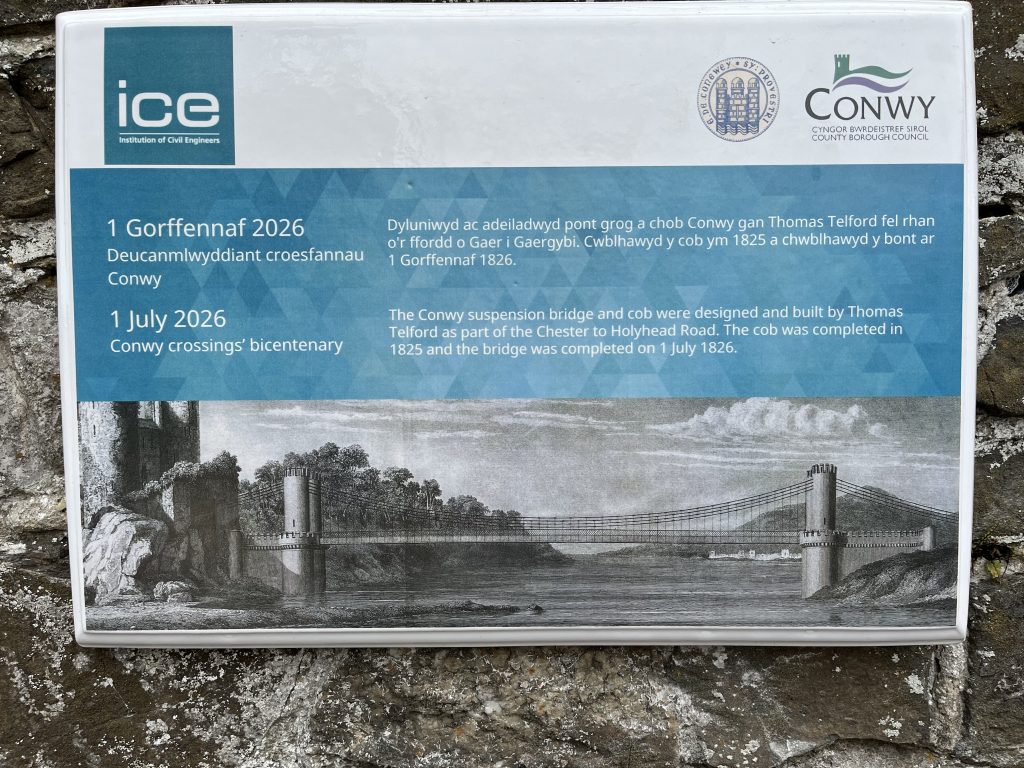
The Conwy suspension bridge is now one of the three oldest road suspension bridges in the world.
ICE Wales Cymru North Wales Chair, Ian Davies, said: “Today’s unveiling marks 200 years of the Conwy bridge and cob that were built by our first President, Thomas Telford.
“These crossings historically connected Wales to England, Ireland and mainland Europe. Engineers play a vital role in shaping culture, connection and community for future generations”.
ICE Wales Cymru Director, Keith Jones, said: “2026 is the year of celebrating bridges in Wales. Earlier this year, we celebrated 200 years of the iconic Menai Bridge.
“Today, we are celebrating 200 years of the Conwy crossings. Then and now, these crossings have made crossing estuaries safer, connected people, and stood the test of time”.
Cllr Trystan Lewis, Chairman, Conwy County Borough Council said: “I’m delighted to join the celebration of 200 years of the Conwy Suspension Bridge and Cob.
“These iconic landmarks, enjoyed by our communities, showcase outstanding engineering, our unique historic environment, as well as the dedication of generations who have cared for them.”