
Motorists urged to ‘drive your litter home’ as charity launches awareness campaign
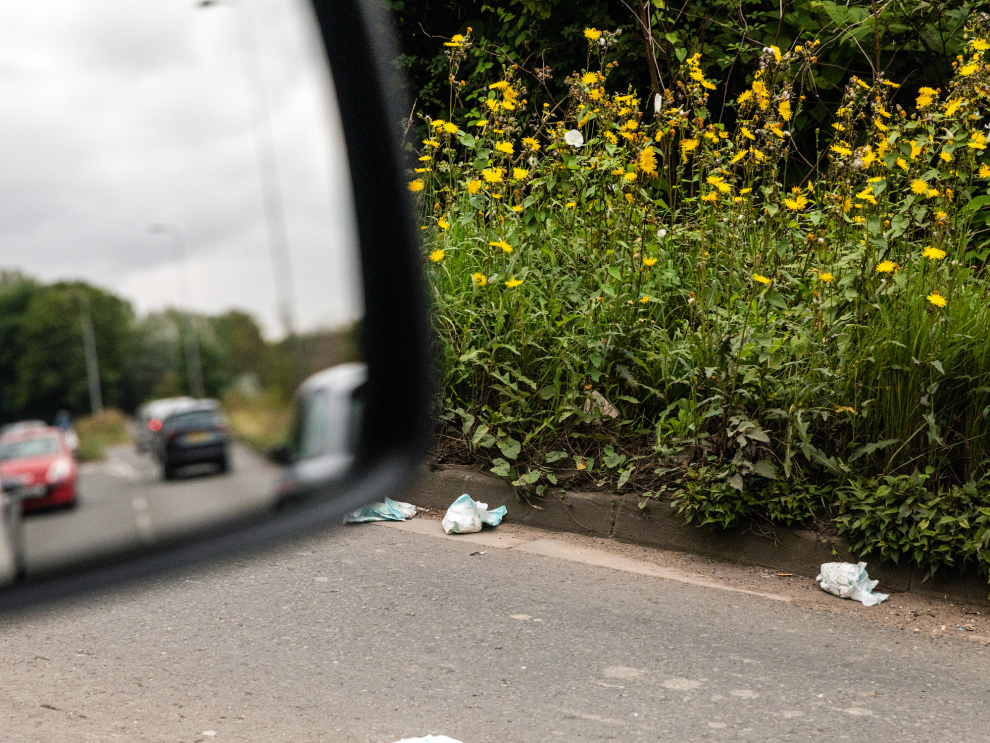
LITTER is blighting almost every major road in Wales, according to new data released by Keep Wales Tidy.
Surveys carried out by the charity found litter on 98.8% of A and B roads across the country, with smoking-related waste – mainly cigarette butts – present on 88.1% of main routes.
The findings have prompted a renewed call for motorists to take responsibility for their rubbish, as part of a Welsh Government-funded social media campaign urging drivers to “drive your litter home”.
The data highlights the environmental impact of on-the-go food and drink consumption, with confectionery wrappers found on 80.7% of main roads, drinks litter present on 72.1%, and fast-food packaging recorded on 67% of routes surveyed between April and December 2025.
Keep Wales Tidy says roadside litter not only spoils the landscape but poses a serious threat to wildlife, pollutes waterways and is both costly and dangerous to remove.

Chief Executive Owen Derbyshire said the scale of the problem was deeply concerning.
“Loving Wales is basically in my job description, but even I feel embarrassed by the state of our roadsides,” he said.
“There is simply no excuse for throwing litter from a vehicle. It is lazy, unnecessary, and completely avoidable.
“Roadside litter is not a new problem, but this latest data shows just how widespread it has become. Every motorist needs to take responsibility. Litter in your vehicle belongs to you. Drive it home and dispose of it properly.”
The figures were gathered using Geospatial Litter Analysis (GLAN), a monitoring system developed by Keep Wales Tidy to record litter and wider environmental quality issues in publicly accessible spaces. The methodology has replaced the previous LEAMS system which operated between 2007 and 2024.
For the purposes of this campaign, analysis focused on sites within 10 metres of A and B roads across Wales. Motorways and C roads were not included.
The new campaign aims to highlight the far-reaching environmental and financial cost of roadside litter and encourage behavioural change among drivers.