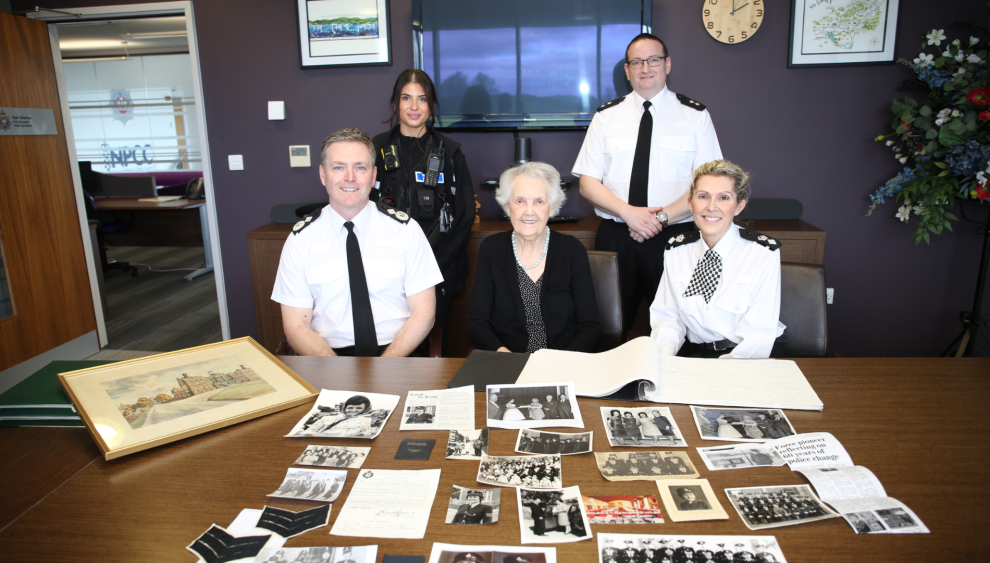

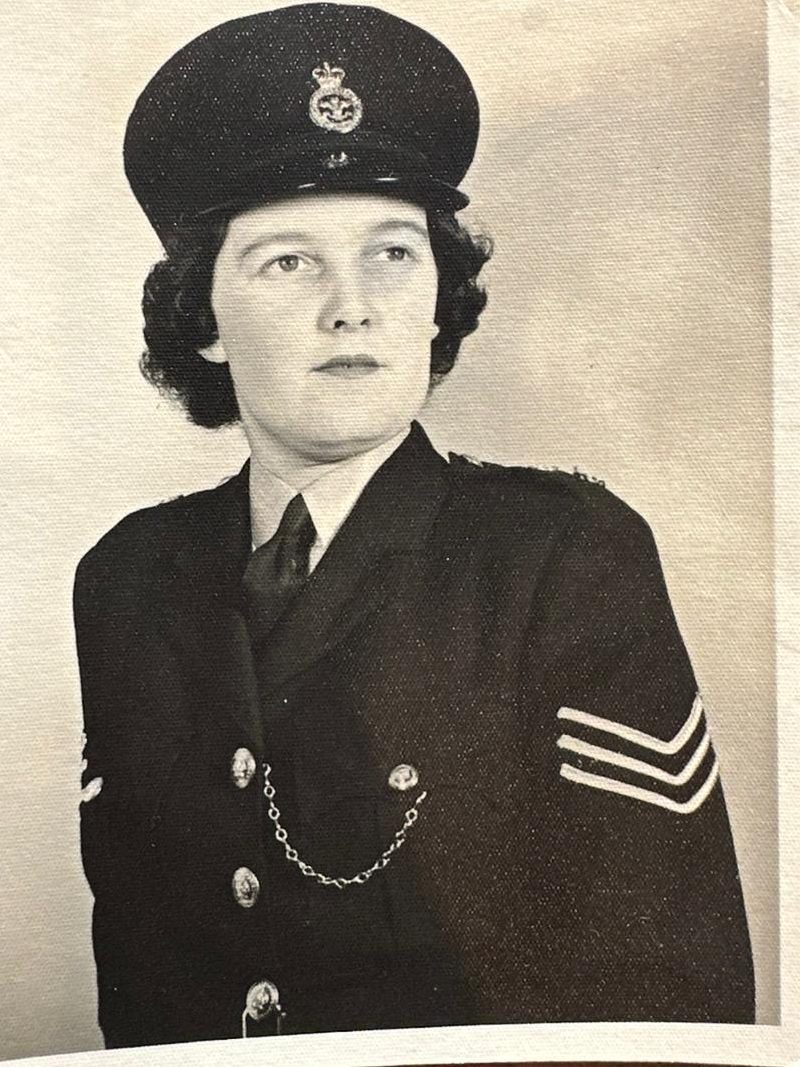
Jean Evans, who joined the force in 1953, became its first female sergeant just five years later
A PIONEERING police officer who patrolled the streets of West Wales alone with little more than a whistle has reflected on her remarkable career as part of International Women’s Day celebrations.
Jean Evans, originally from St Clears, joined Carmarthenshire Constabulary in 1953 at the age of 21 after spotting an advertisement in a local newspaper.
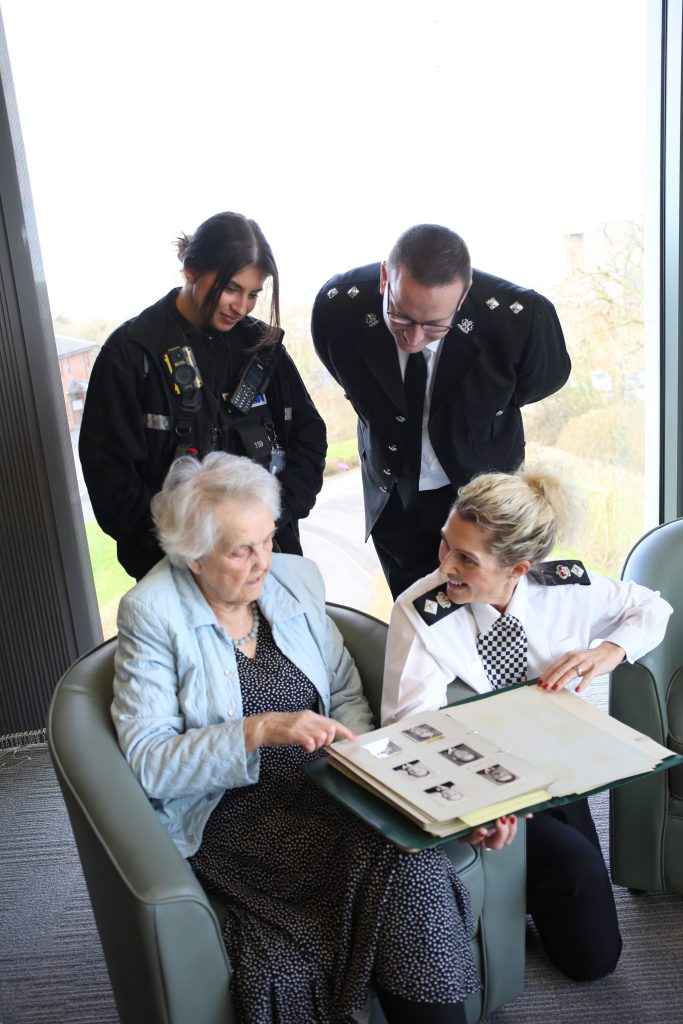
At the time, women in policing were rare. Jean was one of only a handful of female applicants and, following an interview with Chief Constable T.H. Lewis in King Street, she was appointed as a “woman police officer”.
Within five years she had broken new ground, becoming the first female police sergeant in the former Carmarthenshire and Cardiganshire Constabulary in 1958.
Policing in a different era
Speaking during a commemorative visit to police headquarters earlier this month, Jean recalled the challenges of policing in the 1950s.

“You went out on your own… you just had a whistle, tuition and hoped for the best,” she said.
In an era before radios and modern technology, officers often patrolled alone and relied heavily on local knowledge and community relationships.
Discipline within the force was also strict, with female officers required to maintain a specific appearance.
“Looking sharp was essential. If you were seen without your hat, you would be put on a charge,” Jean explained.
Despite working in what was largely a male-dominated profession, Jean rose through the ranks and became responsible for supervising 16 policewomen across stations including Aberystwyth, Ammanford and Llanelli.
Her role included mentoring officers through examinations and supporting their career development.
“Senior policemen didn’t accept the introduction of female officers as much as the younger policemen,” she said. “You had to prove your place in the job.”
On the frontline
As a sergeant, much of Jean’s work involved supporting women and children, including interviewing vulnerable victims and responding to domestic incidents.
She also regularly visited the town’s pubs to monitor underage drinking and maintain order.
“I loved my job being out on the beat all day,” she said. “At times I felt that if there was a stranger in town, I would be aware of it because we more or less knew everyone.”

One of the first major criminal cases she encountered was the 1953 Pendine murders in Pendine, where John and Phoebe Harris were killed.
Their nephew, Ronnie Harris, was later convicted and became one of the final prisoners to be sentenced to death at Swansea Prison in 1954.
“I was in court throughout the trial to support the families,” Jean said. “I knew Ronnie from my previous job working in a local shop and only realised at the sentencing that I had gone to grammar school with his wife.”
Advice for future generations
Looking back on her career, Jean said her advice to women entering policing today remains simple.
“Have the community at the heart of your duties. Local knowledge and walking the beat was always my priority. Do the best you can and always be polite.”
Her recent visit to headquarters was organised with the help of Jolene Mann, Temporary Chief Superintendent, who said pioneers like Jean helped open the door for future generations of women in policing.
“Women like Jean have helped pave the way for female leaders like me,” she said.
“By mentoring, coaching and supporting women across both officer and staff roles, we continue building a truly inclusive organisation that reflects the communities we serve.”
While policing has evolved dramatically with modern technology, greater diversity and new career opportunities, Jean’s legacy remains rooted in the values that still define the profession today – integrity, courage and service to the community.