

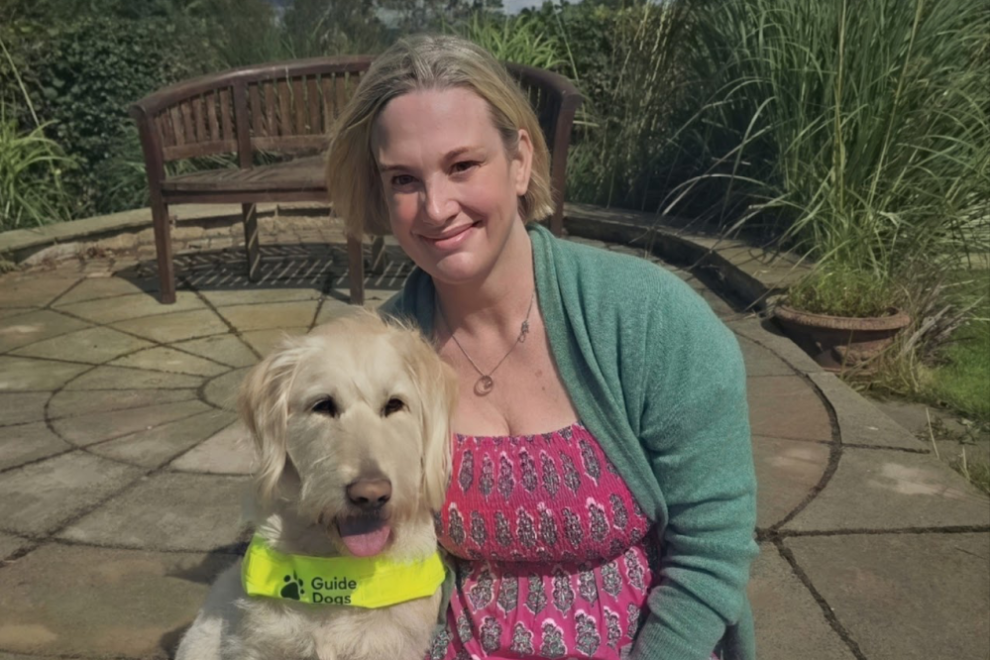

GUIDE DOGS UK are calling for a clear law on pavement parking as new figures reveal the dangers faced on everyday journeys.
For many blind and partially sighted people, a simple walk to the shops or a bus stop can be dangerous. Cars parked on pavements block safe passage, forcing pedestrians into traffic or narrow gaps, often with little warning.
A YouGove survey of 615 UK councillors, conducted for Guide Dogs, indicated 74 per cent of those in areas without a clear law supported the call to introduce new powers.
More than eight out of 10 (84 per cent) respondents said pavement parking creates safety risks for pedestrians, while 51 per cent think current methods of tackling the issue are impractical.
Helen Brewis-Levie, 50, from Cupar, Fife, knows this danger all too well. With her guide dog Sunny by her side, she faces threats every time she leaves home.

Helen said: “Imagine walking down a route you rely on every day, only to find it blocked by a car. My guide dog Sunny hesitates, and suddenly I have no choice but to step into oncoming traffic. It’s terrifying.
“Sunny is extraordinary, but even he cannot protect us from the dangers caused by cars on pavements. Each time it happens, I lose a little more of my independence.
“This is not a minor inconvenience. Pavement parking strips blind people of dignity, safety, and basic human rights.
“Too often I’m told to ‘just deal with it’ or ‘find another route’. My right to safety should never be dismissed as trivial compared to someone’s wish for a convenient parking space.”
Nick Lancaster, 47, from Brecon, echoes her experiences. With his guide dog Benje, blocked pavements often force him to backtrack, miss buses or appointments, and avoid local shops entirely.
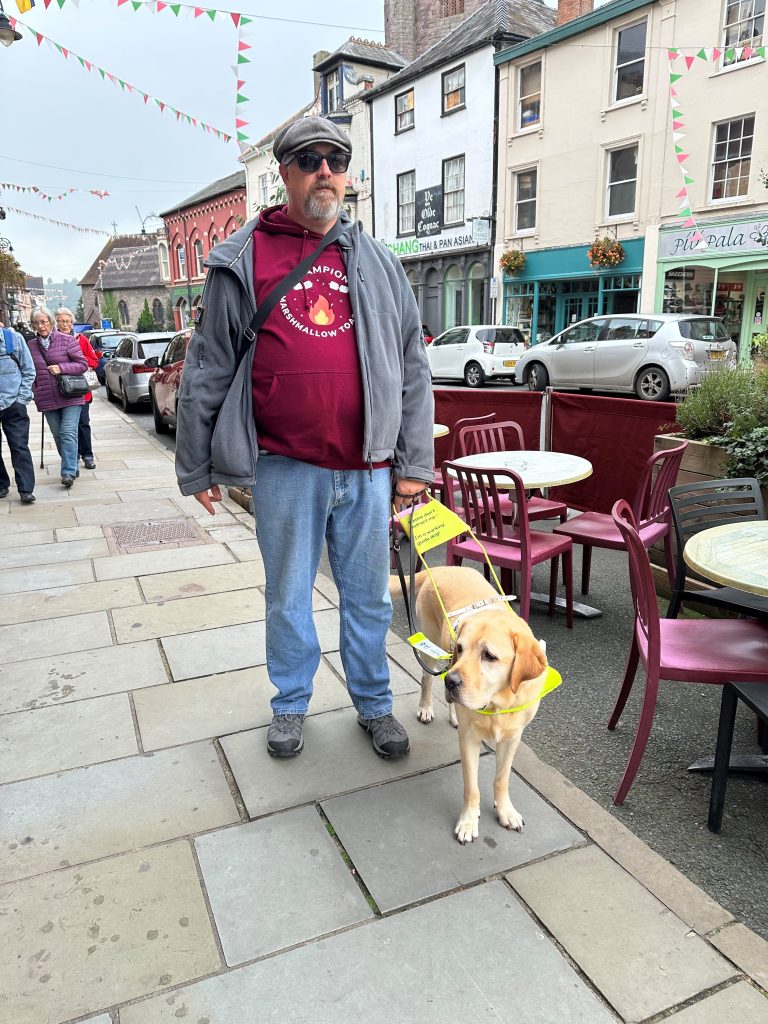
Nick explained: “In my town there is little off-street parking so whenever I leave my home I know I will come across vehicles parked on the pavement somewhere in my journey, but it is stressful not knowing where or when I am going to come across a blocked pavement and if I can get around it or have to backtrack and use an alternative route, if that is even possible.
“This leads to me missing buses, medical appointments or even just not being able to do some food shopping.
“There are parts of my town that for the safety of my guide dog and myself are no-go areas, meaning there are shops and businesses local to me that I have never visited.”
Guide Dogs’ research shows widespread support for stronger action:
- 74% of councillors support introducing powers to tackle pavement parking.
- 84% say pavement parking creates safety risks for pedestrians in their area.
- 45% think current enforcement is too expensive, and 51% feel it is too impractical.
- 83% of the public say they have had to walk in the road because of blocked pavements.
- Nearly two-thirds (63%) want pavement parking made illegal.
Eleanor Briggs, Head of Policy, Public Affairs and Campaigns at Guide Dogs, said: “Local leaders are clear: pavement parking is unsafe, the current system just isn’t working across most of the country, and a clear law is needed to make sure everyone can travel down their streets safely, particularly people with sight loss.”

Guide Dogs is calling on the UK Government to act urgently. The Department for Transport has yet to publish the findings of its 2020 consultation on pavement parking. A simple change in the law could restore freedom, dignity, and independence to thousands of blind and partially sighted people who currently face danger on everyday journeys.
For more information about Guide Dogs’ pavement parking campaign, visit the Guide Dogs UK website.