

Former Greater Manchester mayor takes office promising national renewal, greater devolution and a government focused on the cost of living
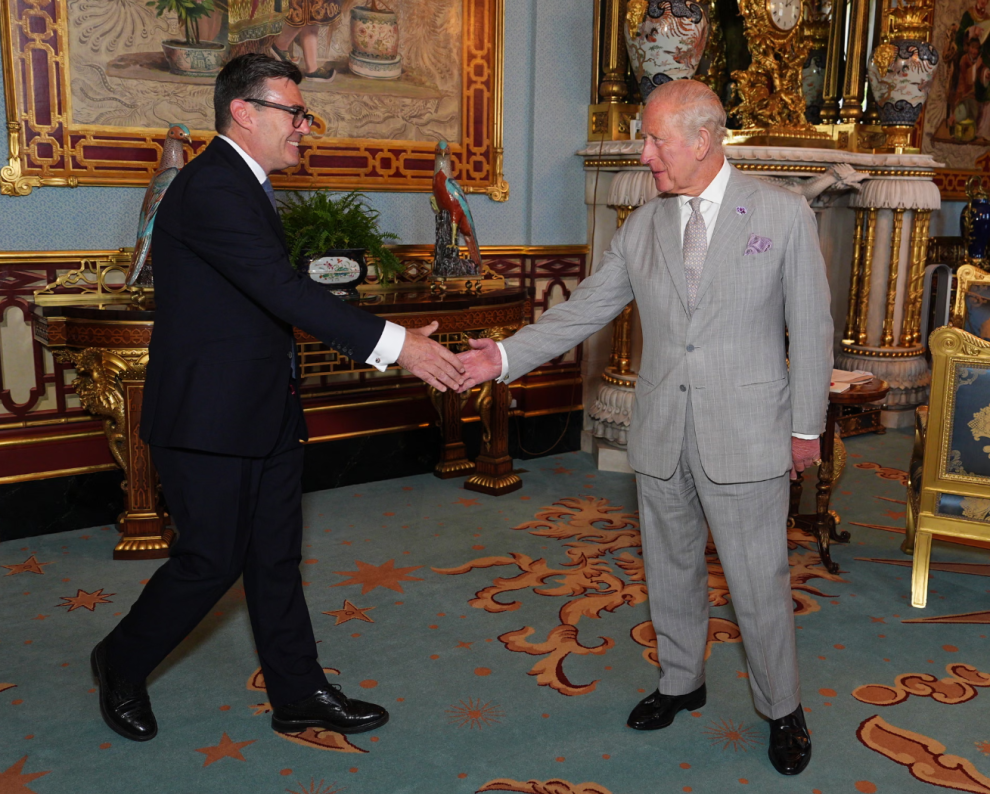
ANDY BURNHAM has become Prime Minister of the United Kingdom after being formally invited by King Charles III to form a government.
The former Mayor of Greater Manchester entered Downing Street on Monday, July 20, following the resignation of Sir Keir Starmer.
Burnham becomes Britain’s seventh prime minister in a decade and takes control of a Labour government with a substantial Commons majority, but facing deep concerns over the economy, public services and falling confidence in Westminster.
His arrival marks the completion of one of the fastest political rises in modern British history.
Only weeks ago, Burnham was still serving as Mayor of Greater Manchester. He returned to Parliament after winning the Makerfield by-election before securing overwhelming support from Labour MPs to replace Starmer.

He was confirmed as Labour leader after receiving the backing of 379 Labour MPs and facing no rival candidate.
Starmer leaves Downing Street
Sir Keir delivered his final address outside Number 10 before travelling to Buckingham Palace to formally tender his resignation.
He said he was proud of his government’s record and pledged his full support to his successor.
Starmer’s departure followed months of pressure over the direction of the government, its handling of the economy and disappointing results for Labour across the country.
Although Labour retains a large parliamentary majority, the change means Britain has a new prime minister without a general election.
There is no constitutional requirement for Burnham to call an immediate election, although opposition parties are expected to intensify demands for the public to be given a say.
From the “King of the North” to Number 10
Burnham enters Downing Street with a political identity built largely outside Westminster.
During his time as Mayor of Greater Manchester, he presented himself as a champion of regions and communities that had been overlooked by governments in London.
His public clashes with Whitehall earned him the nickname the “King of the North” and helped turn him into one of Labour’s most recognisable figures.
At the centre of his political argument is the claim that Britain has become too heavily controlled from Westminster.

He has repeatedly called for more decisions to be transferred to nations, regions, councils and local communities.
Burnham has promised what he describes as a ten-year programme of national renewal, including major investment in social housing, industry, transport and public services.
He has also proposed creating a “Number 10 North” operation in Manchester, focused on housing, utilities and economic regeneration.
The challenge will now be turning those promises into policies that can be delivered and funded.
Cost of living placed at centre of government
The new Prime Minister has indicated that tackling the cost-of-living crisis will be one of his first priorities.
Households across Britain continue to face pressure from food prices, energy bills, housing costs and stagnant wages.
Burnham is expected to place greater emphasis on wages, household bills and affordable housing, while reviewing several policies inherited from the previous administration.
One of his first confirmed moves has been to abandon the previous government’s national digital identity project.
His team said the resources committed to the scheme should instead be redirected towards helping families and strengthening public services.
However, Burnham inherits limited financial room, expensive defence commitments, severe pressure on the NHS and growing demands for reform of social care.
His ability to provide meaningful support without significantly increasing borrowing or taxation could define the opening months of his premiership.
First Minister calls for new relationship with Wales
Burnham’s arrival could have major consequences for Wales.
For the first time, a Labour prime minister at Westminster will have to work with a Plaid Cymru-led Welsh Government following Rhun ap Iorwerth’s election as First Minister.
Responding to Burnham’s appointment, the First Minister said the change at Number 10 presented an opportunity to redefine the relationship between the Welsh and UK governments.
Rhun ap Iorwerth said: “I congratulate Andy Burnham on his appointment as Prime Minister, which presents an opportunity to redefine the relationship between the Welsh and UK Governments.
“I know that Andy Burnham shares my belief in the power of devolution to improve the lives of the people we serve.
“In that spirit, I hope we can speak the same language when it comes to devolving powers out of Westminster by strengthening, not bypassing, Wales’s national parliament and its ability to empower people and communities.
“I look forward to an early meeting with the new Prime Minister to agree how we can give Wales the powers it needs to grow the economy and build a fairer, more prosperous future for all.”
The reference to strengthening rather than bypassing the Senedd is likely to become central to the early relationship between the two governments.
Burnham has spoken frequently about moving power away from Westminster, but much of his political record has focused on English councils, combined authorities and city regions.
The Welsh Government will want assurances that any new programme of decentralisation recognises the Senedd as Wales’s national parliament and does not transfer powers directly from Westminster to local authorities without Cardiff Bay’s involvement.
Burnham’s record as a regional mayor suggests he understands the frustration caused by excessive centralisation.
However, questions remain over whether his devolution programme will result in significant new powers for Wales or remain focused primarily on English councils and city regions.
Plaid Cymru is expected to press the new Prime Minister over the devolution of rail infrastructure, policing, justice and control of the Crown Estate.
The Welsh Government will also seek a new approach to funding, arguing that Wales has repeatedly lost out under decisions made at Westminster.
Burnham will now have to demonstrate that his support for devolution extends beyond speeches and promises.
Welsh Labour sees an opportunity
The change in Downing Street also presents both an opportunity and a challenge for Welsh Labour.
Ken Skates, recently confirmed as the permanent leader of Welsh Labour, has welcomed Burnham’s emphasis on decentralisation and giving communities greater control.
Welsh Labour will hope Burnham’s popularity and more traditional Labour message can help the party rebuild following its historic defeat in the Senedd election.
However, there are likely to be tensions between the Labour government at Westminster and the Plaid Cymru administration in Cardiff Bay.
Both parties will seek to claim credit for any new funding or powers secured for Wales.
Plaid Cymru will argue that pressure from a non-Labour Welsh Government is necessary to win concessions, while Welsh Labour will portray Burnham as a prime minister who understands the needs of communities beyond London.
What it could mean for Pembrokeshire
For Pembrokeshire, the test will not be the language used outside Downing Street but whether the change results in visible investment and better services.
Burnham’s promise to shift power and economic activity away from London could benefit rural and coastal communities that have long argued that government policy is designed around large cities.
However, a model based heavily on English city regions will not automatically answer the needs of west Wales.
Pembrokeshire faces limited public transport, shortages of affordable housing, pressure on health and social care, seasonal employment, fragile town centres and the continued loss of young people who feel they must leave the county to find work.
A genuine policy of regional renewal would need to recognise that rural isolation can be every bit as damaging as deprivation in major urban areas.
Burnham’s plans for industrial renewal and infrastructure could also have significant implications for Milford Haven and the wider Haven waterway.
The area is already central to Britain’s energy system and is seeking to position itself at the heart of future developments involving offshore wind, hydrogen, port infrastructure and lower-carbon industry.
A UK Government committed to reindustrialisation could bring substantial opportunities to Pembrokeshire.
However, local businesses and communities will want firm decisions on energy policy, grid capacity, investment and skilled employment rather than another series of announcements without delivery.
West Wales will also be watching closely for changes to rail funding and transport policy.
Successive Welsh governments have argued that Wales has not received a fair share of major UK rail investment.
Burnham’s claim that he will speak for forgotten places will carry little weight locally unless communities west of Swansea see better connectivity and a fairer share of infrastructure spending.
No guaranteed honeymoon
Despite Labour’s large parliamentary majority, Burnham is unlikely to enjoy an easy transition.
The Conservatives and Reform UK have questioned his mandate, arguing that the public voted for a government led by Starmer rather than Burnham.
They are expected to demand an early general election and portray the leadership transition as an internal Labour appointment rather than a national endorsement.
Burnham must also manage competing pressures within his own party.
Some Labour MPs want a decisive break from the cautious approach associated with Starmer, while others fear that ambitious spending commitments could damage market confidence.
Businesses, investors and trade unions will closely examine his first Cabinet appointments and the economic programme announced by the new government.
Any major spending commitments will need to be accompanied by a credible explanation of how they will be funded.
A moment of possibility
Burnham enters Number 10 with considerable political advantages.
He is an experienced former Cabinet minister, a strong communicator and one of the few senior politicians to have developed a substantial political power base outside Westminster.
His emphasis on place, local identity and practical delivery may resonate in communities that have become increasingly distrustful of national politics.
But expectations are now exceptionally high.
The new Prime Minister has promised a different way of governing, a ten-year programme of renewal and an economy that works for every part of the country.
For Wales, the central question is whether Burnham’s belief in decentralisation will translate into greater respect, fairer funding and meaningful additional powers.
For Pembrokeshire, the question is even simpler.
Will the arrival of a self-declared champion of forgotten places finally bring investment and opportunity beyond Britain’s largest cities?
Andy Burnham has reached Downing Street promising to change how Britain is governed.
His premiership will ultimately be judged on whether that change can be felt hundreds of miles from Number 10.