

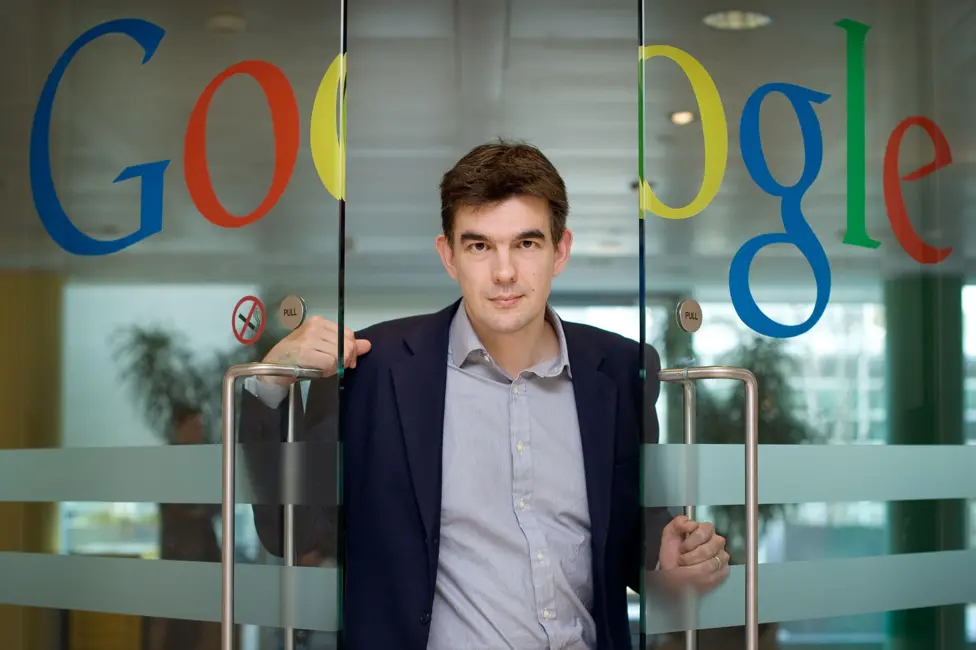

Former Google executive Matt Brittin set to take on the toughest job in British media
THE EXPECTED appointment of former Google executive Matt Brittin as Director General of the BBC raises a simple but crucial question: is he the right man to lead the corporation through one of the most turbulent periods in its history?
Brittin arrives with an impressive CV. A former president of Google in Europe, the Middle East and Africa, he spent nearly two decades at the heart of one of the world’s most powerful technology companies. Those who have worked with him describe a calm, intelligent and highly effective leader—someone capable of grasping complex problems quickly and delivering results.
That kind of leadership may be exactly what the BBC needs.
The corporation has endured a bruising few years, marked by editorial controversies, high-profile resignations and increasing political scrutiny. At the same time, it faces long-term structural challenges: declining traditional audiences, pressure on the licence fee model, and fierce competition from global streaming giants.

In that context, Brittin’s commercial experience could prove valuable. He has overseen large organisations, made difficult decisions, and navigated crises at scale. Supporters argue he brings the kind of strategic thinking needed to modernise the BBC, particularly as it accelerates its digital transformation.

But the BBC is not a typical business—and that is where doubts begin to surface.
Unlike Google, the BBC is a public service broadcaster with a duty to inform, educate and entertain all audiences. It operates under intense scrutiny from politicians, regulators, and the public. Every editorial decision can become a national issue. Running such an organisation requires not just managerial skill, but deep editorial judgement and an understanding of public accountability.
Critics point out that Brittin has no direct experience in public service broadcasting. That lack of editorial background could be a significant weakness, particularly given the recent controversies that have exposed concerns about oversight and decision-making within BBC News.
There are also broader cultural questions. Some have asked whether placing a former big tech executive in charge of the BBC risks blurring the line between traditional journalism and the digital platforms that have disrupted it. Companies like Google have been widely criticised for undermining local media by absorbing advertising revenues and reshaping how audiences consume news.
To some, the appointment feels like putting a “fox in charge of the henhouse”.
Others see it differently. They argue that the BBC must adapt to survive—and that means understanding, not resisting, the digital landscape. Brittin’s experience could help the corporation forge new partnerships, expand its reach on platforms like YouTube, and rethink how it delivers content in a rapidly changing media environment.
His immediate challenges will be considerable. He will need to rebuild confidence within the organisation, appoint key leadership roles, and restore trust after recent editorial missteps. Longer term, he faces the daunting task of defining what the BBC should look like in the next decade—and how it can remain relevant to audiences increasingly turning elsewhere.
Ultimately, the question is not whether Matt Brittin is capable. By most accounts, he is.
The real question is whether his background equips him for a role that is as much about public trust and editorial integrity as it is about strategy and innovation.
If he can combine his commercial acumen with a clear commitment to the BBC’s public service mission, he could bring much-needed energy and direction.

If not, he may find that leading the BBC is far more challenging than anything he faced in Silicon Valley.