

EWE NUTRITION on the approach to lambing has a significant impact on flock performance, says Dr Alison Bond, nutritionist for Rumenco. If the feeding balance is right in late pregnancy, improvements will be made in colostrum quality and yield, along with lamb survival and vitality.
Dr Bond explained: “Around 75% of foetal growth takes place in the six-week period prior to lambing.
During this time, a ewe’s energy and protein requirements rapidly increase to not only ensure lamb development, but to also support colostrum and milk production.”
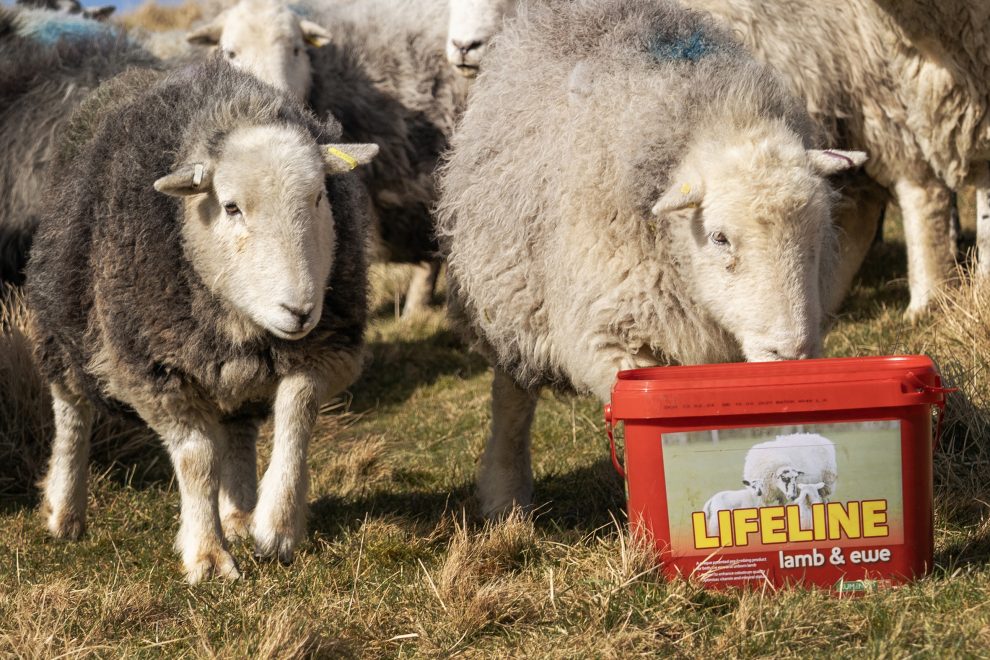
Feeding a specialist pre-lambing supplement such as LIFELINE Lamb and Ewe on the approach to lambing can support the increasing energy and protein requirements of the ewe. It may also help with forage utilisation, preventing body condition loss and support ewes’ immune function and colostrum quality.
If ewes are not receiving adequate nutrition, several issues can occur. These include reduced lamb birthweight which increases the risk of hypothermia and mortality, reduced quantity of colostrum and milk production, pregnancy toxaemia, and delayed onset of lactation.

She added: “Malnutrition during the final stages of pregnancy can reduce lamb birthweight resulting in a long-term knock-on effect in the flock from reduced lamb growth rates.
”There is also research that has found lambs from ewes with inadequate nutrition during late pregnancy to have a reduction in fertility due to the impact on foetal ovary and testes development.”

Sorting for body condition score:
To ensure a ewe’s nutritional requirements are being met, Dr Bond recommends body condition scoring throughout the year. She suggests this should begin around weaning to ensure the target body condition score (BCS) of 3 – 3.5 for lowland ewes (weighing 60-80kgs) and 2.5 for hill ewes (weighing 40-60kgs) is met by tupping. BCS should then be maintained or slightly increased during mid-pregnancy and target score be met for the final approach to lambing (3-3.5 for lowland ewes and 2.5 for hill ewes).
Ewes should be sorted at scanning based on the number of lambs being carried and BCS so that individual requirements can be met for the rapid foetal development period, with a final sort occurring six weeks before lambing.
Dr Bond explained: “As lambing approaches a ewe’s requirement for metabolisable energy (ME) increases according to ewe liveweight, number of lambs carried and proximity to lambing.
“These varying factors make it essential to sort ewes based on individual energy needs.
“For example, a 70kg ewe carrying a single, three weeks pre-lambing has a ME requirement of 12.6 MJ/day, which increases to 16.7MJ/day with triplets – which represents a significant difference in energy demand.”
Dr Bond is keen to add that sorting ewes based on energy requirements does not have to be overly complicated or a huge burden on infrastructure.
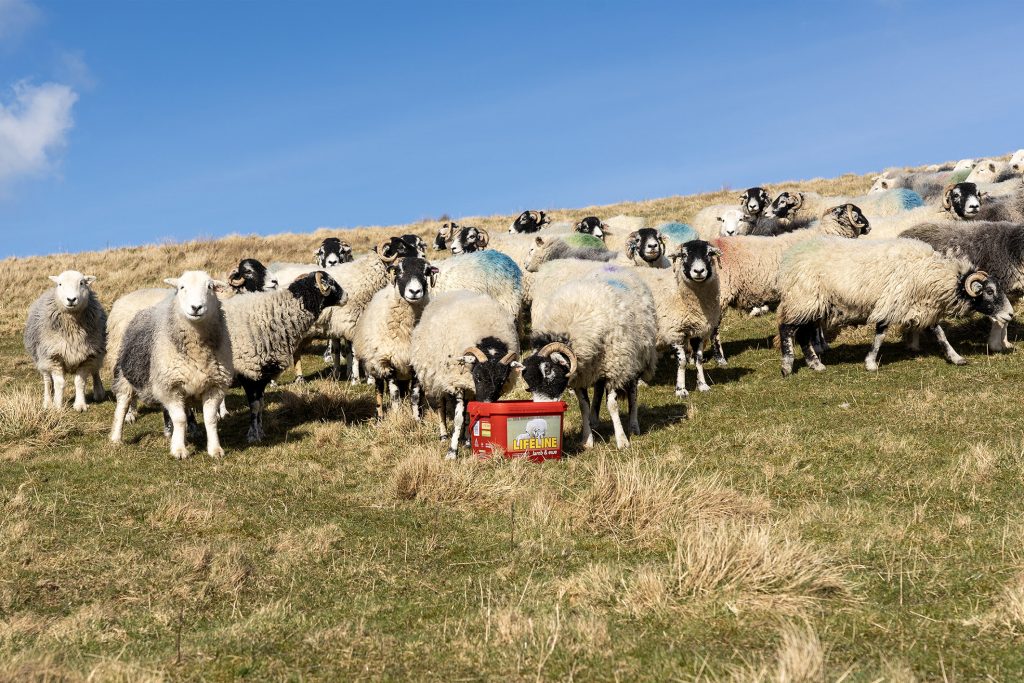
She continued: “An example would be a thin ewe needing extra nutrients, that could be moved to be with higher demand ewes. This would mean grouping thin single bearing ewes with twin bearing ewes.
“Similarly, a thin, twin bearing ewe could be moved to be with ewes carrying triplets.

“However, it is important to keep first-time lambers in separate groups to adult ewes,” she adds.
Late pregnancy nutrition demands:
Along with a rise in ME requirements, a ewe’s protein demands will also have a notable increase during rapid foetal growth in the last six weeks of pregnancy – particularly in the last three weeks before lambing. According to Dr Bond, protein deficient ewes will tap into carcase tissue from internal organs to support lamb development, which could have negative impact on future productivity.
Dr Bond explained: “Supplementing forage with high quality digestible undegradable protein (DUP) will support colostrum production and milk let down at lambing time, while protecting a ewe’s immune function.
“When choosing a delivery method, blocks or buckets allow for easy transport and make for a much cleaner supplementary nutrition system than trough feeding if conditions are muddy.”
When selecting a DUP block or bucket, choose a multi-purpose supplement that will also provide other essential nutrients like minerals, vitamins and trace elements.
Dr Bond added: “Research has shown that DUP supplements with the right blend of functional nutrients such as lactose, mannan-oligosaccharides and beta-glucans, will support a ewe’s immune function and enhance colostrum immunoglobulin content by up to 25%.
She concluded: “This is a very effective way to provide pre-lambing ewes and lambs with the right nutrition for long-term flock performance.”