
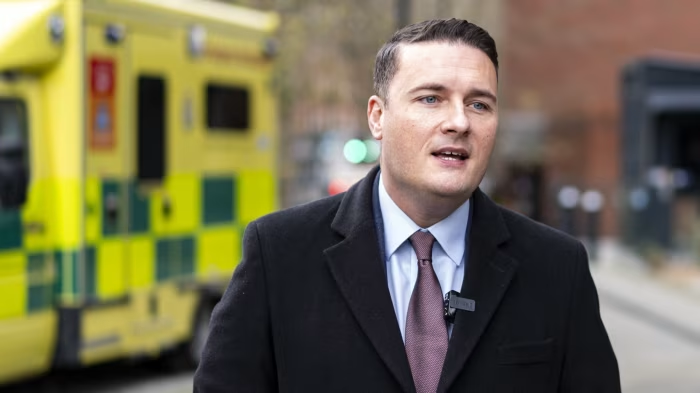
Health Secretary Wes Streeting has urged the public to disregard remarks made by US President Donald Trump suggesting a connection between paracetamol and autism, branding them baseless and potentially harmful.
Speaking on ITV’s Lorraine on Tuesday, Mr Streeting was unequivocal: “I trust doctors over President Trump, frankly, on this. I’ve just got to be really clear about this: there is no evidence to link the use of paracetamol by pregnant women to autism in their children. None. In fact, a major study was done back in 2024 in Sweden, involving 2.4 million children, and it did not uphold those claims.”
He went on to urge the public not to rely on politicians or speculation, but instead to listen to doctors, scientists and the NHS.
“It’s really important that at a time when there is scepticism – and I don’t think asking questions is a bad thing – we’ve got to follow medical science.”
The comments came after Mr Trump, flanked by his health secretary Robert F Kennedy Jnr, told pregnant women to “fight like hell” to avoid taking Tylenol – the American brand name for paracetamol – declaring the drug “is no good”.
His remarks were quickly condemned by medical experts on both sides of the Atlantic. A spokesman for Kenvue, Tylenol’s manufacturer, rejected any link between the medicine and autism, while the American College of Obstetricians and Gynaecologists described Mr Trump’s announcement as “irresponsible”.
Dr Steven Fleischman, the organisation’s president, warned: “Today’s announcement by HHS is not backed by the full body of scientific evidence and dangerously simplifies the many and complex causes of neurologic challenges in children.”
In Britain, Dr Alison Cave, chief safety officer at the Medicines and Healthcare Products Regulatory Agency, also dismissed the claims.
“Patient safety is our top priority. There is no evidence that taking paracetamol during pregnancy causes autism in children,” she said. “Our advice on medicines in pregnancy is based on rigorous assessment of the best available scientific evidence.”
Professor Claire Anderson, president of the Royal Pharmaceutical Society, echoed those assurances: “Paracetamol has been used safely by millions of people for decades, including during pregnancy, when taken as directed. A large study conducted in 2024 found no evidence of a link between paracetamol use in pregnancy and an increased risk of autism in children.”
Despite the weight of scientific opinion, Mr Trump pledged to increase production of leucovorin, a drug used to treat side effects of cancer therapies, for potential use in autism treatment. Early trials have suggested it may help children with autism spectrum disorder develop communication skills, though experts stress larger studies are required.
Mr Trump also used the press conference to revive long-debunked claims about vaccines, suggesting hepatitis B jabs should not be given to newborns and that the MMR vaccine should be administered in separate doses. These assertions, repeatedly dismissed by scientists, have fuelled declining vaccination rates in the US and contributed to recent measles outbreaks – the worst seen in more than three decades.
Robert F Kennedy Jnr, a long-time critic of vaccines, went further, pointing to the Amish community as supposed evidence that limited use of prescription drugs reduces autism rates. His claims, like many made under the “Make America Healthy Again” banner, have been widely discredited.
In June, Mr Kennedy dismissed the entire US vaccine advisory committee, replacing its members with figures aligned with his own anti-vaccine views.
While autism diagnoses have risen in recent years, experts emphasise that this is largely down to better awareness, improved testing and a broader understanding of autism spectrum disorder – not the causes claimed by Mr Trump and his allies.
Mr Streeting’s intervention is the latest attempt by British officials to counter misinformation emanating from the US. “Don’t pay any attention whatsoever to what Donald Trump says about medicine,” he said. “Listen to British doctors, British scientists, the NHS.”