


A NEW SURVEY from Jacamo has explored the relationship between male confidence and mental health to discover trends and patterns in modern masculinity and wellbeing.
2025 has been a year where men’s mental health has been front-and-centre, but often in a negative context. From the success of Netflix’s Adolescence spotlighting the rise in misogyny-fuelled violence, youth radicalisation, and toxic masculinity, to studies revealing that suicide remains the single leading cause of death for men under 50, the societal pressures on men seem to only be increasing.
With direct correlations between low self-esteem and mental health problems, Jacamo sought to understand how confidence changes throughout men’s lives, including what impacts their mental health, along with what spaces make men feel stronger, in the hopes of changing the narrative.
The survey revealed that just 7% of men feel great about their appearance. In contrast, more than one in five (21%) say they notice their flaws most days, while almost a third (29%) admit to having seriously low appearance confidence causing them to avoid mirrors, dodge photos, or focus on insecurities every day.
The majority (42%) sit somewhere in the middle, describing their appearance confidence as “just okay.” But experts warn that indifference is not the same as confidence.

| Responses by age | 18-24 | 25-34 | 35-44 | 45-54 | 55-64 | 65+ |
| I avoid mirrors and photos whenever possible | 21% | 6% | 8% | 11% | 8% | 5% |
| I notice my insecurities most days | 21% | 16% | 21% | 35% | 19% | 18% |
| I feel okay | 29% | 40% | 38% | 37% | 45% | 50% |
| I’m confident most of the time | 29% | 30% | 25% | 15% | 22% | 18% |
| I feel great and rarely doubt myself | 0% | 9% | 8% | 3% | 7% | 9% |
Over a quarter (27%) say low confidence impacts their focus and performance at work, while 22% admit to neglecting their grooming routines. A further 23% report drinking more heavily, and one in five (21%) say they argue more with family and friends.
When it comes to fitness, men are divided. Some skip it altogether (15%), while others overtrain (11%) as a coping mechanism, meaning nearly a quarter struggle to find balance in their routines.
Despite these signs, more than a quarter (28%) claim their mental health “never struggles”, suggesting stigma and denial are still preventing men from addressing their anxieties.
| Responses by age | 18-24 | 25-34 | 35-44 | 45-54 | 55-64 | 65+ |
| Neglecting my appearance or grooming | 33% | 18% | 22% | 28% | 28% | 13% |
| Overtraining or skipping gym/ exercise | 37% | 25% | 46% | 30% | 10% | 9% |
| Spending more money on things I don’t need | 29% | 21% | 20% | 16% | 15% | 9% |
| Drinking heavily or more often | 25% | 23% | 24% | 30% | 23% | 14% |
| Spending more time gaming | 17% | 10% | 10% | 11% | 4% | 6% |
| Watching more TV or streaming | 21% | 11% | 13% | 12% | 12% | 15% |
| Arguing more with friends of family | 25% | 18% | 17% | 26% | 28% | 17% |
| Struggling to focus or perform at work | 21% | 23% | 28% | 39% | 27% | 17% |
| My mental health never struggles | 4% | 33% | 15% | 14% | 30% | 52% |
Parks and green spaces come out on top, with a quarter of men (25%) saying time in nature is their biggest confidence booster. Gyms and sports clubs follow closely behind (19%), while more traditional “men’s spaces” such as pubs (9%) and barbers (3%) barely register, suggesting that modern men are redefining where they feel most at ease.

However, one in five men say nowhere helps boost their confidence, a clear signal that new solutions are needed.
| Responses by age | 18-24 | 25-34 | 35-44 | 45-54 | 55-64 | 65+ |
| Pubs and bars | 21% | 10% | 8% | 9% | 10% | 6% |
| Cafes, coffee shops and restaurants | 12% | 11% | 13% | 7% | 8% | 12% |
| Sports clubs and gyms | 17% | 23% | 31% | 20% | 10% | 7% |
| Barbershop | 4% | 2% | 5% | 4% | 1% | 1% |
| Libraries and community centres | 4% | 5% | 10% | 5% | 3% | 1% |
| Parks and public gardens | 25% | 12% | 15% | 30% | 39% | 35% |
| Places of worship | 8% | 13% | 9% | 3% | 3% | 6% |
| None of the above | 8% | 23% | 11% | 22% | 25% | 33% |
Jacamo teamed up with expert voices in wellbeing and parenting to help put the data into context.
Steve Blood, small group personal trainer & functional fitness coach, commented: “In my line of work, I see day in, day out just how closely mental health and training habits can be linked. For good and for bad.
“Jacamo’s research shows that when men’s mental health starts to dip, their routine can become extreme, either over or under training. Both of these outcomes aren’t ideal and can lead to even worse mental health symptoms.
“If you know that you’re someone who this could happen to, there are a few things you could watch out: training every single day even when fatigued, feeling guilty on rest days, visiting the gym much more often than usual and feeling like it ‘numbs’ your stress.
“On the other hand, you might notice that you’re completely losing interest in workouts that you used to love, stopping training altogether, cancelling last minute, feeling overwhelmed by simple sessions.

“Exercise can be a great coping mechanism, but it’s important to make sure you have structured rest and recovery.
“Adopting new practices into your routine can be a great idea if you’re struggling to get motivated, breathwork and grounding techniques can help regulate stress and are great alternatives to high intensity workouts on tougher days.
“Confidence isn’t something you can build overnight, it comes from small, and crucilally, consistent wins. Using training for longevity rather than punishment will help switch your mindset and you should start to see small gains in self-belief.
“Just showing up time and time again (even imperfectly) will build resilience, physically and mentally. The gym is a great place to build a mindset that can help you handle life’s pressures.”
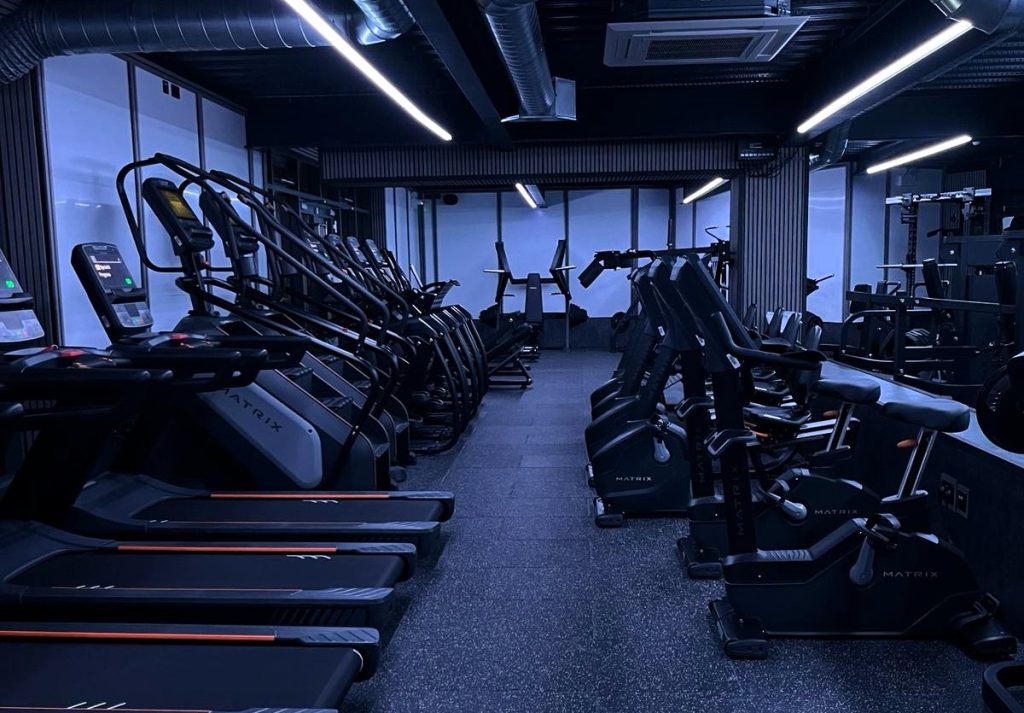
On the findings, Tommy Hatto commented: “There’s so much around us now that relies heavily on looks… for men it’s not just about muscle, but insecurities around things like height or hair loss. The pressures are real, even if they don’t always get spoken about
“It doesn’t surprise me that conversations are moving away from typical men’s spaces. Confidence can be built in parks, run clubs, or even gyms that provide a social element, anywhere men can talk and move together.
“There’s no doubt that exercising can improve mental clarity and actually make us feel better because of the endorphin release.
“However it’s important to listen to your body – when you need to rest, take the rest because that’s just as important for your mental health as exercising.
“Exercise is so important for mental health because your body releases those ‘feel-good’ hormones that are going to make you feel happier and manage your stress levels.
“Then, when you think about exercise – you are pushing yourself and maybe you’re achieving things you didn’t think you could achieve previously.
“That is going to give you a boost in your confidence, and then over time, exercising is going to make you stronger and ultimately make you look better so then that will help with self-esteem too.”
Kirsty Ketley commented: “Men noticing their flaws daily, more than feeling good, underlines how vital it is for dads to model kindness towards themselves.
“By voicing healthy choices – ‘I’m going for a walk to clear my head’ dads can demonstrate practical ways to care for mental health, rather than turning to unhealthy coping strategies like excess drinking or neglecting self-care.
“Relationships also take a hit, with 1 in 5 men arguing more when they’re struggling. Here, dads have an opportunity to model conflict resolution, apologising, repairing, and showing children that disagreements can be managed respectfully.
“Importantly, 28% of men claim their mental health never struggles, which suggests stigma still exists.
“Dads can change this by showing it’s okay to say when things are tough, it is okay to cry and be upset. Admitting vulnerability teaches children that strength isn’t about hiding, but about being honest and seeking support.
“Ultimately, dads don’t need ‘perfect’ strategies, just openness, balance, and consistency.
“By showing their children healthy ways to handle life’s pressures, they will be better able to raise confident, resilient young people who feel safe and comfortable to just be themselves.”
Shaun Hulm, Head of Merchandising at Jacamo, said: “Confidence isn’t about pretending. It’s about finding what fits you, in style, mindset, and lifestyle.
“Whether that’s an outfit that makes you feel sharp, a gadget that keeps you switched on, or fitness gear that gets you moving, Jacamo’s here to help every man feel fit for life.”
You can find out more on Jacamo’s Modern Man: Fit For Life webpage.
This research was commissioned by Jacamo and conducted via a nationally representative survey of men across the UK. The study gathered responses from 1,000 men aged 18 and over, capturing a range of ages, life stages, and backgrounds. Fieldwork was carried out August 2025 using an online panel. Respondents were asked about their confidence, appearance, mental health, and the spaces and habits that help them feel stronger. Data was analysed to identify key themes around modern masculinity and wellbeing.
The findings were supported with commentary from expert voices in wellbeing (Tommy Hatto) and parenting (Kirsty Ketley) to help put the data into context.