

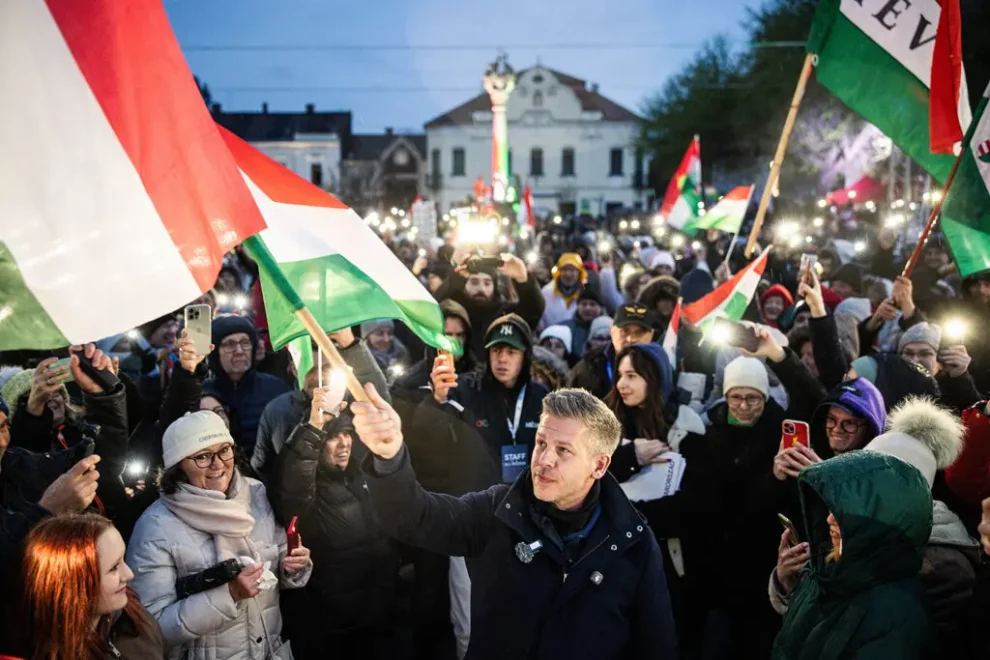

Historic defeat for Europe’s longest-serving nationalist strongman could redraw Hungary’s place in the West — but the real battle may only just be beginning
VIKTOR ORBAN has conceded defeat in Hungary’s parliamentary election, bringing a dramatic end to the nationalist leader’s 16-year grip on power and delivering what could prove to be the most significant political upset in Europe this year.
Early and partial results put Péter Magyar’s Tisza party well ahead of Fidesz, with Orbán acknowledging a painful loss as record turnout suggested a country no longer willing to settle for more of the same. For many Hungarians, this was not simply a vote to change government, but a decision to break with a political era that had come to define the nation itself.
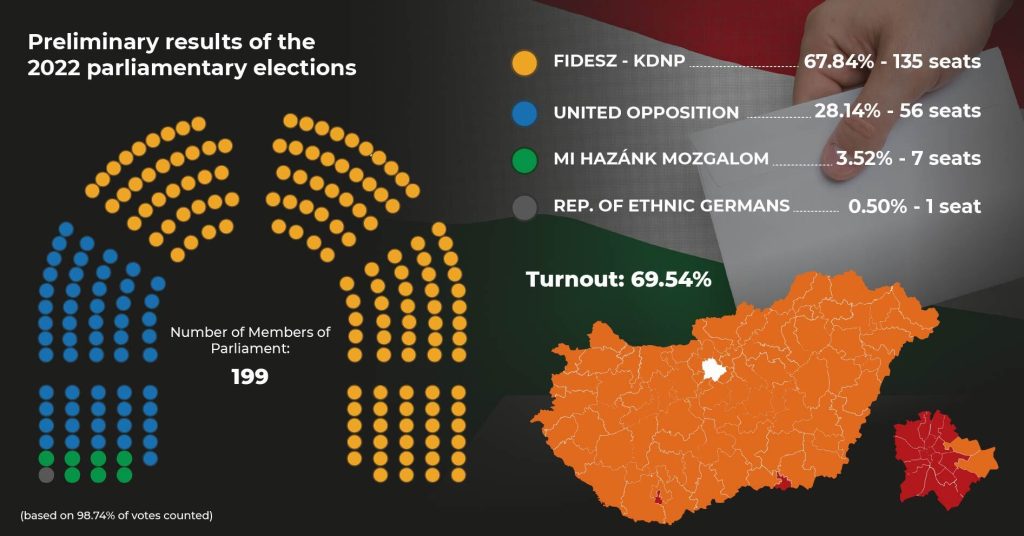
This was no ordinary election defeat for a sitting prime minister. It was a rejection of an entire system. Orbán did not merely govern Hungary; he remade it in his own image, constructing what he proudly called an “illiberal” state and turning himself into a hero for parts of the global Right. In the process, Hungary became the European Union’s most disruptive and controversial member.

That is why his fall matters far beyond Budapest. The result is significant not just because of who has won, but because of what voters appear to have turned against: entrenched power, allegations of cronyism, democratic backsliding, and a style of politics built on permanent cultural warfare.
The scale of the result is what makes it historic. Reuters reported that with 46 per cent of votes counted, Tisza was on course to win 135 seats in the 199-seat parliament — enough for a two-thirds majority if confirmed. The Associated Press, reporting on later partial returns, said Tisza had more than 52 per cent of the vote with around 60 per cent counted, far ahead of Fidesz on 38 per cent. Turnout was above 77 per cent, described by AP as the highest in post-communist Hungarian history.


That turnout tells its own story. Hungary was not sleepwalking into change; it was straining towards it. After years in which Orbán had seemed electorally untouchable, voters appear to have decided that economic drift, rising living costs and long-running corruption allegations mattered more than the government’s warnings about migrants, war and foreign enemies. Reuters said frustration over economic stagnation and the cost of living helped drive the opposition surge.
Péter Magyar’s rise makes the outcome all the more remarkable. He is not a veteran dissident or a familiar opposition grandee. He is a former Fidesz insider who broke with the ruling camp and then reinvented himself as the vessel for anti-Orbán anger. That gave him an advantage previous challengers lacked: he could not easily be dismissed as an outsider who failed to understand the system he was trying to dismantle. To Orbán loyalists, he is a traitor. To his supporters, he is proof that the rot had begun from within.
For Brussels, this could mark the start of a major reset. Orbán spent years obstructing EU partners over rule-of-law disputes, media freedom, relations with Moscow and support linked to Ukraine. Reuters reported that a Tisza victory could reopen the path to frozen EU funds and shift Hungary’s stance on key European decisions, including those connected to Ukraine. Put simply, one of the EU’s most stubborn blockers may have been removed by his own electorate.
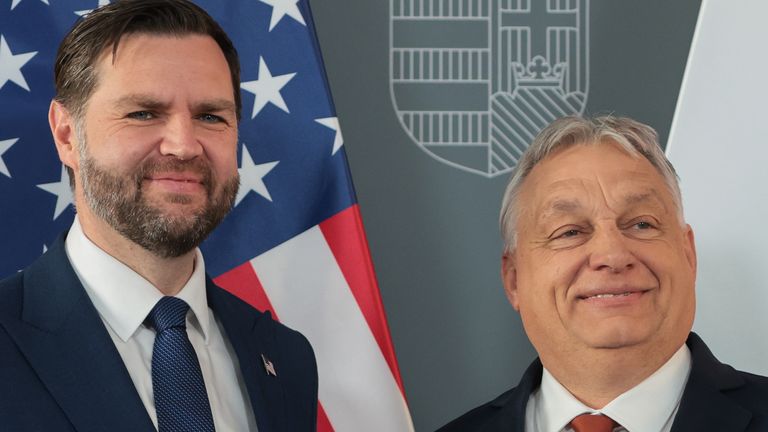
The symbolism reaches well beyond Europe. Orbán became a reference point for nationalist and populist movements across the Western world, admired by figures on the American Right and tolerated elsewhere as a difficult but durable fact of European politics. His defeat is therefore more than a domestic upset. It is a reminder that strongman politics can look invincible until the moment voters decide they have had enough.
But this is where caution is needed. Orbán’s defeat does not necessarily mean Orbánism is finished. Even if Tisza secures a commanding majority, Hungary remains deeply divided, and much of the state, media landscape and political culture has been moulded by Fidesz over a decade and a half. Removing Orbán from office is one thing. Unpicking the loyalties, habits and networks of his era is another entirely. That will be Magyar’s true test.
There is a danger for the victors too. Political earthquakes create expectations that are almost impossible to satisfy. Magyar has campaigned as the man who can clean up the state, restore trust, improve services and bring Hungary back towards the European mainstream. That is a compelling message in opposition. It is far harder in government, particularly in a country where Orbán’s influence has been embedded so deeply. Voters may have delivered a revolution at the ballot box, but revolutions do not, by themselves, produce stable government.
Still, the meaning of the night is already unmistakable. Hungary has not merely changed government; it has rejected the assumption that Viktor Orbán’s model was permanent. After sixteen years in power, the man who made himself the face of Europe’s nationalist resistance to liberal democracy has been brought down not by Brussels, nor by foreign pressure, but by Hungarian voters themselves.
That is what makes this result so powerful — and why its consequences may reach far beyond Hungary.