

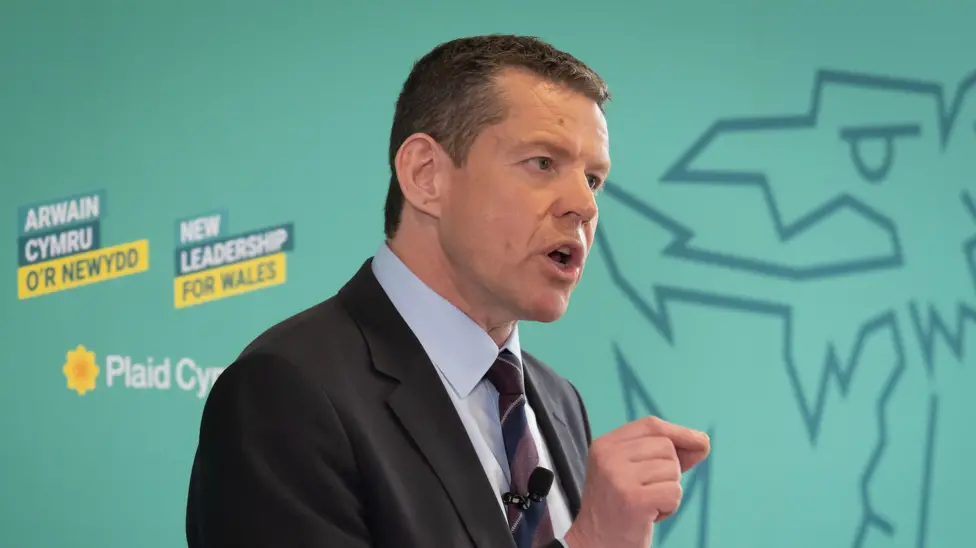

Rhun ap Iorwerth’s party says plan is radical and fully costed as it bids to lead next Welsh government
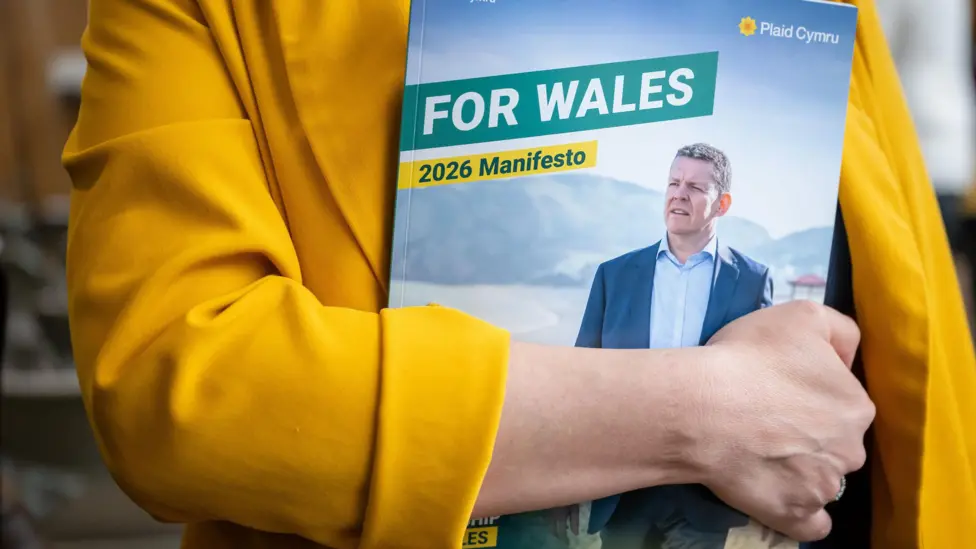
PLAID CYMRU has launched its manifesto for the 2026 Senedd election, setting out a programme focused on childcare, health, education and tackling child poverty as the party seeks to convince voters it is ready for government.
With opinion polls suggesting Plaid could be in contention for its strongest ever Senedd result, the party is presenting itself as a serious alternative administration under leader Rhun ap Iorwerth.
Rather than putting major constitutional change at the centre of the campaign, Plaid’s manifesto concentrates heavily on public services and living standards. While the party continues to support Welsh independence, it is not proposing an independence referendum during a first term in government.

Instead, Plaid says it would establish a national commission for Wales, with a budget of £500,000, to examine future constitutional options including further devolution and the foundations for a future white paper on independence.
On education, Plaid is promising to widen access to free school meals. The party says it would extend free meals to year seven to 11 pupils in households receiving Universal Credit, with no income cap. It is also pledging new incentives to attract teachers and says it wants to strengthen Welsh-medium education.

However, questions remain over whether enough Welsh-speaking staff could be recruited to support the scale of expansion Plaid is proposing across childcare and education.
The party is also promising a review of the Curriculum for Wales, alongside clearer guidance for teachers, in what appears to be an acknowledgement of continuing concern about how the reforms are working in practice.
In health, Plaid says it wants to cut waiting times, although the manifesto itself does not contain a detailed overall target. Rhun ap Iorwerth has said that under a Plaid-led government no-one would be waiting two years for treatment within the first year, with wider waiting lists brought back to pre-pandemic levels by the end of a Senedd term.
The manifesto also says Plaid would consider “all options” for reforming Betsi Cadwaladr University Health Board in north Wales, leaving open the possibility of structural change at Wales’ largest health board.
On higher education, Plaid says it would prioritise a review of universities and their funding amid growing financial pressure in the sector. The party says it wants to ensure more Welsh government spending on higher education remains in Wales.
The manifesto also proposes refocusing the Seren programme towards Welsh universities and boosting participation from disadvantaged communities. Critics, however, may argue that such a move risks narrowing options for the most academically able students.
Housing and tourism policy also feature prominently. Plaid says it will review the effectiveness of current second homes and self-catering holiday let rules, including the controversial requirement for holiday lets to be rented out for at least 182 days a year to avoid being treated as second homes for council tax purposes.
That rule has been defended by those concerned about housing shortages in tourism hotspots, but it has come under strong criticism from tourism operators who say it is harming local businesses.
Plaid is also proposing to explore a Welsh child payment of £10 a week for children under six in families receiving Universal Credit. The idea would begin as a pilot scheme aimed at addressing child poverty.
But there are doubts over how easily such a scheme could be delivered, given that Wales does not have the same benefits powers as Scotland, where a similar payment already exists. Any full rollout could depend on cooperation from the UK government.
Taken together, the manifesto suggests Plaid Cymru is trying to broaden its appeal beyond its traditional base, offering a platform centred less on constitutional change and more on bread-and-butter issues such as health, schools, housing and family finances.
Whether that approach is enough to persuade voters Plaid is ready to run Wales may prove one of the defining questions of the 2026 election campaign.