
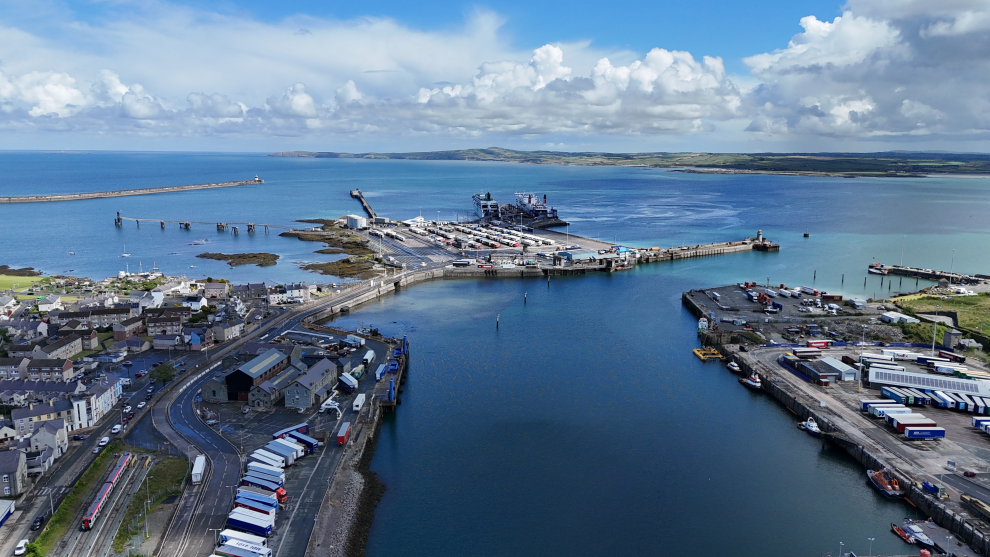

Holyhead Port is reportedly being used as a backdoor route for illegal immigration, according to Home Office sources. So far this year, 177 people have been refused entry and removed from the UK’s second busiest passenger ferry port.
The Home Office says some individuals attempt to bypass immigration checks by moving within the Common Travel Area (CTA), a zone allowing British and Irish citizens to travel between the UK, Ireland, the Isle of Man, and the Channel Islands without a passport.
Some of those seeking entry are backed by organised gangs and reattempt entry via ports such as Holyhead, often after being turned away at airports including Heathrow and Gatwick. Last week, three Romanians with previous immigration offences were returned after attempting to enter through Holyhead, the BBC reports.
The same system is also being exploited to smuggle cigarettes and criminal cash through the Anglesey port. In one instance, a UK Border Force sniffer dog discovered €13,000 (£11,340) of suspected criminal cash hidden in a “purpose-built concealment” in a lorry. On another occasion, officers seized more than £33,000 of non-duty paid tobacco and cigarettes.
Paul Harvey, chief immigration officer, said intelligence-led operations were having an impact on organised immigration crime targeting the CTA. Speaking to the BBC, he said:

“There’s absolutely an organised crime element that seeks to exploit the common travel areas that use Holyhead. We know that. But there are also individual people who seek to exploit that. There’s also other cases, so people who seek to use this as a route to bring people in, and commodities, like drugs, alcohol, tobacco. Unfortunately, people are also commodities.”
Conservative MS Andrew RT Davies described the reports of illegal migrants entering Britain via Holyhead Port as “deeply concerning”. He added:
“Robust action is required to stamp it out. The message to those entering our country illegally must be clear: you are not welcome and will not be allowed to stay.”
In the past year, the Home Office has intensified efforts to tackle illegal working across the country, targeting takeaways, fast food delivery, beauty salons, and car washes. By disrupting the black economy, authorities aim to reduce the incentives for people to enter the UK unlawfully.
Between October 2024 and September 2025, more than 8,000 illegal migrants were arrested following 11,000 raids by Immigration Enforcement. Notable operations included six arrests at a dairy farm in Llangedwyn, Powys, in January, and 16 arrests at a solar farm in Anglesey in March. That same month, four people were detained in Bangor, Gwynedd, as part of a crackdown on organised immigration crime. On 12 September, three illegal working arrests were made at a barbershop in Porthmadog, Gwynedd.
The UK government faces mounting pressure to tackle irregular arrivals, which have risen by 27% on the previous year. Most migrants arrive via small boats crossing the English Channel, with 36,000 recorded since the start of 2025. Ministers have drafted new legal powers aimed at tightening border security and reforming the asylum and immigration system.
Immigration policy is not devolved to Wales, where the Welsh Government has instead pursued a “Nation of Sanctuary” approach to support asylum seekers and refugees. This policy has primarily assisted Ukrainians and, to a lesser extent, Afghans.
In the Senedd, Reform’s Laura Anne Jones criticised the policy, saying it places a “neon sign” over Wales welcoming “the rest of the world”. While the scheme accounts for less than 0.5% of overall Welsh spending, Andrew RT Davies has called for it to be scrapped, claiming it acts as a pull factor for illegal migration.