

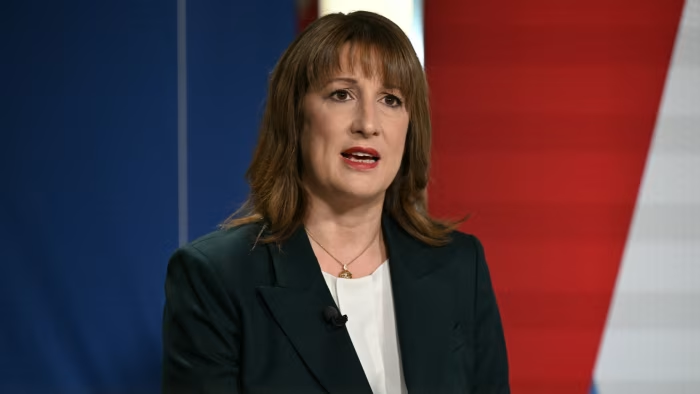

Young people who had been out of work or education for 18 months will be offered a guaranteed paid work placement, Chancellor Rachel Reeves announced. Those who refuse the offer without a reasonable excuse could face losing their benefits.
In her speech to Labour’s annual conference in Liverpool, Reeves pledged “nothing less than the abolition of long-term youth unemployment,” signalling a bold push to tackle a growing social and economic issue. She also set out her vision for a society built on “contribution,” where “hard work is matched by fair reward.”
Speaking to the BBC, Reeves defended Labour’s record after 15 months in government, highlighting the progress made while admitting there was “more to do.” The announcement came ahead of the November Budget, with the chancellor under pressure to balance public finances while also supporting economic growth.
Reeves said no companies had yet signed up to the scheme as it had not been formally launched, but several business organisations had expressed support. The initiative builds on the “youth guarantee” announced last November, which promised every 18 to 21-year-old in England access to an apprenticeship, training, education, or help finding a job.
Under the updated plans, every young person who had been on Universal Credit for 18 months without “earning or learning” would be offered a guaranteed paid work placement. Those who declined without a valid reason would face sanctions, including the potential loss of benefits. The aim is to equip participants with the skills needed to secure full-time employment.

Recent statistics show that around one in eight 16 to 24-year-olds—approximately 948,000 young people—are not in education, employment, or training, marking a slight decrease from last year’s 11-year high of 987,000. The scheme will build on existing employment support and work placements delivered by the Department for Work and Pensions and will involve private companies, with the government expecting businesses to contribute at least partially to wages.
Reeves said the scheme would be “backed by government money with some form of subsidy for those work placements,” with full details to be outlined in the November Budget. While the cost has not been specified, it will be funded from existing budgets allocated in this year’s spending review.
The chancellor faces a challenging Budget, with economists warning that tax rises or spending cuts may be necessary to meet self-imposed borrowing targets. Asked whether taxes might increase, Reeves told the BBC: “The world has changed” over the past year, citing wars in Europe and the Middle East, US tariffs, and the global cost of borrowing. She added: “We’re not immune to any of those things.”
Pressed on potential VAT rises, Reeves reiterated Labour’s manifesto commitment not to increase taxes on working people, including National Insurance, income tax, or VAT. She stressed that the government had “protected the pay packets of working people and we did not put up the prices in the shops. That’s very important to me.”
In her conference address, Reeves said: “I will never be satisfied while too many people’s potential is wasted, frozen out of employment, education, or training. There’s no defending it. It’s bad for business, bad for taxpayers, bad for our economy, and it scars people’s prospects throughout their lives.” She drew a parallel with the last Labour government, which introduced a New Deal for young people and abolished long-term youth unemployment, pledging the same outcome under her government.
The Federation of Small Businesses welcomed the announcement as “hugely important.” Policy chair Tina McKenzie said: “Reprioritising spending from employment programmes which aren’t working to this type of scheme is exactly the way to get much-needed bang for taxpayer cash.” She added that care must be taken to ensure support for over-25s, young people out of work for health reasons, and to enable small businesses to fully participate in the scheme.
However, questions remain about whether businesses under pressure from National Insurance contributions and the National Minimum Wage could take on significant numbers of new workers. UK job vacancies have been falling, reaching their lowest level since the pandemic earlier this year.
Reeves also set out her vision for “a Britain based on opportunity,” where “ordinary kids can flourish, unhindered by their background.” Her call for a society based on “contribution” echoes recommendations from the think tank Labour Together, which last week urged the government to make the principle—pay in and see results—a central part of its agenda.
In addition, the chancellor pledged to fund a library in every primary school in England. According to the National Literacy Trust, around one in seven state primary schools currently lack a library, rising to one in four in disadvantaged areas.