

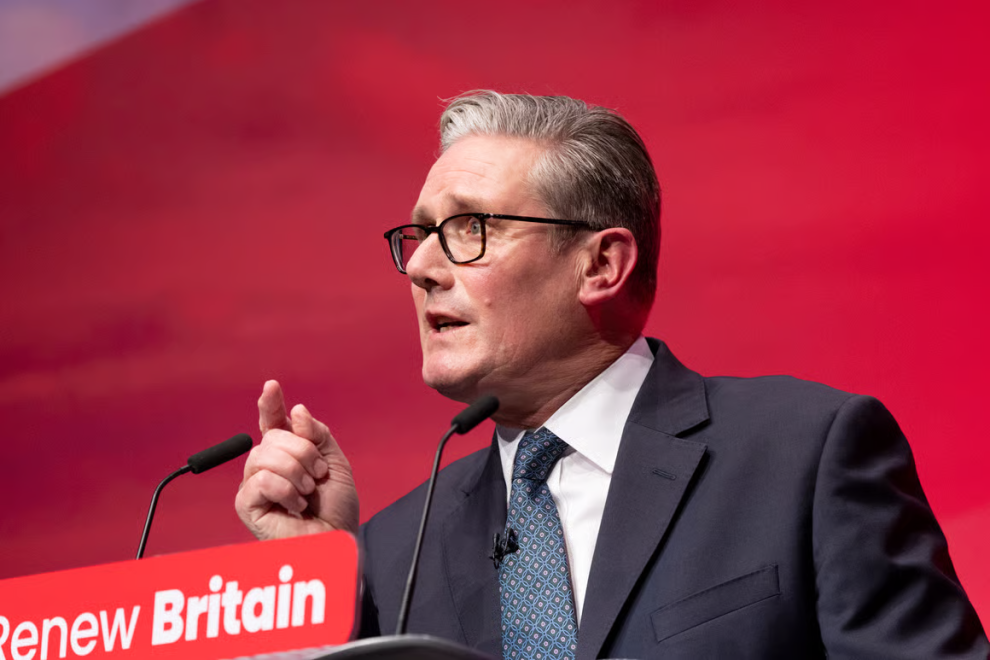

Prime Minister Sir Keir Starmer has signalled his intention to revisit how international law is interpreted in asylum and deportation cases, arguing that recent patterns of mass migration demand a fresh approach.
Speaking to the BBC, Sir Keir said he did not wish to “tear down” human rights protections but insisted that UK courts needed to “look again” at the way Article 3 of the European Convention on Human Rights (ECHR) – which prohibits torture and degrading treatment – is applied.
The prime minister said there was a clear distinction between sending someone back to face “summary execution” and deporting an offender to a country with poorer healthcare or prison conditions. “We need to look again at the interpretation of a wide range of international laws,” he said. “Those genuinely fleeing persecution should be afforded asylum, and that is a compassionate act.”
His comments follow new proposals from the home secretary to tighten the rules governing indefinite leave to remain, and came after a high-profile case in which a Brazilian paedophile avoided deportation by arguing he would face harsher treatment in his home country’s prisons.
Pressed on what was preventing the removal of foreign offenders, Sir Keir cited both Articles 3 and 8 of the ECHR – the latter guaranteeing the right to private and family life – as well as provisions under the UN Refugee Convention, the Torture Convention and the Convention on the Rights of the Child.

However, leading human rights lawyer Shami Chakrabarti rejected suggestions that these laws were being abused, insisting that successful claims on such grounds were “very, very rare”. She said: “To say that it’s inhuman and degrading because the situation is worse back home than it is in the UK has never been the test that has been employed by the UK courts.”
Immigration in the spotlight
The issue has become a central theme in government policy. Earlier this year, ministers pledged in their immigration white paper to “clarify” how the right to a family life should apply in deportation cases. Before her move to the Foreign Office, Yvette Cooper ordered officials to examine how courts were applying human rights law in deportation appeals.
Sir Keir’s latest intervention also follows a Labour Party conference dominated by debate over immigration and the challenge posed by Reform UK. In his keynote address, the prime minister accused Nigel Farage’s party of trading in the “politics of grievance” while positioning Labour as the party of “tolerant, decent patriotism”.
He refrained from repeating his claim that Reform’s deportation proposals were “racist”, but pledged to fight racism in politics “with everything we have”. In a separate interview, Sir Keir branded the small boat crossings “Farage boats”, arguing that Brexit had scrapped the Dublin Regulation, which once allowed the UK to return asylum seekers to the EU state where they first arrived. The scheme ended in January 2021.
Leadership questions and domestic agenda
Away from immigration, the prime minister also faced questions about his leadership after Greater Manchester Mayor Andy Burnham revealed that Labour MPs had urged him over the summer to return to Westminster and challenge for the top job.
Sir Keir dismissed such speculation, saying he had “been underestimated every time” he had taken on a senior role. “I didn’t come into politics as some sort of popularity contest,” he told the BBC. “I came in with one focus, which is changing my country for the better. I’m proud to be prime minister, getting on with that work.”
In a wide-ranging series of interviews, he also addressed the growing number of young people out of work due to mental health conditions. While stressing that benefits must be available, he argued: “If you are on benefits in your 20s, it is going to be extremely difficult to get off benefits for the rest of your life.”
On the economy, Sir Keir said he remained committed to bringing down household bills, particularly as Ofgem’s 2 per cent increase to the energy price cap takes effect this week across England, Wales and Scotland. He also pointed to the recently agreed UK–EU SPS Agreement, covering animal and food standards, as a measure that would help reduce food costs.
Apprenticeships and education
Looking ahead, the prime minister reiterated his ambition for two-thirds of young people to go on to higher education or technical qualifications, replacing Tony Blair’s long-standing target of sending half of school leavers to university.
Sir Keir said he wanted “gold standard” apprenticeships to be “equally regarded, equally respected” as university degrees, adding that some young people “might have been better off” pursuing an apprenticeship rather than a degree.

The new ambition includes both degree-level apprenticeships, part-funded by employers, and technical qualifications sitting just below degree standard.