

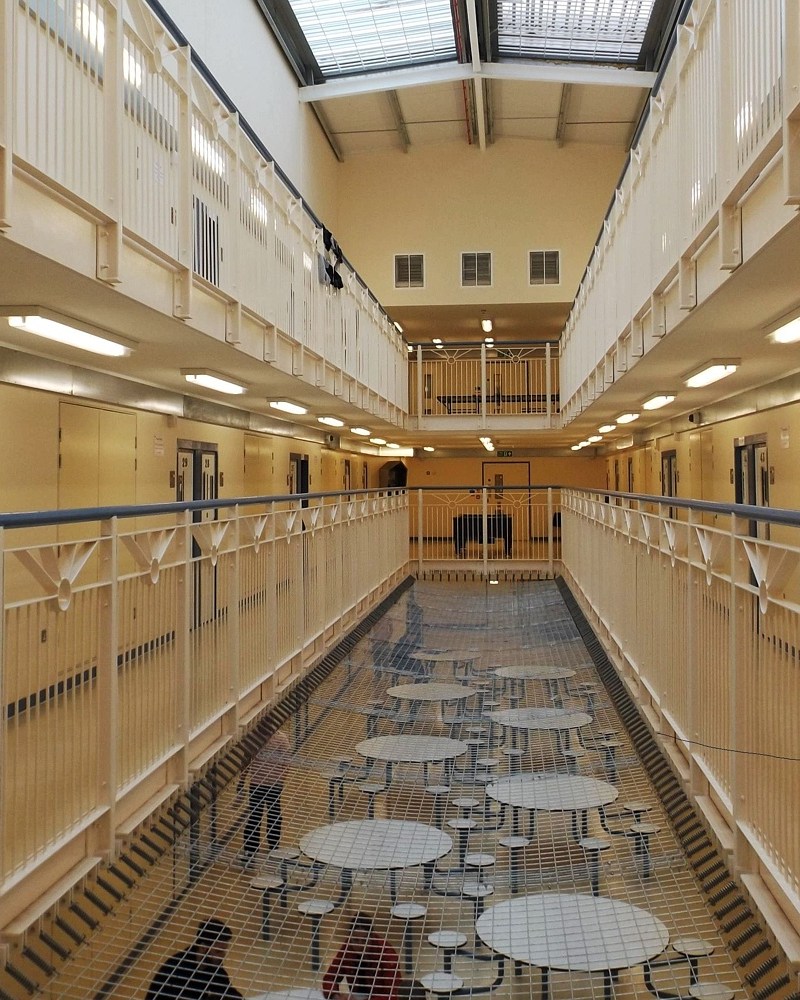

Intelligence suggested other inmates may have used convicted murderer Martyn Bruce as a “tester” for drugs, although investigators found no evidence prison staff had missed opportunities to intervene
A LIFE-SENTENCE prisoner died after suffering a cardiac arrest caused by the use of a synthetic drug at HMP Parc, an investigation has concluded.
Martyn Bruce was found lying unresponsive on the floor of his cell at the privately-run Bridgend prison on July 20, 2022.
Prison officers began CPR before nurses and paramedics arrived, and medical staff were initially able to restore a pulse.
Mr Bruce was taken to hospital and placed in an induced coma, but scans later showed no signs of brain activity. His life support was withdrawn following discussions between hospital staff and his family, and he died on July 27 with relatives at his bedside.
A report by the Prisons and Probation Ombudsman found that Mr Bruce’s sudden cardiac arrest was caused by the use of a psychoactive substance, commonly known as PS or Spice.

Toxicology tests found traces of a synthetic cannabinoid in his system.
The medical cause of death was recorded as hypoxic-ischaemic encephalopathy, an acute loss of blood and oxygen to the brain, and pneumonia caused by the cardiac arrest.
The Ombudsman’s investigation also revealed that prison staff received intelligence following Mr Bruce’s death suggesting that other prisoners may have used him as a “tester” for drugs on the wing.
The information was passed to the South Wales Police Crime in Prison Team for further investigation.
The report said: “We found that prison staff received intelligence following Mr Bruce’s death to suggest that other prisoners might have used him as a ‘tester’ for drugs on the wing.
“The prison shared all appropriate information with South Wales Police Crime in Prison Team for the purposes of further investigation.”
The Ombudsman said any subsequent police action would fall outside the scope of its investigation.
Mr Bruce had a long history of substance misuse and had suffered seizures after using psychoactive substances.
He was serving a life sentence for murder after being remanded to HMP Cardiff in March 2005 and convicted in February 2006. He was ordered to serve a minimum term of 16 years.
He was transferred to HMP Parc in September 2018.

During his time at the prison, staff found him under the influence of suspected psychoactive substances on a number of occasions.
In October 2018, he suffered a seizure after taking an unknown substance and was taken to hospital.
Further incidents were recorded in November 2019, September and November 2020, and during June and July 2021.
Each time, prison or healthcare staff assessed him and opened a Substance Misuse Observation Record where required. He was also reviewed by the prison’s rapid-response substance misuse team and given harm-reduction advice.
Mr Bruce had told healthcare staff that he experienced post-traumatic stress disorder, anxiety, nightmares and intrusive thoughts.
He said that using psychoactive substances helped him forget his problems in the short term.
In July 2021, traces of synthetic cannabinoids were found during a routine drug test and a further review with the prison’s substance misuse service was planned.
He died before that review and further dual-diagnosis work addressing his mental health and drug use could take place.
On the morning of July 20, Mr Bruce met his prison offender manager and was described as appearing “really positive” and in a “really good mood”.
He was told that his community offender manager planned to visit the following week to discuss a possible transfer to open prison conditions.
Routine checks were carried out at around 7am and 12.35pm, with no concerns reported.
At approximately 4.37pm, another prisoner alerted an officer that Mr Bruce appeared unresponsive.
The officer found him face down on the floor of his cell and immediately called for assistance.
A medical “code blue” was declared and officers began CPR. Two nurses arrived at around 4.43pm and attached a defibrillator before taking over resuscitation efforts.
Paramedics reached the cell at 5.01pm and detected a pulse, although Mr Bruce suffered several further cardiac arrests.
He was stabilised and taken to hospital at around 5.44pm, suffering another cardiac arrest during the journey.
The Ombudsman found that the clinical care Mr Bruce received at Parc was equivalent to the treatment he could have expected in the community.
His general healthcare needs had been appropriately managed through GP appointments, medication and counselling.
Investigators also concluded that staff had responded appropriately whenever Mr Bruce was found under the influence of drugs.
The report said his substance misuse history was documented, staff were aware of his needs and referrals had been made for ongoing support.
It found no evidence that prison staff had missed an opportunity to identify that Mr Bruce possessed psychoactive substances before he took them.
The report said he appeared to have been careful to conceal the substances.
However, the Ombudsman expressed concern about the wider availability of drugs at Parc, noting that Mr Bruce had been able to obtain substances on a number of occasions.
HMP Parc is a medium-security prison operated by G4S and accommodates around 1,600 adult male prisoners and young offenders.
An inspection conducted shortly before Mr Bruce’s death found that drugs remained a significant threat at the prison.
Inspectors nevertheless identified work being undertaken to disrupt supplies, including cooperation with police over suspected staff corruption, which had led to dismissals and criminal investigations.
The prison had also invested in drone and mobile phone detection technology, body and post scanners and equipment designed to detect psychoactive substances sprayed onto incoming mail.
The Ombudsman said Parc had introduced a comprehensive strategy based on lessons learned from previous drug-related deaths.
It concluded that the risk-management and support procedures contained within that strategy had been correctly followed in Mr Bruce’s case.
No recommendations were made concerning his substance misuse treatment or the prison’s response to the fatal incident.
The report added: “We are concerned about the availability of drugs at Parc which Mr Bruce had accessed on a number of occasions.
“However, we found no evidence that staff had missed opportunities to intercept this or identify that Mr Bruce was in possession of PS before he used it.”
An inquest into Mr Bruce’s death concluded on June 29, 2023.