


ON TUESDAY, February 3, the Welsh Government published its plans to create a new water regulator for Wales.
The proposals respond to the findings of the Independent Water Commission, established jointly by the Welsh Government and UK Government and published in July 2025.
The proposals include creating a new, dedicated Welsh economic regulator for water, supported by new legislation and a new regulatory framework.
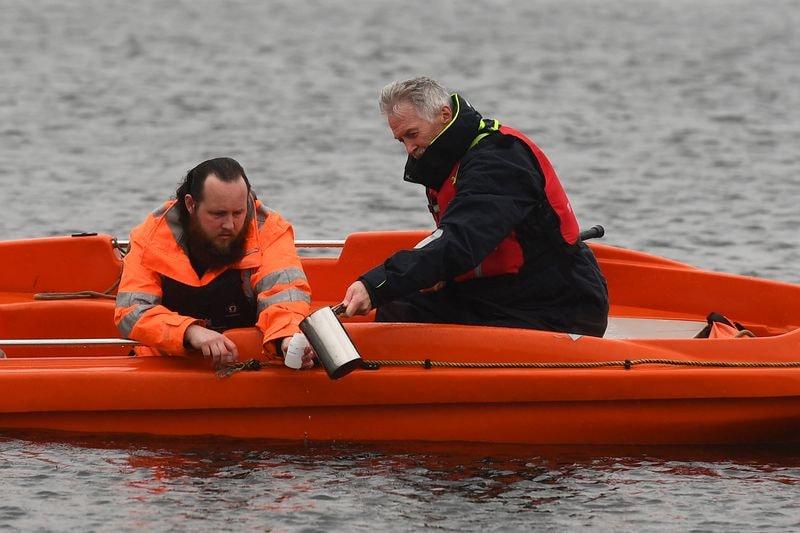
Speaking at a Dŵr Cymru site at Lisvane and Llanishen reservoirs to launch the Green Paper, the Deputy First Minister, Huw Irranca-Davies, said: “Our ambition is clear and bold: clean and thriving rivers, safe and high-quality drinking water, fair and affordable services, and modern infrastructure ready for the future.”
“We will strengthen accountability, rebuild trust and create a system that is simpler, stronger and more transparent.”

On the same day, a Labour Party press release claimed the new regulator would tackle water pollution in Pembrokeshire and drew attention to the First Minister’s support for it. However, the new regulator will have no investigatory powers of its own. Instead, it will depend on Natural Resources Wales to provide it with evidence that would enable it to pursue water companies.
At the same time, the Labour Party press release said that Labour would introduce a Clean Water Bill following May’s election.
The announcement raises several questions about the announcement’s timing.
Baroness Morgan and her predecessors have been at pains to defend NRW over questions about its capacity to investigate and prosecute those who pollute Wales’s coastal waters and inland waterways. In response to repeated questioning from Conservative and Plaid Cymru Senedd Members over recent years, Labour ministers have repeatedly claimed they have confidence in NRW and that the body has sufficient money and resources to carry out its role.
The announcement that the Welsh Government intends to create a new body from scratch, with its own staff, statutory obligations, and enforcement powers, inevitably suggests that Labour ministers and First Ministers were not as confident in NRW as they claimed when asked about it. In addition, the announcement of plans for a new regulator does not disclose whether its creation will lead to a cut in NRW’s already overstretched budget or where the money to fund it will come from.
There is little doubt that regulation of the water industry is outdated and overly complex. However, adding another layer of bureaucracy could diminish whatever benefits streamlining the legal framework governing it might deliver.
In the Senedd on Wednesday, Conservative Shadow Minister Janet Finch-Saunders asked Huw Irranca-Davies about the timing of the Welsh Government’s announcement about a new regulator.
He ducked the question but went on to issue a statement suggesting that whatever a new regulator did, much of it was already underway.
The Deputy First Minister said: “We don’t need to wait for the outcomes of the Green Paper, or new legislation, to get on with fixing the problems with the infrastructure, the levels of customer satisfaction, the leakage, and so on.
“The pressure is on both of our water companies to perform for the customers who have seen over the last year and now are going to see those bigger bills landing. Now, that does deliver £6 billion investment, so we absolutely need to see that being delivered—not waiting, but, in this price period, actually investing in the priorities that will stop those combined sewer overflows polluting the river, stop the sewage outfalls, and right across the piece as well.”

The Conservative position has previously been clear: NRW isn’t working and needs to be broken up and replaced. In particular, the Conservatives have focused on the need for a separate and independent water regulator with both investigative and enforcement powers, and the resources to fulfil those responsibilities. Whatever the next Welsh Government decides to do with the proposals, Tuesday’s announcement does not meet that aim.