

SPENDING £1.8m on an abandoned project to replace a storm-wrecked bridge, without considering a “plan B” would be a “shocking” waste of public money, a councillor says.
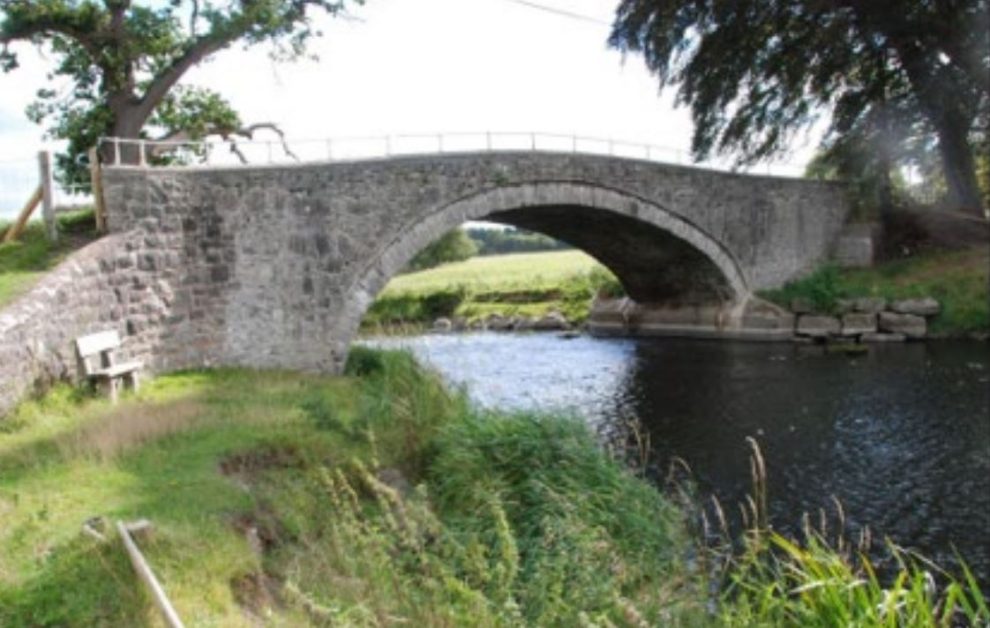
Tremeirchion and Trefnant residents and businesses have been forced to make costly detours of up to seven miles since the Llanerch Bridge was swept away when Storm Christoph devastated North Wales in January 2021.
Tremeirchion councillor Chris Evans is urging Denbighshire County Council to look at a scheme for a prefabricated crossing, after the authority scrapped plans for a new crossing last May, over fears work to build a new bridge over the River Clwyd could endanger public health by drilling into the sandstone riverbed and contaminating the water supply.
The call comes after an FOI revealed more than £1.7m of Welsh Government funds, as well as over £106,000 of council money was spent on the Llanerch Bridge replacement project, abandoned last year.
At the time the plans were abandoned, it was revealed the council had spent £1.5m of Welsh Government funds on design work, a figure now revealed to be £1,763,758. The latest figures also show that in addition, the council spent £106,266 of its funds on the scheme.

The council admitted it had no plans for further expenditure on the project in 2026-2027, with no further work in the pipeline.
But Chris Evans said it would be “shocking” if that amount of public money was “wasted” without a crossing being built. He added: “So it’s public money. It doesn’t matter where it’s come from, and to not have a bridge after spending all that money is quite concerning.”
In January the council’s cabinet member for transport Barry Mellor said the authority would be open to looking at any affordable scheme, following residents presenting a petition with over 2,500 signatures.
Cllr Evans says he is now working with Cllr James Elson and a local contractor to put together plans for a new prefabricated bridge.
“Cllr James Elson and I have worked tirelessly to try and get an outcome for Llanerch Bridge,” he said.
“We understand that the issue of the aquifer and the (risk of) liability if we affect that is high, but in 2026 we cannot say that that bridge cannot be built.
“We have not exhausted all avenues, and the plan B is to get a prefabricated bridge to go over the river.”
He added: “We’re going to have a site meeting with the local contractor to make it 100% that it can be done and see what the actual look of that bridge will be.”
Trefnant councillor James Elson added: “Denbighshire stopped the project full stop without considering plan B.
“We’ve spoken to engineers, and they have a prefabricated bridge which is 24m long. I’ve also spoken to the bridge manufacturers, and they’ve told us the bridge would last 50-100 years. Just because it is prefabricated, it doesn’t mean it is a rubbish bridge. It is an engineered bridge that sits on concrete plinths either side.

“What we can’t get off DCC is any money to do more engineering works, more design works, so we can drop that bridge in with a crane, and Bob is your uncle. I’ve been given a verbal quote of about £1.5m installed.”
He added: “It would mean a lot for local people because they would get their bridge back. It’s as good as any other bridge. It’s an ideal solution.”
He went on to say he envisaged the bridge as a single-track bridge with a pedestrian section.
A Denbighshire County Council spokesman said they were “waiting” for more information on the proposals for the prefabricated bridge.
“The council has worked closely and extensively with the Welsh Government to try and design a solution to replace the bridge without the risk of causing irreparable damage to a nearby water facility that provides water to around 85,000 homes in the region.
“It was always the desire and intention of the council to replace the bridge after its collapse in 2021. However, having followed a robust process and fully assessed the risks and issues from a design and construction perspective, it was deemed by experts that it was not possible to design a foundation that could accommodate the predicted riverbed scour depth without penetrating the bedrock below, which holds the aquifer that is a key source of the groundwater abstraction that is linked to fresh drinking water. Therefore, after significant consideration, the Council’s Cabinet decided last year not to proceed with the final design solution for a new highway bridge.”
He added: “With regards to the ward councillors’ proposals on an independently precured alternative design, we are waiting for this information to be submitted before consideration can be made.”