
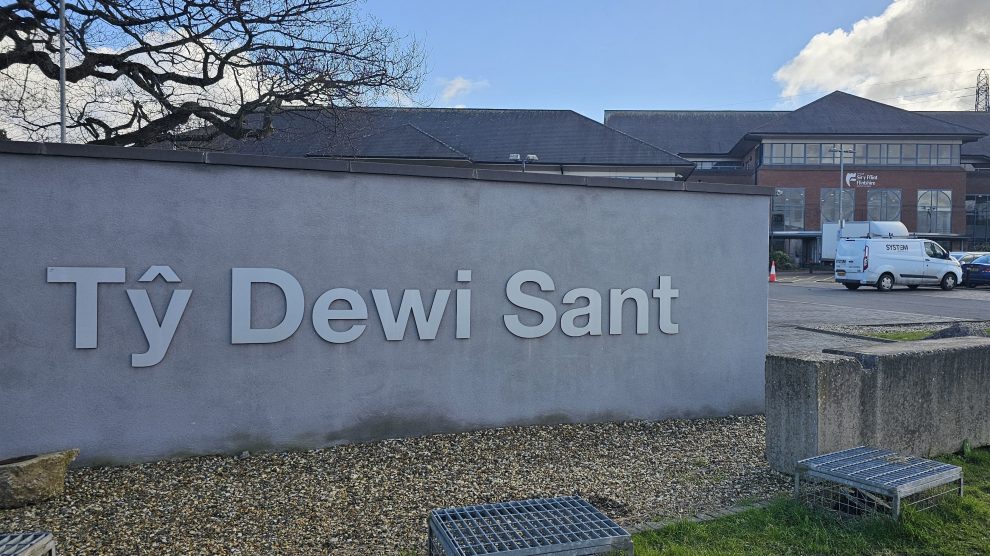

A FLINTSHIRE County Council officer showed ‘guts’ when she ordered an audit that revealed a major financial risk to the authority.
Chief Officer for Streetscene and Transportation Katie Wilby ordered an internal audit of the Proactis system after finding she could not access crucial access data related to some Flintshire Council contracts.
That audit revealed deficiencies within Flintshire County Council’s contract management system – Proactis – that made it almost impossible for officers across all departments to accurately track council spending.
While no significant financial loss was identified, the risk due to officers being unable to see and track contracts could have potentially run into millions for the authority.
One of the core issues related to ‘quick quotes’ – a function within Proactis that can be used to commission spending of £20,000 or less.

The investigation found this system did not always allow officers to see the detail of contract value and, in many cases, contracts had not been uploaded to the system once the quotes had been approved.
Quick quotes is not supposed to be a replacement for traditional tender processes within the council – but the audit indicated in some instances it had been used in that way – leaving many jobs untracked or at risk of duplication.
The audit also found that spreadsheets authorised for use to monitor procurement activity alongside Proactis were incomplete.
A sample of 12 contracts relating to the Highways Network, Regulatory Services and Service Delivery found that seven contracts worth £679,000 had no record of the arrangement or the contractor details in Proactis, preventing officers from accurately reporting on spend, performance and value for money.
Ms Wilby said that commissioning the audit to identify these problems had been difficult, but also necessary in order for the authority to address them.
“I asked for the audit because I wasn’t getting the assurances I was seeking from the teams, from the officers,” she said.
“We had an inconsistency across the portfolio in relation to how contracts were being managed so I wanted to look into that.
“We’ve got some excellent examples of contract management across the portfolio – Parc Adfer the waste‑from‑energy plant is a good example. The same in transportation, with school transport we’ve got the dynamic purchasing system in place.
“We’ve got some really positive examples within those areas of the portfolio, and those are visible to me and I can see that they’re compliant.
“The reason I asked for the audit is that not all areas were visible. Some of those spend areas were invisible in terms of contracts.
“The report found a number of repeat works or regular types of work at low values and for me that’s a risk to the organisation. If we’ve got all our eggs in one basket with one supplier and that supplier then dissolves or goes into liquidation we’re not protected.
“I would like to see a situation where we have different frameworks in place for the whole of our operations so we have got that resilience and capacity within services, so we’re reducing those risks.”
She added that officers had already begun to work on fixing the issues highlighted in the audit.
“We’re treating it really seriously,” she said. “We put an action plan in place as soon as we had the outcome of the audit. We started work in June of last year to try and obtain a lot of this information and with the support of audit and procurement we’ve been able to drill down and get these reports.
“In terms of the quick quote system we need a better system for reporting. We have agreed within Streetscene and Transportation to stop using the quick quote system and move to an alternative – hopefully from next month.”
The authority is now also using a quarterly report to analyse any work over £25,000 that has no contract associated with it to prevent works taking place that do not comply with the authority’s contract management process.
While these actions require more officer time, they ensure that managers now have much greater visibility and control over contracts.
Cllr David Coggins Cogan praised Ms Wilby for forcing the authority to face up to the problem.
“This is exactly what our chief officers should be doing, carrying out robust investigations within their own portfolios to make sure they are performing correctly. I want to congratulate the chief officer and the department because I know it couldn’t have been easy bringing this to the committee.”
Cllr Chris Bithell agreed.
“Obviously this has gone on for some time and it’s simply not good enough,” he said. “It took a lot of guts to raise this issue because it does raise some fundamental questions about what’s gone on and what has not gone on in the past.”