


NEW waste figures show that Flintshire County Council has sent almost 3,000 fewer tonnes of rubbish to Parc Adfer than this time last year.
The figures indicate that three-weekly bin collections are increasing recycling rates within the authority.
While all five local authorities in the project – Anglesey, Conwy, Denbighshire Gwynedd and Flintshire – have reduced the amount of black bin rubbish used to fuel the ‘waste-to-energy’ plant at Parc Adfer, Flintshire has delivered the biggest improvement.
So significant has been the drop that it is no longer the biggest contributor of waste to Parc Adfer, with Gwynedd now sending more rubbish to be converted into energy.
Three-weekly bin collections introduced by Flintshire in April have helped reduce the black bin waste sent to Parc Adfer from 15,488 tonnes in the first six months of last year to 12,839 tonnes this year.

Operated by Enfinium, Parc Adfer on Deeside Industrial Park has been fully operational for more than five years – turning non-recyclable waste into energy to power homes and businesses.
The plant is responsible for around 7% of partner authorities recycling levels. It is also trialling carbon capture technology with a view to connecting to the Hynet carbon capture pipeline when that comes on-stream between now and 2030.
Katie Wilby, Chief Officer for Streetscene and Transportation, said: “Early monitoring indications show a significant reduction in the level of non-recyclable waste being sent to Parc Adfer.
“Because of the efforts put in by the residents of Flintshire we have seen a consistent decline in waste tonnages captured per-week in comparison to last year, with an 18% decrease, helping us achieve our service change objectives for the first quarter.”
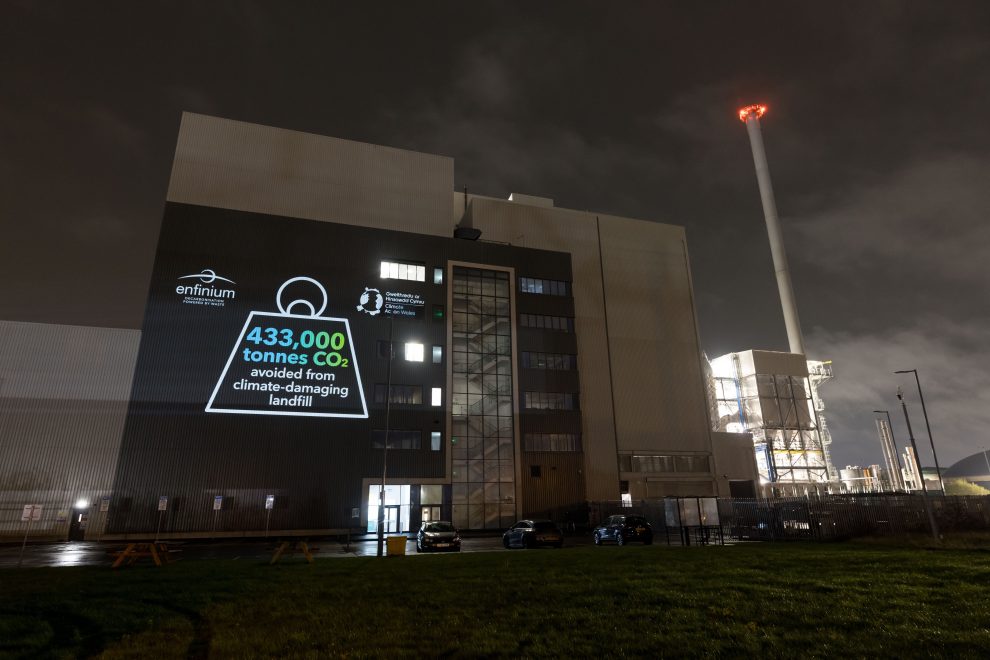
Last week – during Wales Climate Week – Parc Adfer also celebrated preventing 433,000 tonnes of carbon dioxide emissions from landfill since it opened in late 2019.
Since it began operations it has taken in 1,154,000 tonnes of unrecyclable waste and turned it into energy instead of sending it to landfill.
To mark Climate Week it projected those figures onto the wall of the plant to highlight the vital contribution it has made to reducing carbon emissions in North Wales.